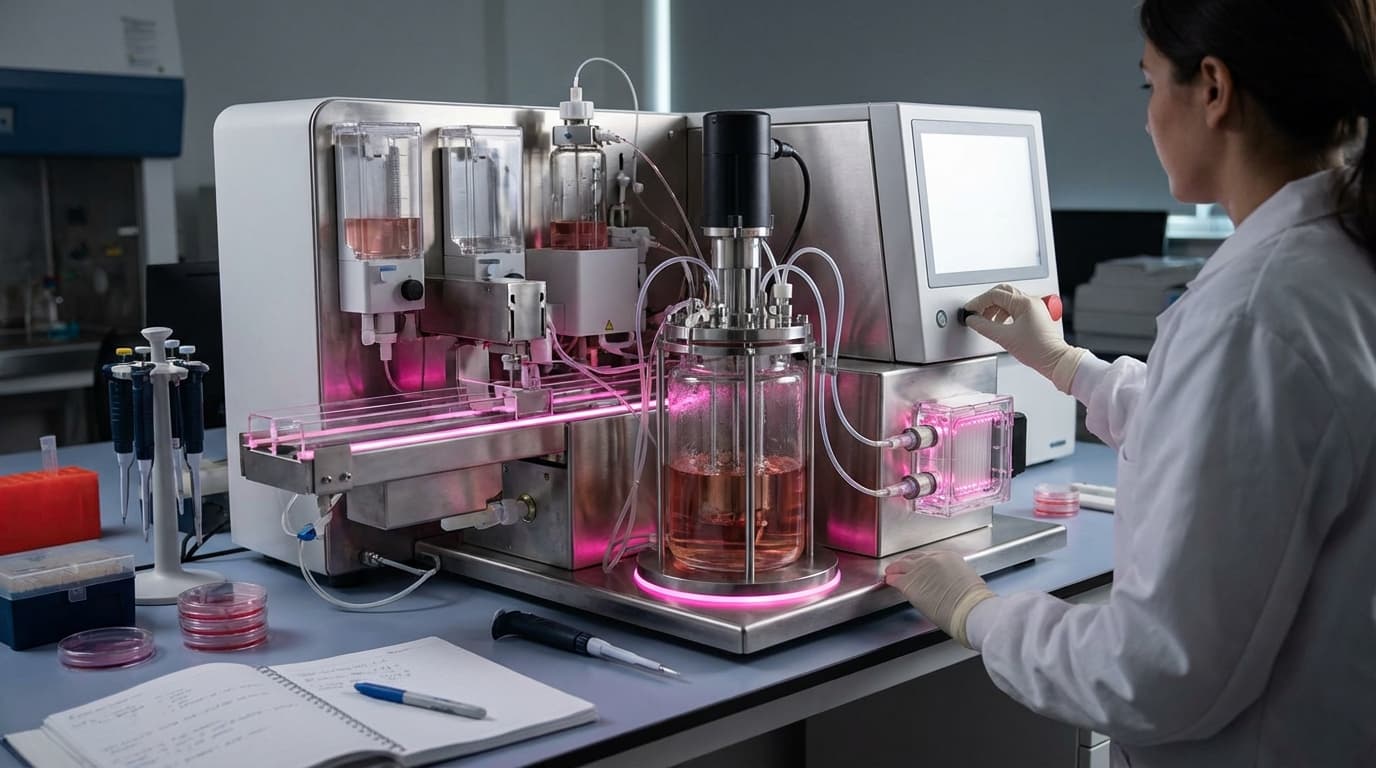
CAR-T Cell Manufacturing
CAR-T cell manufacturing facilities use closed, automated production systems including modular bioreactors, automated cell washers, and inline quality control analytics to produce personalized chimeric antigen receptor T-cell (CAR-T) therapies, where a patient's own T cells are genetically modified to fight cancer. These modern facilities deploy digitized manufacturing records and AI-powered scheduling systems to optimize production workflows, shrinking vein-to-vein times (the time from collecting cells from a patient to delivering the engineered cells back) and boosting throughput so hospitals can deliver individualized cancer therapies at scale, making these life-saving treatments more accessible.
This innovation addresses the challenge of manufacturing personalized cell therapies, where each patient's treatment must be individually produced, making scalability and efficiency critical for accessibility. By automating and optimizing the manufacturing process, these facilities can produce CAR-T therapies faster and more reliably, reducing costs and wait times. Companies like Novartis, Gilead/Kite, and various contract manufacturers are developing these advanced manufacturing capabilities.
The technology is essential for making personalized cell therapies accessible, where manufacturing efficiency directly impacts patient access and outcomes. As cell therapies expand to treat more conditions, efficient manufacturing becomes increasingly important. However, ensuring quality, managing complexity, and reducing costs remain challenges. The technology represents an important evolution in cell therapy manufacturing, but requires continued development to achieve the efficiency and cost-effectiveness needed for widespread use. Success could make personalized cell therapies more accessible and enable new applications, but the technology must continue to improve to make these treatments affordable and available to more patients.
Related Organizations

A company developing an Integrated Development and Manufacturing Organization (IDMO) for cell therapies.


A global provider of products and services for biomedical research and cellular therapy.
United States · Company
A global provider of technologies and services that advance and accelerate the development and manufacture of therapeutics.

A manufacturing technology company for cell and gene therapies.

An American supplier of scientific instrumentation, reagents and consumables.
United States · Company
A company specializing in cell culture devices.

A non-profit engineering innovation company that develops acoustic microfluidic separation systems for CAR-T manufacturing.
Supporting Evidence
Research this in Signals
Signals turns a topic into a sourced research record you can inspect and rerun. Your first scan is free, and this one starts with CAR-T Cell Manufacturing already loaded, so edit it or scan as is.