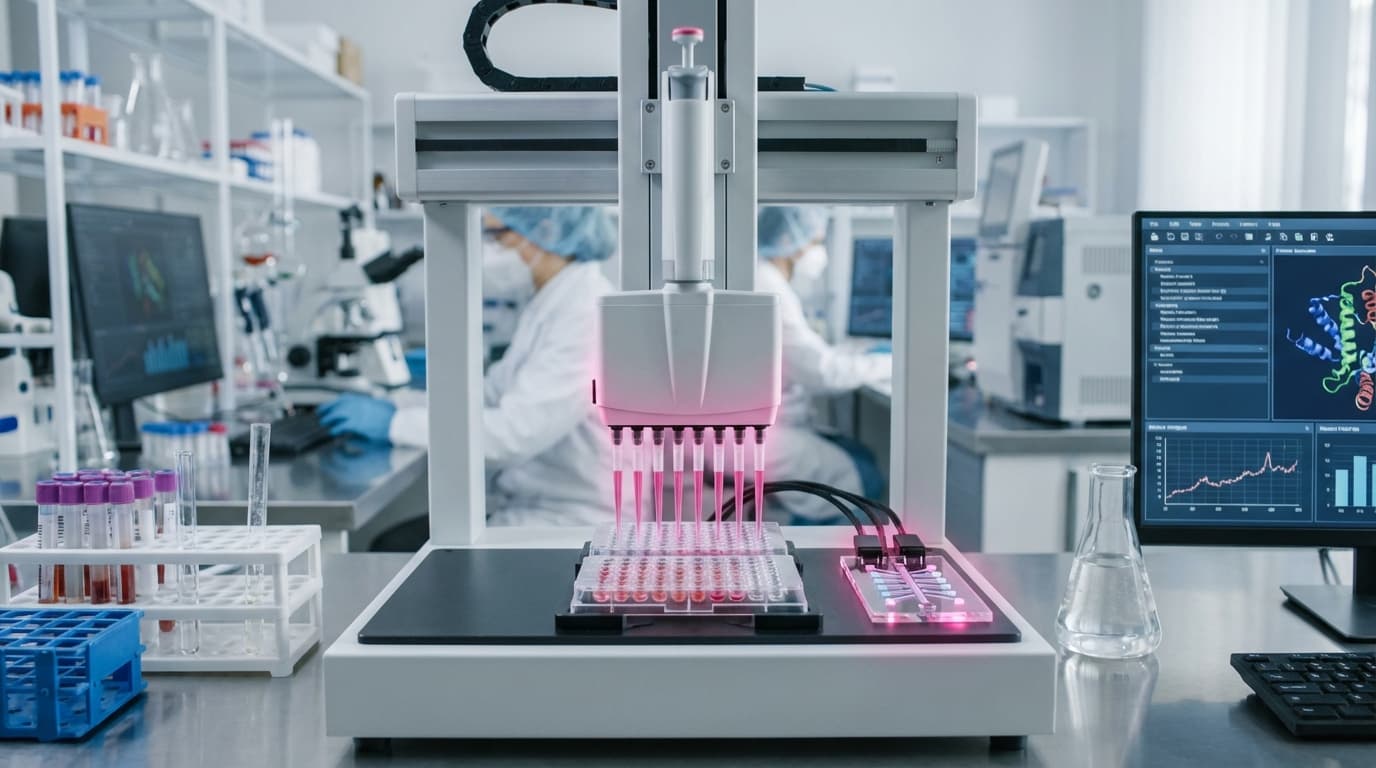
AI-Accelerated Protein & Cell Engineering
AI-accelerated protein and cell engineering uses high-fidelity generative AI models to enable de novo protein design (creating entirely new proteins with desired functions), predict cell behavior, and rewire biological pathways like cellular senescence. These AI systems use reinforcement learning and other advanced techniques to optimize complex biological parameters including cell culture conditions or gene therapy vector designs, dramatically accelerating the engineering of novel biological components that would be difficult or impossible to design manually. Companies like Generate Biomedicines, Cradle, and research institutions are developing these capabilities.
This innovation addresses the complexity of biological engineering, where designing proteins or optimizing cell behavior requires understanding vast design spaces that are difficult to explore experimentally. By using AI to explore these spaces computationally, these systems can identify optimal designs much faster than traditional approaches. The technology is being applied to drug discovery, enzyme engineering, and cell therapy development.
The technology is transforming biological engineering, enabling the creation of proteins and cells with novel functions that weren't possible before. As the technology improves, it could enable new classes of therapeutics and engineered biological systems. However, ensuring designs work in practice, validating AI predictions, and integrating with experimental workflows remain challenges. The technology represents a major advance in biological engineering capabilities, but requires continued development to achieve the reliability needed for widespread use. Success could enable new classes of therapeutics and engineered biological systems, dramatically expanding what's possible in biotechnology, but the path from AI-designed components to functional products requires careful validation and integration.
Related Organizations

Academic hub at the University of Washington led by David Baker, creating tools like RosettaFold and RFdiffusion.

Uses generative AI to create de novo protein therapeutics across multiple modalities.

Uses generative AI to help biologists design improved proteins and accelerate R&D pipelines.

Developing Large Language Models (LLMs) trained on protein sequences to design functional proteins.

A generative AI drug creation company focused on creating de novo antibodies.

A horizontal platform for cell programming that enables other companies to develop precision fermentation strains.
United States · Company
Designing safer, more effective antibody therapies using AI/ML.
United States · Startup
A biotechnology company applying AI to gene therapy to design improved AAV capsids with greater functionality.
Supporting Evidence
Research this in Signals
Signals turns a topic into a sourced research record you can inspect and rerun. Your first scan is free, and this one starts with AI-Accelerated Protein & Cell Engineering already loaded, so edit it or scan as is.