


AI for protein folding
Protein Structure Prediction AI
AlphaFold-class models using multimodal data to predict folding and stability.
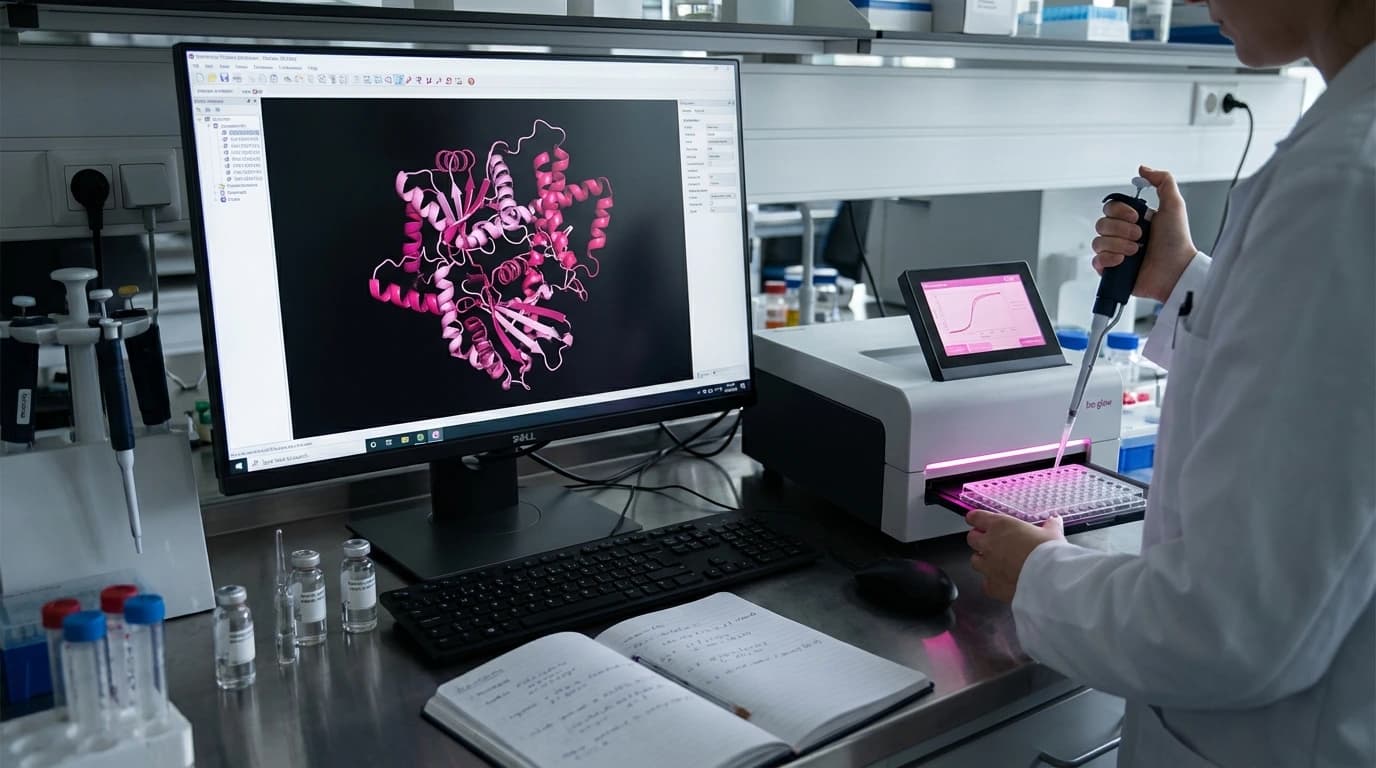
Protein structure prediction AI uses foundation models like AlphaFold that are trained on multimodal data including cryo-electron microscopy (cryo-EM), nuclear magnetic resonance (NMR) spectroscopy, and mutational scanning experiments to predict protein three-dimensional structures, conformations, binding affinities, and stability. These AI systems can predict how proteins fold, how they interact with other molecules, and how mutations affect their structure and function, with outputs feeding into antibody discovery, enzyme engineering, and protein degrader design pipelines at unprecedented speed, dramatically accelerating drug discovery and protein engineering.
This innovation addresses the fundamental challenge in biology where determining protein structures experimentally is slow, expensive, and often difficult, limiting our ability to understand protein function and design therapeutics. By accurately predicting protein structures computationally, these AI systems enable rapid exploration of protein design space and drug discovery, where understanding structure is essential for designing effective therapeutics. Companies like DeepMind (AlphaFold), Meta (ESMFold), and various biotech firms are using these models to accelerate research and development.
The technology is transforming drug discovery and protein engineering, where structure prediction enables rational design of therapeutics and enzymes. As the models improve and become more accurate, they could enable new approaches to drug discovery and protein design. However, ensuring accuracy for all protein types, handling dynamic structures, and integrating predictions into design workflows remain challenges. The technology represents a major advance in computational biology, but requires continued development to achieve the accuracy and reliability needed for all applications. Success could dramatically accelerate drug discovery and enable new classes of therapeutics and engineered proteins.
TRL
7/9Operational
Impact
5/5
Investment
5/5
Category
Software
Related Organizations
Developers of the Gemini family of models, which are trained from the start to be multimodal across text, images, video, and audio.
Developer
A subsidiary of Alphabet applying AI (specifically AlphaFold technology) to reimagine the drug discovery process.
Deployer
OpenFold Consortium
95%United States · Consortium
Non-profit consortium for open-source protein modeling.
Developer
Provides a physics-based computational platform for drug discovery and materials science.
Developer
Developing foundation models for robotics (Project GR00T) and vision-language models like VILA.
Developer
Tencent
80%China · Company
Global tech giant that implemented the 'Midnight Patrol' facial recognition system to enforce curfew regulations.
Developer
What was expected
Published forecasts about this technology, graded against what happened in Hindsight.
Protein Folding
AI-Driven Molecular Modeling
This page is a narrower case of it.
Supporting Evidence
Evidence data is not available for this technology yet.
Research this in Signals
Scan Protein Structure Prediction AI for yourself.
Signals turns a topic into a sourced research record you can inspect and rerun. Your first scan is free, and this one starts with Protein Structure Prediction AI already loaded, so edit it or scan as is.