Last-Mile Drone Delivery
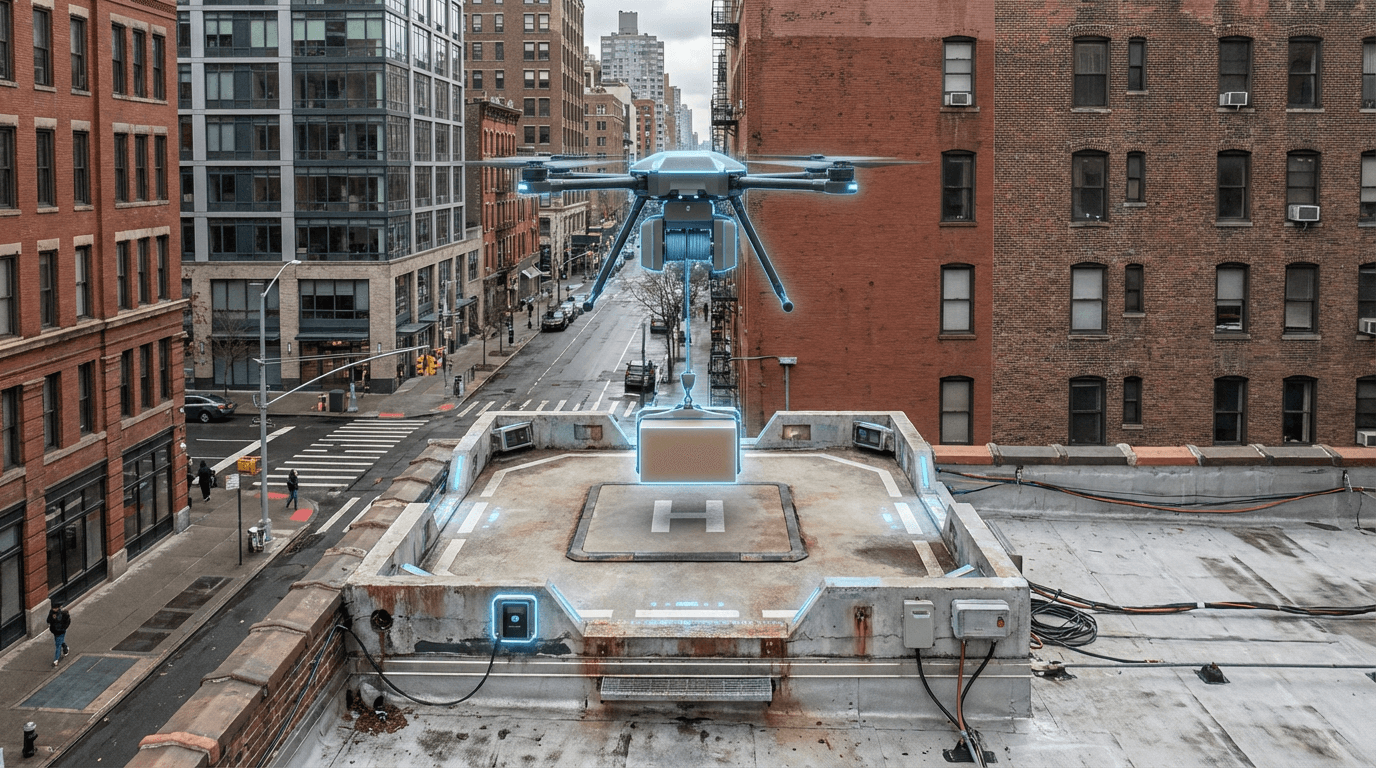
Last-mile drone delivery represents a fundamental shift in how goods move through the final leg of the supply chain, utilizing autonomous aerial vehicles to transport packages directly from distribution centers to end consumers. These systems employ sophisticated navigation technologies, including GPS, computer vision, and obstacle avoidance sensors, to safely navigate urban airspace and precisely locate delivery destinations. Modern delivery drones typically feature vertical takeoff and landing (VTOL) capabilities, allowing them to operate without dedicated runways, while onboard flight control systems manage route optimization, weather adaptation, and battery consumption in real-time. The aircraft themselves range from small quadcopters capable of carrying packages up to several kilograms to larger fixed-wing designs that can cover extended distances, with most commercial systems incorporating redundant safety features such as multiple rotors, parachute deployment mechanisms, and geofencing to prevent unauthorized flight zones.
The logistics industry faces mounting pressure from the dual challenges of rising consumer expectations for rapid delivery and increasing urban congestion that slows traditional ground-based transport. Last-mile delivery—the final step from distribution hub to doorstep—accounts for a disproportionate share of total shipping costs, often representing 40-50% of overall logistics expenses while contributing significantly to urban traffic and emissions. Drone delivery addresses these challenges by creating an entirely new transportation layer that operates independently of road infrastructure, potentially reducing delivery times from hours to minutes while lowering per-package costs at scale. This capability proves particularly valuable in scenarios where traditional delivery faces inherent limitations: remote or rural areas with sparse road networks, urgent medical deliveries requiring immediate transport of blood samples or medications, and disaster response situations where ground routes may be compromised. The technology also enables new business models, such as on-demand delivery of restaurant meals, retail items, or emergency supplies, that were previously economically unviable due to the high cost of dedicated courier services.
Several major logistics providers and technology companies have progressed beyond pilot programs to limited commercial operations in select markets, with regulatory frameworks gradually evolving to accommodate routine drone flights. Early deployments have focused on controlled environments such as hospital campuses for medical supply transport, rural communities with challenging terrain, and suburban areas with lower population density where airspace management complexity remains manageable. However, the path to widespread urban deployment requires continued advancement in several critical areas: battery technology to extend flight range and payload capacity, acoustic engineering to minimize noise pollution in residential areas, and sophisticated air traffic management systems capable of coordinating thousands of simultaneous flights safely. Industry analysts note that the integration of drone delivery with existing logistics networks, rather than wholesale replacement of ground transport, represents the most likely near-term trajectory, with aerial systems handling time-sensitive or hard-to-reach deliveries while traditional vehicles continue to manage bulk shipments and dense urban routes.
Related Organizations

Alphabet subsidiary developing an autonomous delivery drone service and an unmanned traffic management (UTM) platform.

Operates the world's largest autonomous drone delivery network, specializing in medical supplies and e-commerce delivery.

Developer of autonomous drone logistics systems for healthcare and e-commerce, with FAA Type Certification.

Provides drone flight services and technology, serving as a primary partner for Walmart's drone delivery network.
Operates a drone delivery fleet in Ireland and expanding to the US, delivering food and pharmacy items.

Specializes in direct-to-backyard food and retail delivery via drone.


Australian drone logistics company focused on essential health supplies.

The drone delivery division of the Japanese e-commerce giant Rakuten.

Provider of drone delivery services and vertiport infrastructure.
Supporting Evidence
Research this in Signals
Signals turns a topic into a sourced research record you can inspect and rerun. Your first scan is free, and this one starts with Last-Mile Drone Delivery already loaded, so edit it or scan as is.