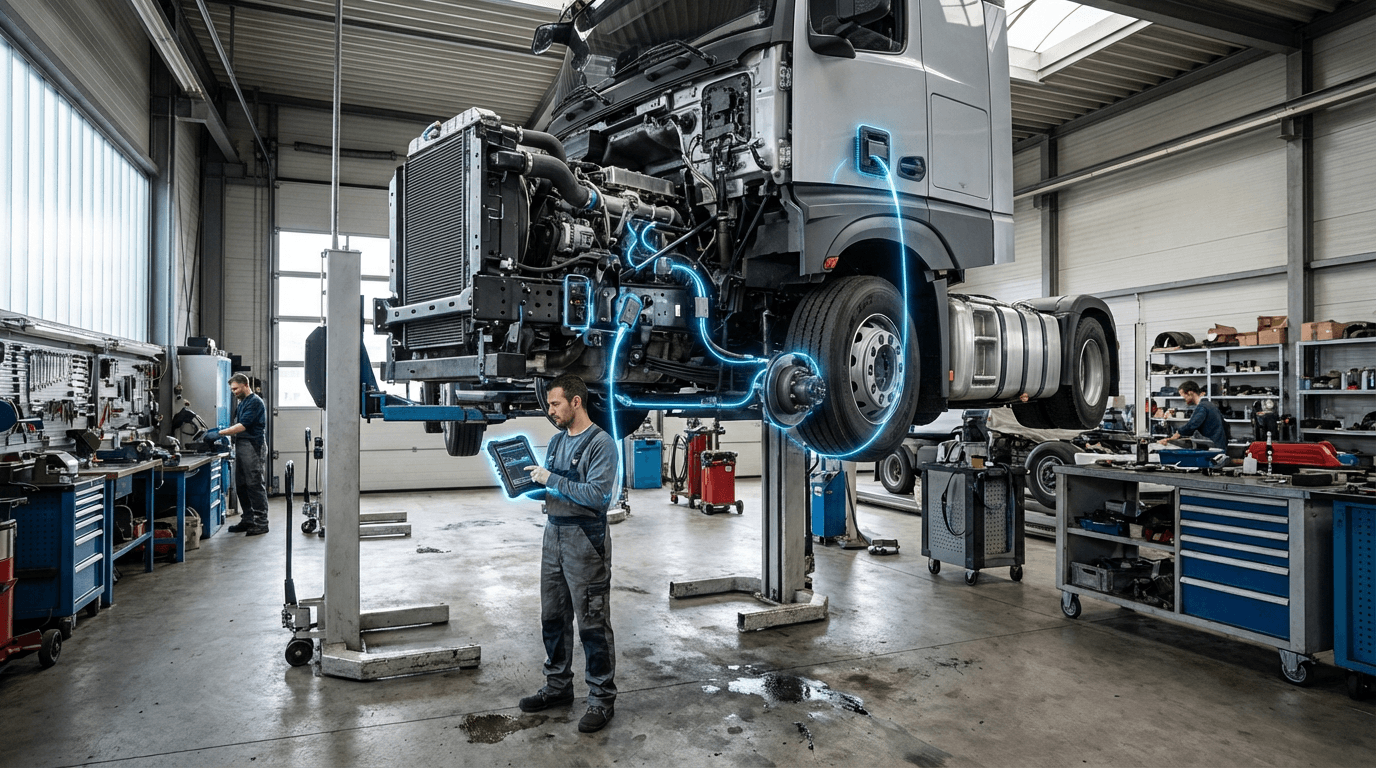
Predictive Fleet Maintenance
Predictive fleet maintenance represents a fundamental shift from reactive or time-based maintenance strategies to a data-driven approach that anticipates equipment failures before they occur. This technology leverages artificial intelligence and machine learning algorithms to continuously monitor and analyze vast streams of sensor data from vehicles and vessels, including vibration patterns, temperature fluctuations, oil quality, engine performance metrics, tire pressure, brake wear, and dozens of other parameters. Advanced analytics platforms process this real-time diagnostic information alongside historical maintenance records, operating conditions, and usage patterns to identify subtle anomalies that precede component failures. The system employs pattern recognition to detect deviations from normal operating parameters that human inspectors might miss, creating predictive models that can forecast when specific parts—from transmission systems to hydraulic components—are likely to fail within defined time windows.
The logistics and transportation industries face enormous challenges from unplanned vehicle downtime, which can cascade through supply chains, disrupting delivery schedules, damaging customer relationships, and generating substantial costs. Traditional preventive maintenance approaches either service components too early, wasting functional life and resources, or too late, risking catastrophic failures. Predictive maintenance solves this optimization problem by enabling just-in-time servicing based on actual component condition rather than arbitrary schedules or mileage intervals. For fleet operators managing hundreds or thousands of vehicles across vast geographic areas, this technology transforms maintenance from a cost center into a strategic advantage. It allows companies to schedule repairs during planned downtime, optimize parts inventory by forecasting demand more accurately, and allocate maintenance resources more efficiently. The technology also addresses the growing complexity of modern commercial vehicles, which contain increasingly sophisticated electronic and mechanical systems that require specialized diagnostic capabilities beyond traditional mechanic expertise.
Early adopters in long-haul trucking, maritime shipping, and last-mile delivery have reported significant reductions in unplanned breakdowns and maintenance costs, with some operators noting improvements in fleet availability of 15-25 percent. The technology is particularly valuable for high-value assets like refrigerated trailers, where component failure can result not only in repair costs but also in cargo spoilage. As electric and autonomous vehicles enter commercial fleets, predictive maintenance becomes even more critical, as these platforms generate exponentially more sensor data and require new diagnostic approaches for battery systems, electric drivetrains, and autonomous driving hardware. The convergence of predictive maintenance with broader fleet management systems, telematics platforms, and supply chain visibility tools points toward an integrated future where vehicle health monitoring becomes seamlessly embedded in logistics operations, enabling unprecedented levels of reliability and operational efficiency across global transportation networks.
Related Organizations

Industrial AI software that analyzes data from heavy equipment to predict failures and optimize maintenance strategies.

A Digital Twin solution provider for the automotive industry focusing on predictive maintenance.

AI-powered predictive maintenance software for trucking and transit fleets.

A predictive fleet maintenance platform that turns vehicle data into real-time intelligence.

Geotab
Canada · Company
Global leader in connected transportation and telematics.

IoT platform for connected operations, using AI to predict vehicle maintenance needs and improve fleet safety.

The fleet management services division of the global tire manufacturer.

A fleet management platform (formerly KeepTruckin) offering compliance and maintenance tracking.

SparkCognition
United States · Company
Develops AI solutions for industrial applications, including predictive maintenance for energy and manufacturing assets.
Supporting Evidence
Research this in Signals
Signals turns a topic into a sourced research record you can inspect and rerun. Your first scan is free, and this one starts with Predictive Fleet Maintenance already loaded, so edit it or scan as is.