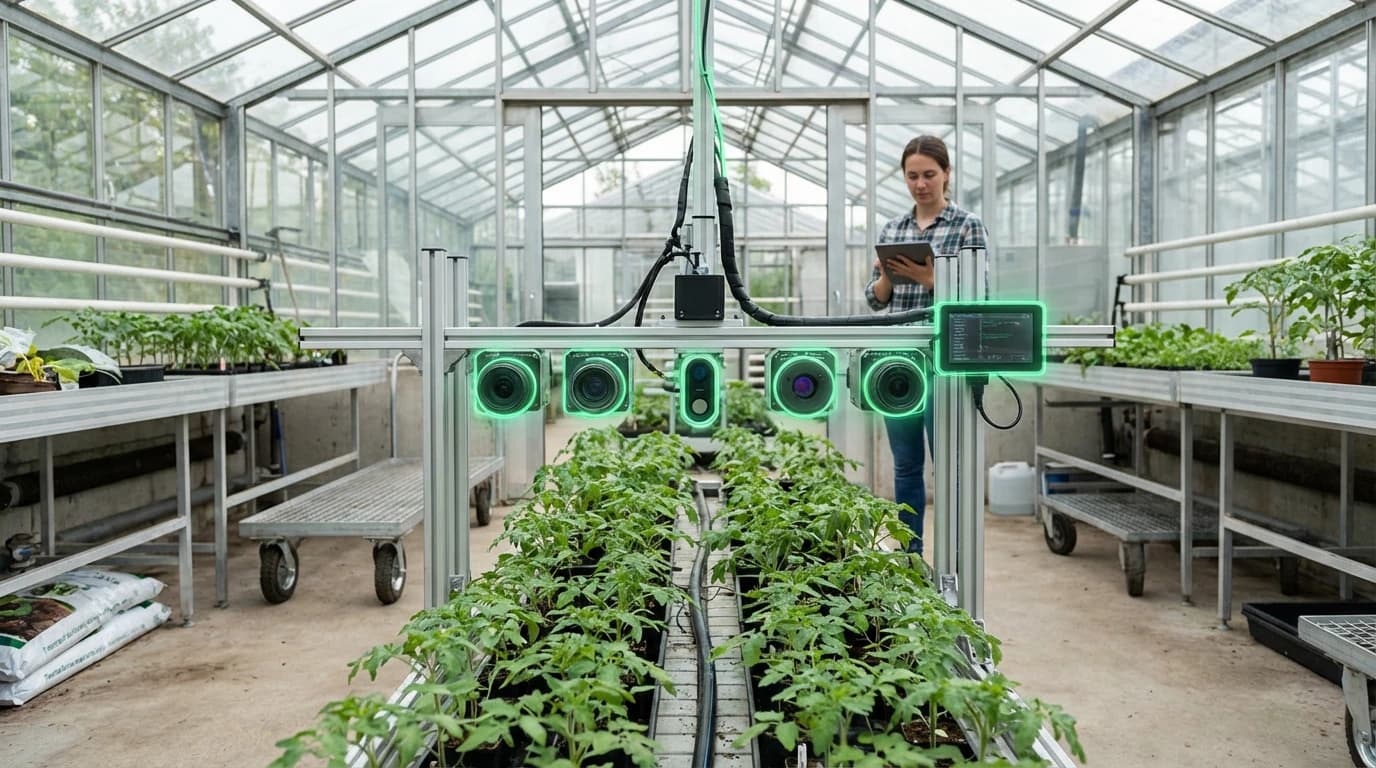
Crop Computer Vision
Crop computer vision represents a convergence of deep learning, remote sensing, and agricultural expertise, enabling automated identification of plant health issues through visual analysis. At its technical foundation, the system employs convolutional neural networks (CNNs) trained on vast datasets of crop imagery to recognize subtle visual patterns indicative of disease, pest damage, nutrient deficiency, or weed presence. These networks process high-resolution images captured by drones, ground-based cameras, or tractor-mounted sensors, analyzing leaf discoloration, growth abnormalities, canopy density variations, and other visual markers that human scouts might miss or detect too late. The models operate through multi-stage analysis: first segmenting individual plants or crop rows from background elements, then classifying health status at the pixel or plant level, and finally generating spatial maps that pinpoint problem areas within fields. Advanced implementations incorporate multispectral or hyperspectral imaging beyond visible light, capturing infrared and near-infrared wavelengths that reveal stress conditions before they become visible to the naked eye.
The agricultural sector faces mounting pressure to increase yields while reducing chemical inputs, a challenge compounded by labor shortages for manual field scouting and the economic unfeasibility of inspecting every plant in large-scale operations. Traditional approaches to pest and disease management often rely on calendar-based spraying or reactive treatment after problems become widespread, leading to overuse of pesticides, fungicides, and herbicides with associated environmental and cost implications. Crop computer vision addresses these limitations by enabling early detection when interventions are most effective and targeted application that treats only affected areas rather than entire fields. This precision approach can reduce agrochemical use by 30-50% according to early field trials, while simultaneously improving crop outcomes by catching problems in their nascent stages. The technology also creates new data streams for agronomic decision-making, allowing farmers to track disease progression patterns, correlate environmental conditions with outbreak risks, and optimize treatment timing based on actual field conditions rather than regional averages.
Commercial deployment of crop computer vision systems has accelerated significantly over the past five years, with both established agricultural technology companies and specialized startups offering solutions ranging from drone-based scouting services to integrated tractor systems that spray as they scan. Research suggests adoption is strongest in high-value crops like vineyards, orchards, and specialty vegetables where the economic return on precision treatment justifies the technology investment, though applications in row crops like corn and soybeans are expanding as costs decline. The technology integrates naturally with broader precision agriculture trends, feeding detection data into farm management platforms that coordinate irrigation, fertilization, and harvest planning. Looking forward, industry analysts note that crop computer vision is evolving toward predictive capabilities, using historical imagery and environmental data to forecast disease outbreaks before symptoms appear, and toward autonomous systems where detection and treatment occur in a single pass without human intervention. As climate change increases pest pressure and regulatory frameworks tighten restrictions on agrochemical use, computer vision-based crop monitoring represents a critical pathway toward sustainable intensification of food production.
Related Organizations

Subsidiary of John Deere, developing 'See & Spray' technology that identifies weeds and diseases in real-time.

Produces the Autonomous LaserWeeder, which uses AI and lasers to eliminate weeds without chemicals.

Develops selective spraying systems that use cameras and GPU processing to identify and spray weeds in real-time while sparing crops.

Produces ultra-high precision sprayers (ARA) that use AI to target individual weeds.

Builds autonomous mechanical weeders (Vulcan) powered by AI and computer vision.

A mobile app that allows farmers to take photos of crops to instantly diagnose diseases and pests using image recognition.

Operates 'Community Notes' (formerly Birdwatch), the most prominent collaborative verification system at scale.
An industrial computer vision company connecting plants, people, and facilities through an AI platform called LUNA.

Uses computer vision for post-harvest quality assessment, grading fruits and vegetables via smartphone apps and sorting machinery.

Uses sub-millimeter aerial imagery and AI to detect crop diseases and pests at leaf-level resolution.

Robotics company offering 'Sharpshooter' technology for farming.

An AI-based precision agriculture platform that provides automated alerts for disease and pest spread.

Manufactures the Smart Cultivator, a software-defined implement that uses vision to mechanically remove weeds in row crops.

Tomra Systems
Norway · Company
Global leader in sensor-based sorting machines for the food industry, using advanced camera and laser vision to grade and sort produce.
Supporting Evidence
Research this in Signals
Signals turns a topic into a sourced research record you can inspect and rerun. Your first scan is free, and this one starts with Crop Computer Vision already loaded, so edit it or scan as is.