Hyperspectral Imaging Sensors
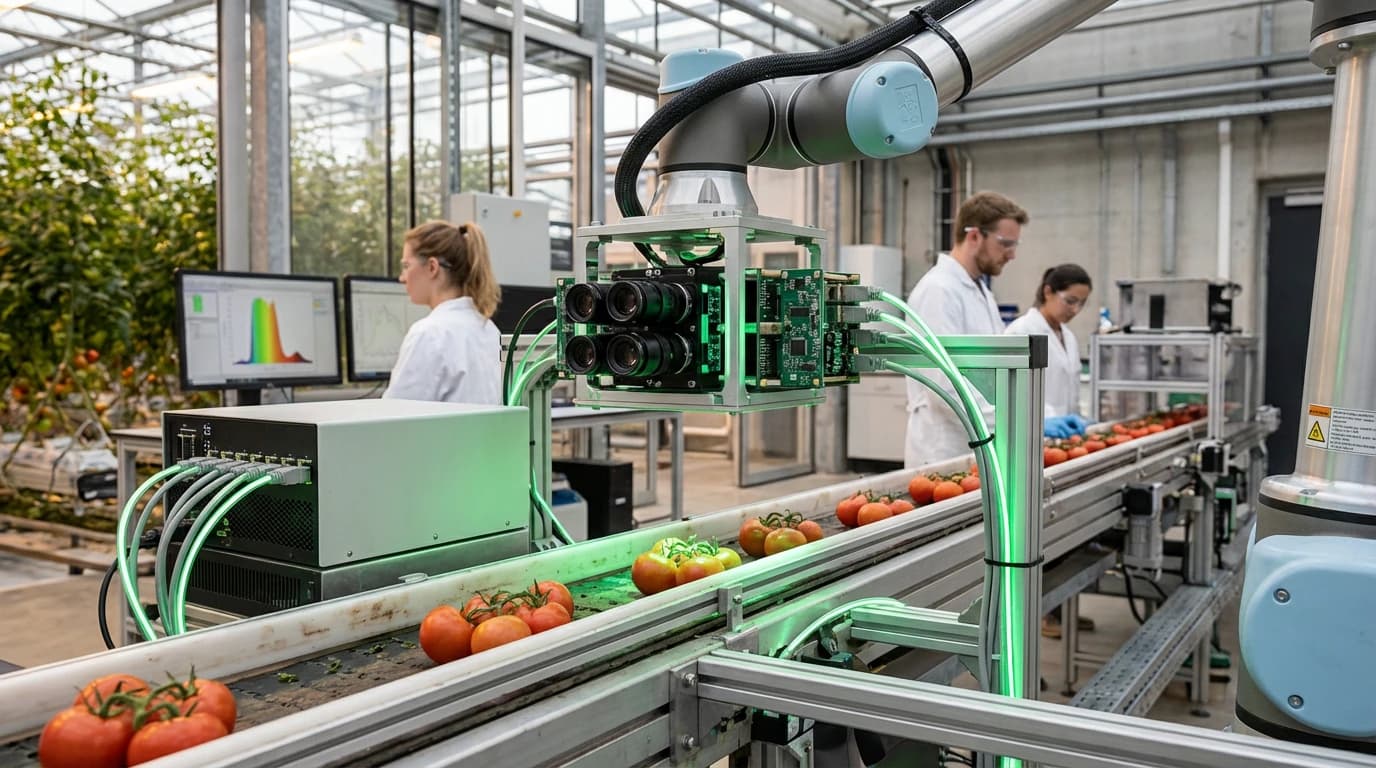
Hyperspectral imaging sensors represent an advanced optical technology that captures and processes information across a wide range of electromagnetic wavelengths, far beyond what the human eye can perceive. Unlike conventional cameras that record only red, green, and blue light, these sensors collect data across hundreds of narrow, contiguous spectral bands spanning from ultraviolet through visible light and into the near-infrared spectrum. Each pixel in a hyperspectral image contains a complete spectrum, creating what researchers call a "spectral signature" unique to different materials and substances. This capability allows the technology to detect subtle variations in chemical composition, moisture content, and structural properties that would be invisible to standard imaging systems. The sensors work by splitting incoming light into its component wavelengths using diffraction gratings or tunable filters, then analyzing how different materials absorb, reflect, or transmit light at specific frequencies—a principle that reveals the molecular makeup of the scanned object without any physical contact or destructive testing.
In agricultural and food processing environments, hyperspectral imaging addresses critical challenges related to quality control, food safety, and waste reduction. Traditional inspection methods often rely on visual assessment by human operators or destructive sampling that can only evaluate a small fraction of products. These approaches struggle to detect internal defects, early-stage spoilage, or contamination that isn't visible on the surface. Hyperspectral sensors overcome these limitations by enabling real-time, non-destructive analysis of every item on a processing line. The technology can identify bruising beneath fruit skin, detect foreign materials like plastic or metal fragments that share similar colors with food products, measure protein or fat content in meat, assess ripeness levels, and even identify pathogen presence through characteristic spectral patterns. This capability transforms quality assurance from a sampling-based process into comprehensive inspection, reducing the risk of contaminated products reaching consumers while minimizing unnecessary waste from overly cautious rejection criteria.
Research institutions and food processing facilities have begun deploying hyperspectral systems for applications ranging from grain sorting to poultry inspection, with early implementations demonstrating significant improvements in detection accuracy compared to conventional methods. In fresh produce handling, the technology enables sorting based on internal sugar content or firmness rather than external appearance alone, potentially reducing post-harvest losses and improving consumer satisfaction. The agricultural sector is exploring field-based hyperspectral systems mounted on drones or tractors to assess crop health, nutrient deficiencies, and disease presence before harvest. As processing speeds increase and system costs decline, industry analysts note growing interest in integrating these sensors into automated sorting lines and robotic handling systems. The convergence of hyperspectral imaging with machine learning algorithms promises even greater capabilities, as trained models can recognize increasingly subtle patterns associated with quality parameters. This trajectory suggests that comprehensive spectral analysis may become standard practice in food supply chains, supporting both enhanced safety protocols and more efficient resource utilization as the technology matures from specialized research tool to mainstream quality control infrastructure.
Related Organizations

Manufacturer of the HySpex line of high-performance hyperspectral cameras used extensively in agricultural research and industrial food sorting.

Develops the Smart Imaging System, a hyperspectral solution specifically designed for food processing to detect foreign objects and quality issues in meat and produce.
A global leader in hyperspectral imaging instrumentation and systems, now part of Konica Minolta.

Develops food sorting and monitoring systems (Sherlock line) based on Chemical Imaging Technology (CIT), a form of hyperspectral imaging.

Fraunhofer Institute of Optronics, System Technologies and Image Exploitation.

Develops user-oriented hyperspectral imaging solutions specifically for plant breeding, farming, and food quality.

Designs and manufactures high-performance hyperspectral imaging systems for remote sensing and industrial machine vision.

A Duravant company that manufactures digital sorting systems (VERYX) incorporating hyperspectral sensors for food safety.

Manufactures hyperspectral imaging cameras and systems for laboratory, outdoor, and airborne applications.

Develops compact scientific and industrial cameras, including hyperspectral models using imec sensors.

Silicon Valley-based company manufacturing handheld and airborne hyperspectral imagers for agricultural crop analysis.

Specializes in industrial imaging and sensor technology, including hyperspectral classification systems for food sorting and recycling.

Manufactures industrial hyperspectral imaging systems (RedEye) used for recycling and food sorting applications.

Innovator in materials science, specifically glass and ceramics.


Utilizes hyperspectral imaging and AI to detect crop stress and disease before it is visible to the human eye.

Develops intelligent hyperspectral imaging solutions that combine hardware with embedded logic to classify materials in real-time.

Part of Patria Group, Senop develops lightweight hyperspectral cameras for UAVs used in precision agriculture.

Develops miniaturized spectral sensing solutions for mobile devices, enabling consumer-grade food freshness scanning.

TOMRA Food
Norway · Company
A global leader in sensor-based sorting machines that integrates hyperspectral technology to grade food by biological characteristics.

Industrial plant equipment manufacturer that provides complete processing lines for insect protein.

A spin-out from the University of Strathclyde providing hyperspectral imaging systems for food quality and authentication.

Conducts advanced research into cryogenic CMOS and quantum computing interconnects.

Manufactures hyperspectral imaging systems for material science and life sciences.

Develops tunable Fabry-Perot filters (MEMS) that turn standard cameras into hyperspectral sensors.
Supporting Evidence
Research this in Signals
Signals turns a topic into a sourced research record you can inspect and rerun. Your first scan is free, and this one starts with Hyperspectral Imaging Sensors already loaded, so edit it or scan as is.