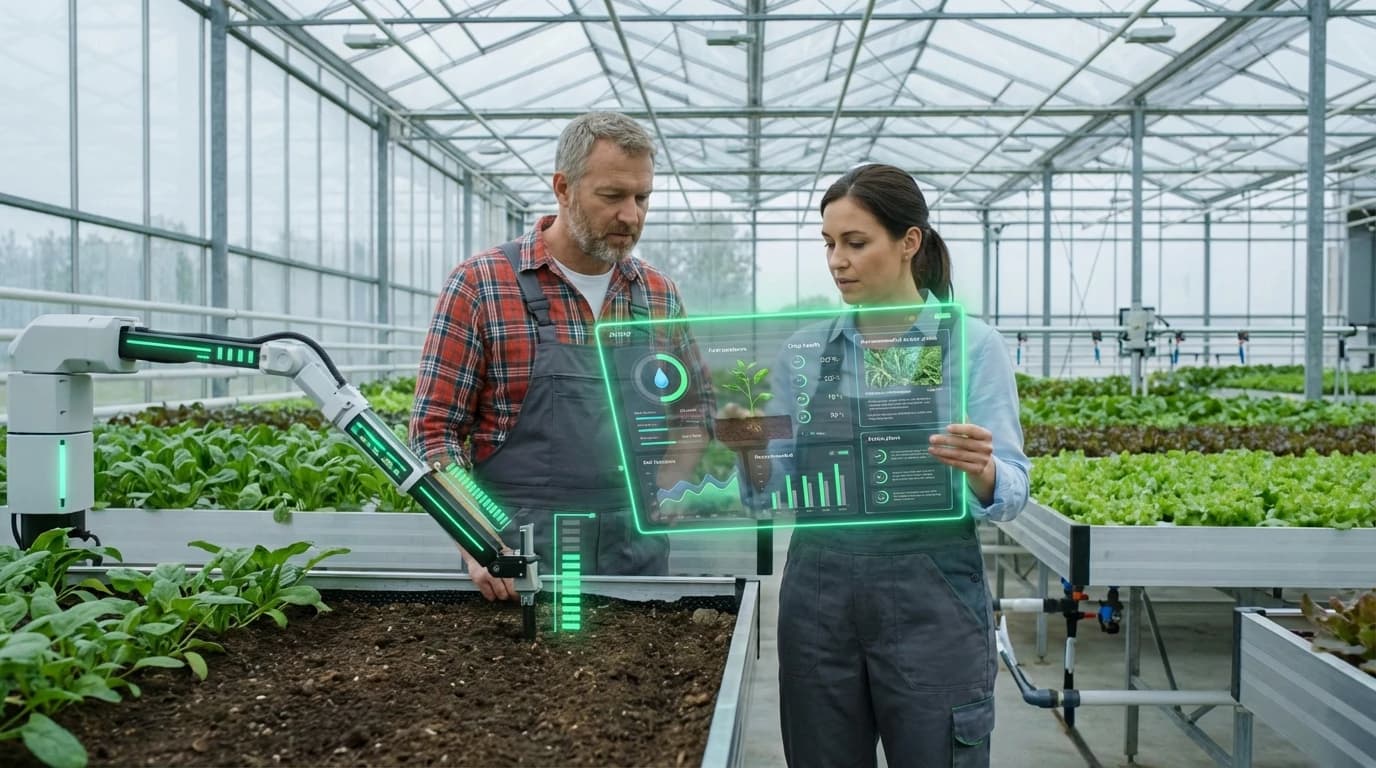
Agronomy Decision Support AI
Agronomy Decision Support AI represents a sophisticated class of recommendation engines that synthesize multiple data streams to guide agricultural input and management decisions. These systems integrate satellite and drone-based remote sensing imagery, on-farm sensor networks, historical yield data, soil composition analyses, and weather forecasts into unified analytical frameworks. Machine learning algorithms process this heterogeneous information to identify patterns between management practices and outcomes, building predictive models that account for local soil conditions, microclimates, crop varieties, and farming systems. The technical architecture typically combines computer vision for crop health assessment, time-series analysis for phenological tracking, and optimization algorithms that balance competing objectives across agronomic, economic, and environmental dimensions. Unlike static agronomic guidelines, these systems continuously refine their recommendations as new data accumulates, creating feedback loops that improve precision over successive growing seasons.
The fundamental challenge these tools address is the overwhelming complexity of modern agronomic decision-making, where farmers must optimize dozens of interrelated variables—from seed selection and planting density to fertilizer timing and pest management strategies—while navigating volatile weather patterns, fluctuating input costs, and tightening environmental regulations. Traditional extension services and generic crop management guides cannot account for the field-level variability that significantly impacts outcomes, often leading to over-application of inputs that erodes profitability while contributing to nutrient runoff and greenhouse gas emissions. Decision support AI enables a shift from calendar-based or intuition-driven practices toward evidence-based precision agriculture, where recommendations adapt to real-time conditions and site-specific characteristics. This capability is particularly valuable for addressing the dual pressures of increasing food production while reducing agriculture's environmental footprint, as the systems can identify management strategies that maintain or improve yields while minimizing synthetic inputs, water consumption, and soil degradation.
Early commercial deployments of these systems have emerged across major agricultural regions, with platforms offering subscription-based advisory services that deliver recommendations through mobile applications and farm management software. Research indicates that adoption is strongest among medium-to-large operations with existing digital infrastructure, though simplified versions are increasingly accessible to smallholder farmers through partnerships with agricultural cooperatives and government extension programs. Current applications span nitrogen management optimization, irrigation scheduling, disease risk forecasting, and harvest timing recommendations, with some systems beginning to incorporate carbon accounting and regenerative practice guidance. As climate variability intensifies and regulatory frameworks increasingly reward sustainable practices, agronomy decision support AI is positioned to become essential infrastructure for the agricultural sector, evolving from optional productivity tools into critical systems for managing risk, ensuring food security, and achieving environmental compliance targets across diverse farming contexts.
Related Organizations

A global agrochemical giant heavily investing in biocontrols, including RNA-based solutions for pest management.

The Climate Corporation (Bayer)
United States · Company
Develops Climate FieldView, the leading digital agriculture platform that uses AI to analyze field data and provide planting and fertility recommendations.

A global crop nutrition company and a provider of environmental solutions.

Major agricultural chemical and seed company holding significant CRISPR-Cas9 intellectual property for crop improvement.

A precision agriculture platform for permanent crops that deploys sensor networks (including camera/trap modules) to monitor pests.

A top-tier university for agricultural research, specifically in greenhouse and vertical farming innovation.

A full-stack agricultural technology platform in India providing AI-enabled advisory services to millions of smallholder farmers.

Provides a farm management system integrated with proprietary soil sensors for moisture, temperature, and EC.
xarvio (BASF)
Germany · Company
BASF's digital farming brand offering field manager tools that optimize crop protection and seeding rates.

Develops MRV (Measurement, Reporting, and Verification) software for agriculture, modeling soil carbon sequestration and GHG emissions at the field level.

Creator of the Arable Mark, an in-field device that collects weather, plant health, and soil moisture data simultaneously.

Provides aerial spectral imagery analytics to detect irrigation issues and disease pressure.

A farmer-to-farmer network that aggregates agronomic and pricing data to provide analytics and transparency back to its members.

Through Copilot and the 'Recall' feature in Windows, Microsoft is integrating persistent memory and agentic capabilities directly into the operating system.

Utilizes hyperspectral imaging and AI to detect crop stress and disease before it is visible to the human eye.
Supporting Evidence
Research this in Signals
Signals turns a topic into a sourced research record you can inspect and rerun. Your first scan is free, and this one starts with Agronomy Decision Support AI already loaded, so edit it or scan as is.