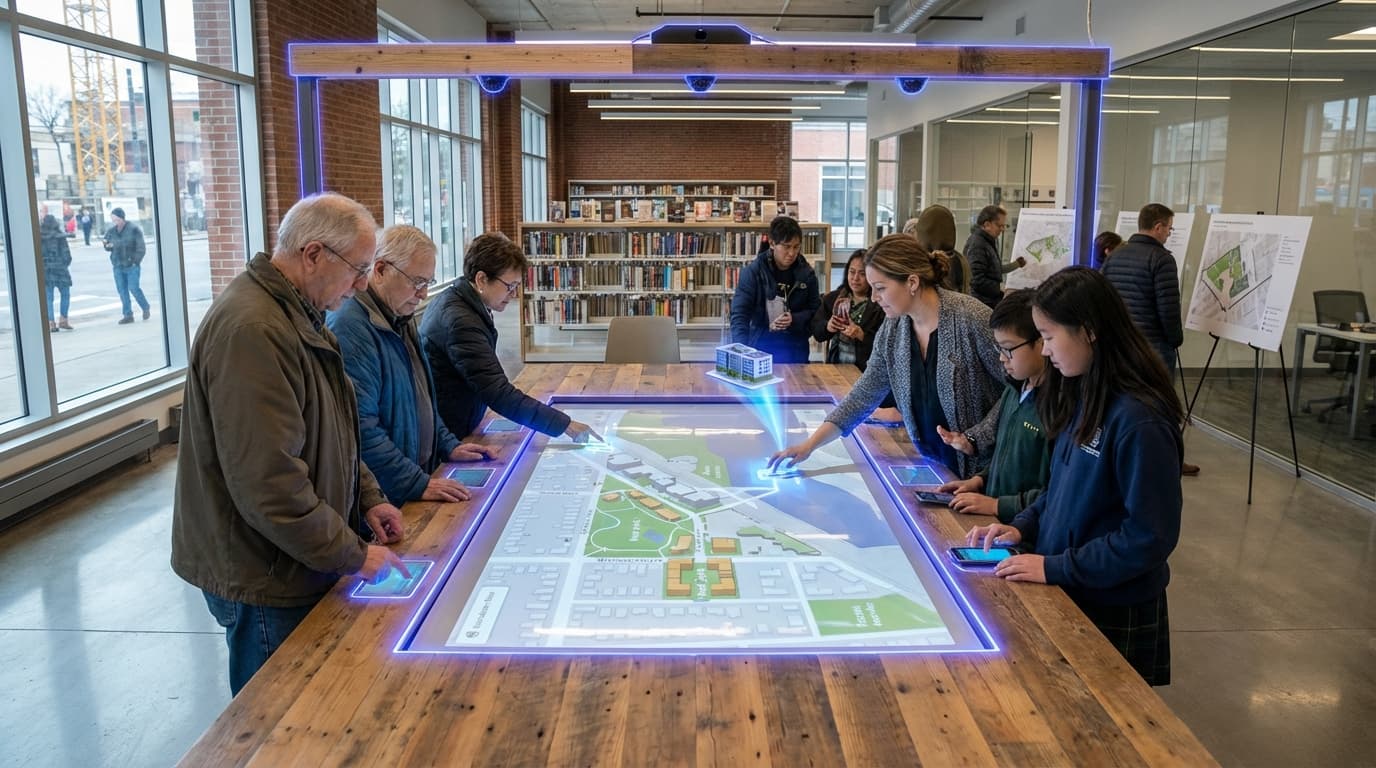
Participatory Planning Platforms
Urban planning has traditionally been a top-down process, with decisions made by experts and officials often disconnected from the communities they affect. This approach frequently results in projects that fail to address local needs, face public opposition, or exacerbate existing inequalities. Participatory Planning Platforms emerge as a response to these challenges, leveraging digital technology to democratize the planning process and bridge the gap between professional planners and the communities they serve. These platforms combine interactive visualization tools, survey mechanisms, and deliberation features to create structured channels for community input on spatial development decisions. By integrating geographic information systems, 3D modeling, and increasingly augmented reality capabilities, they transform abstract planning documents into accessible, visual experiences that residents can meaningfully engage with regardless of technical expertise.
The core value of these platforms lies in their ability to scale genuine participation beyond traditional public hearings, which often attract only the most vocal or privileged community members. Through web and mobile interfaces, residents can explore proposed developments in their neighborhoods, understand trade-offs between different design options, and contribute ideas at times and in formats that suit their schedules and communication preferences. Advanced implementations connect with urban digital twins, allowing users to see how proposed changes would affect traffic patterns, sunlight access, green space distribution, or other quality-of-life factors in real time. This transparency helps surface concerns early in the planning process when modifications are still feasible and cost-effective, rather than after significant resources have been committed. The platforms also create documented records of community priorities and concerns, providing planners with richer data than traditional consultation methods while helping ensure that diverse voices—including those historically marginalized in planning processes—can influence outcomes.
Cities across various contexts are deploying these tools with varying degrees of sophistication. Some municipalities use relatively simple platforms for gathering feedback on specific projects, while others have integrated participatory planning into comprehensive digital governance strategies. Research suggests that when properly designed and supported by genuine commitment to incorporating community input, these platforms can improve both the technical quality of plans and their social legitimacy. However, challenges remain around digital access, ensuring representative participation rather than amplifying already-powerful voices, and translating online engagement into actual influence over decisions. As urban populations grow more diverse and expectations for transparency increase, participatory planning platforms represent an important evolution in how cities balance expert knowledge with local wisdom, potentially fostering development that better reflects community values while maintaining technical rigor and long-term sustainability considerations.
Related Organizations

A digital community engagement platform used by local governments to consult citizens.

A free open-source participatory democracy framework for cities and organizations.

Community engagement platform for map-based surveys and participatory planning.

A digital engagement platform for cities and developers to connect with the community about planning and development.

A platform that helps civic organizations collaborate with residents on the future of their communities.

A community engagement platform offering mapping tools, surveys, and forums for public consultation.

Provides cloud-based software for government communications, meeting management, and digital services.

An online engagement platform specifically designed for planning documents and interactive feedback.

The United Nations programme for human settlements and sustainable urban development.

Provides an urban intelligence platform that analyzes data to assist governments and utilities in planning for climate, energy, and community resilience.
Supporting Evidence
Research this in Signals
Signals turns a topic into a sourced research record you can inspect and rerun. Your first scan is free, and this one starts with Participatory Planning Platforms already loaded, so edit it or scan as is.