Resident Community Engagement Platforms
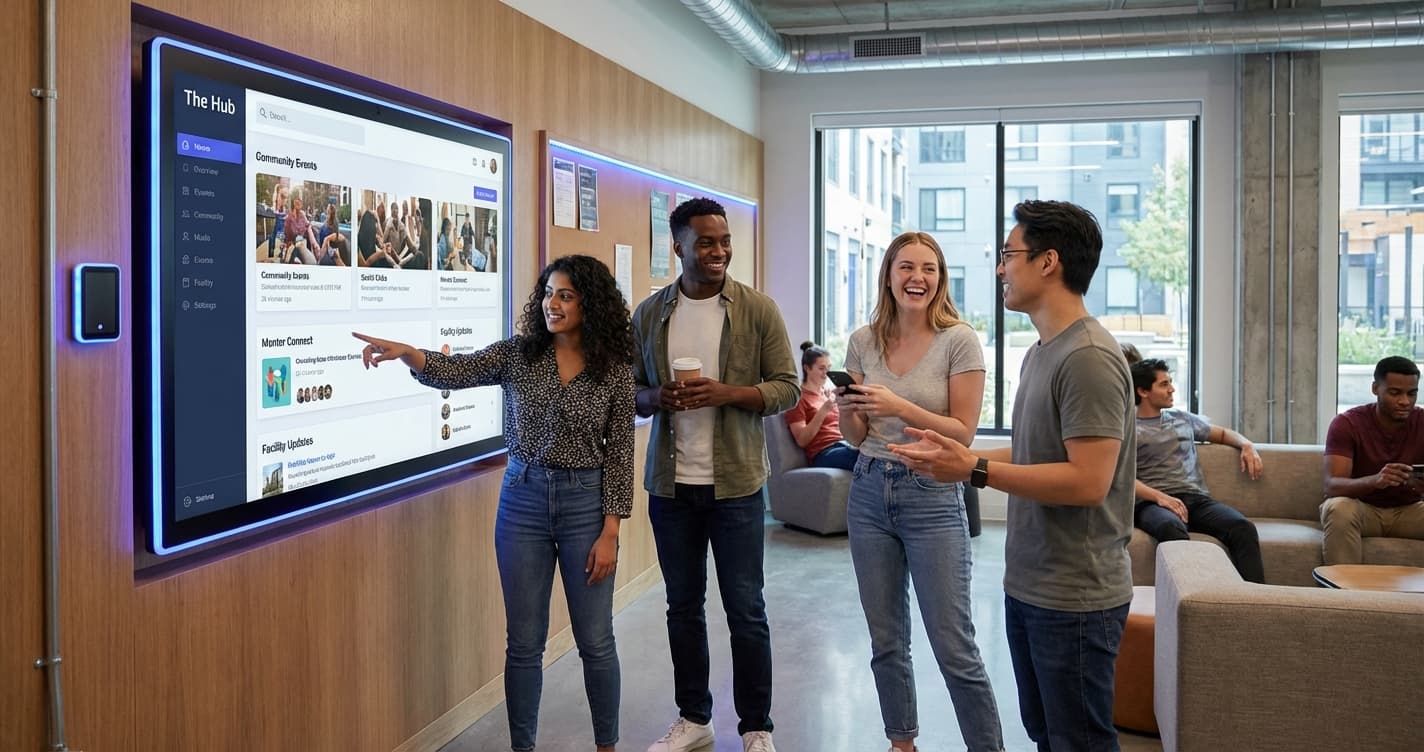
The challenge of social isolation in modern urban housing, particularly among students and young professionals, has become increasingly pronounced as cities grow denser and traditional community bonds weaken. Resident Community Engagement Platforms address this fundamental disconnect by transforming residential buildings from mere accommodation into active social ecosystems. These digital solutions operate through web and mobile applications that serve as central hubs for community interaction, typically integrating features such as event calendars, interest-based groups, resident directories with opt-in profiles, and communication channels. The underlying architecture combines user management systems with activity tracking algorithms that can identify common interests, suggest connections between residents, and facilitate both spontaneous and organised social interactions. Many platforms incorporate gamification elements, rewarding participation with points or recognition, while others use matching algorithms similar to professional networking tools to connect residents based on shared interests, career goals, or academic pursuits. The technical foundation enables property managers and resident leaders to coordinate activities, broadcast announcements, and gather feedback, creating a bidirectional flow of information that keeps communities informed and engaged.
The property management and student housing industries face persistent challenges around resident satisfaction, retention rates, and the commoditisation of living spaces in competitive urban markets. Traditional approaches to community building—bulletin boards, occasional social events, or resident assistant programs—often fail to achieve meaningful engagement in an era where digital communication dominates social interaction. Resident Community Engagement Platforms solve these problems by providing scalable, measurable tools for fostering genuine connections. Property operators can track engagement metrics, identify isolated residents who might benefit from outreach, and demonstrate the value proposition of their communities beyond physical amenities. For student housing providers, these platforms support academic success by facilitating study groups and peer mentoring, while young professional housing operators leverage them to create networking opportunities that enhance career development. The business model implications are significant: properties with active community platforms report higher renewal rates, can command premium rents, and differentiate themselves in saturated markets. Furthermore, these systems reduce the operational burden on community managers by automating event promotion, RSVP tracking, and feedback collection, allowing staff to focus on high-value personal interactions rather than administrative tasks.
Early adopters in the purpose-built student accommodation sector and co-living spaces have demonstrated the viability of these platforms, with several operators now considering community engagement capabilities as essential infrastructure rather than optional amenities. Deployment scenarios range from single-building implementations to portfolio-wide networks that enable residents to connect across multiple properties in different cities, creating extended professional and social networks. Some platforms have evolved to include marketplace features where residents can exchange services, sublet spaces, or coordinate shared resources like vehicles or equipment. The integration of these systems with smart building technologies opens possibilities for seamless event check-ins, space booking, and activity-based access control. As the built environment sector increasingly recognises the importance of social sustainability alongside environmental considerations, community engagement platforms represent a convergence of property technology and social infrastructure. The trajectory suggests these tools will become standard features in new residential developments, particularly as younger generations prioritise community and experience over traditional housing attributes, fundamentally reshaping how we conceive of residential buildings as not just shelter, but as platforms for human connection and collective wellbeing.
Related Organizations

Cobu
United States · Startup
A community engagement platform specifically for apartment buildings to foster resident connections.

Provides a resident engagement platform that acts as a 'digital concierge' and event organizer.

A global leader in student housing software, providing comprehensive solutions for bookings, roommate matching, and resident engagement.

Provides tenant engagement and management software (Spike Student) specifically tailored for the student accommodation market.

Provides specialized software for student accommodation, conferencing, and hospitality management for the higher education sector.
Smart building automation platform that includes a resident app for community messaging and services.
Property technology platform (owned by Global Payments) that includes resident engagement and communication tools.

A long-term student accommodation booking platform that provides management tools for property owners.

The world's largest marketplace for student housing, which also facilitates community connections for international students.
Supporting Evidence
Research this in Signals
Signals turns a topic into a sourced research record you can inspect and rerun. Your first scan is free, and this one starts with Resident Community Engagement Platforms already loaded, so edit it or scan as is.