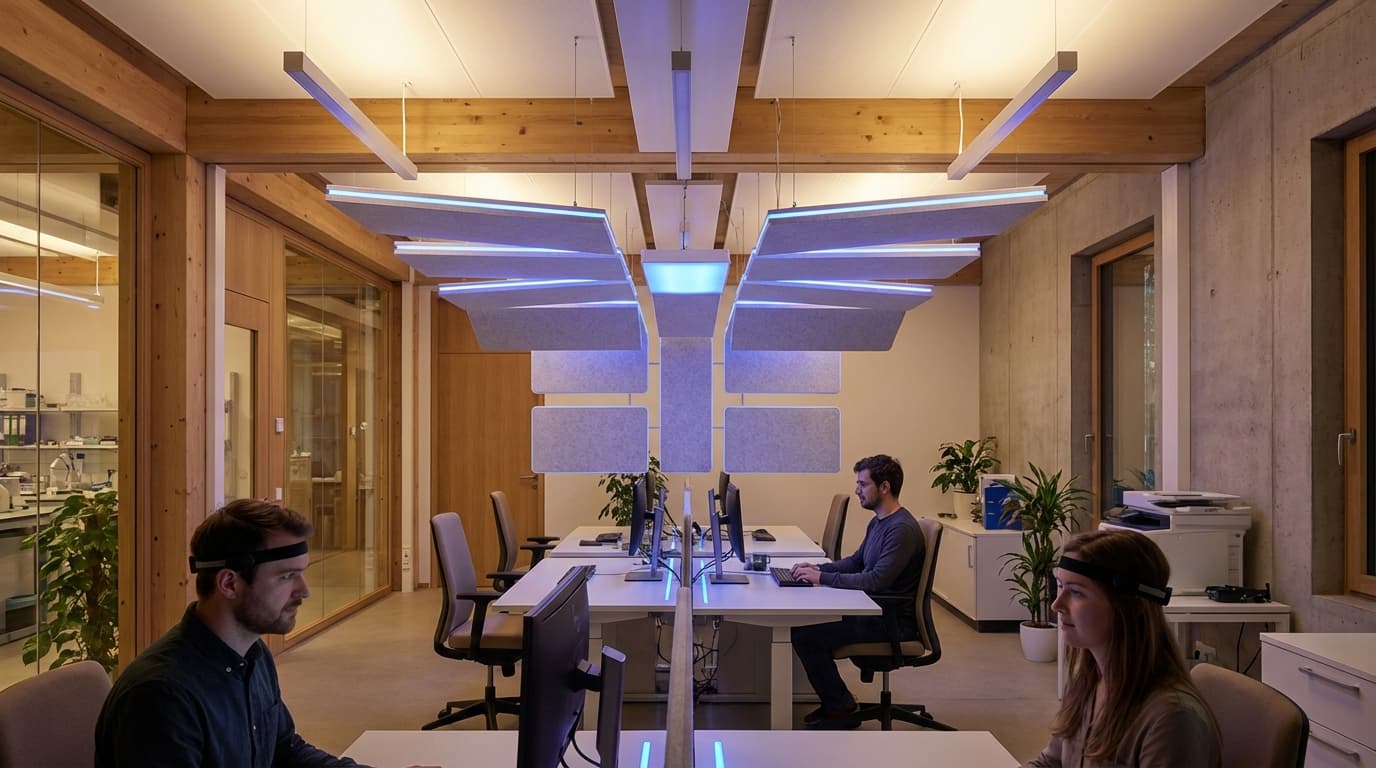
Neuro-Adaptive Environments
Neuro-adaptive environments represent a significant evolution in building design, merging principles from neuroscience, architecture, and Internet of Things (IoT) technologies to create spaces that respond dynamically to human physiological and psychological states. These systems employ a network of sensors—ranging from wearable devices that monitor heart rate variability and skin conductance to ambient sensors that detect movement patterns, facial expressions, and even thermal signatures—to gather real-time biometric data from occupants. Advanced algorithms process this information to identify indicators of stress, fatigue, cognitive overload, or emotional distress. The environment then responds by modulating various parameters: adjusting lighting color temperature and intensity to align with circadian rhythms, deploying sound masking or biophilic audio to reduce distractions, altering HVAC settings to optimize thermal comfort, or even reconfiguring modular furniture and spatial layouts to better support the current activity or mood of occupants. Privacy-preserving approaches, such as federated learning and edge computing, ensure that sensitive biometric data remains secure and anonymized, addressing growing concerns about surveillance in built environments.
The traditional built environment has long been static, designed around average user needs rather than the dynamic, individual requirements of actual occupants. This one-size-fits-all approach often results in workplaces where employees struggle with poor lighting that induces eye strain, open-plan offices that create cognitive fatigue through constant noise exposure, and rigid spatial configurations that fail to accommodate varying work styles or emotional needs throughout the day. Research in environmental psychology and neuroscience has demonstrated that these mismatches between environment and human needs can significantly impair productivity, creativity, and wellbeing. Neuro-adaptive environments address these challenges by creating responsive ecosystems that recognize when occupants are experiencing suboptimal conditions and intervene proactively. In commercial office settings, this technology promises to reduce burnout and enhance employee satisfaction by creating personalized micro-environments within shared spaces. Healthcare facilities can leverage these systems to accelerate patient recovery by maintaining optimal conditions for healing and rest. Educational institutions can deploy neuro-adaptive classrooms that adjust to support different learning activities, from focused individual work requiring minimal stimulation to collaborative sessions benefiting from energizing environmental cues.
Early implementations of neuro-adaptive environments are emerging in high-performance workplaces, wellness-focused hospitality venues, and specialized healthcare settings where the return on investment justifies the sophisticated sensor infrastructure and control systems required. Pilot programs in corporate headquarters have explored how real-time environmental adjustments can reduce afternoon productivity dips, while luxury hotels are experimenting with guest rooms that adapt to individual sleep patterns and preferences. The technology builds upon broader trends in human-centered design, personalized medicine, and the quantified-self movement, reflecting a growing recognition that environments should serve human needs rather than forcing humans to adapt to rigid spaces. As sensor costs decline and machine learning algorithms become more sophisticated at interpreting complex biometric signals, neuro-adaptive environments are poised to transition from premium installations to mainstream building features. The integration of these systems with emerging smart building platforms and digital twin technologies suggests a future where buildings function less as static containers and more as active partners in supporting human flourishing, continuously learning and optimizing their responses to create spaces that enhance cognitive performance, emotional resilience, and overall quality of life.
Research this in Signals
Signals turns a topic into a sourced research record you can inspect and rerun. Your first scan is free, and this one starts with Neuro-Adaptive Environments already loaded, so edit it or scan as is.