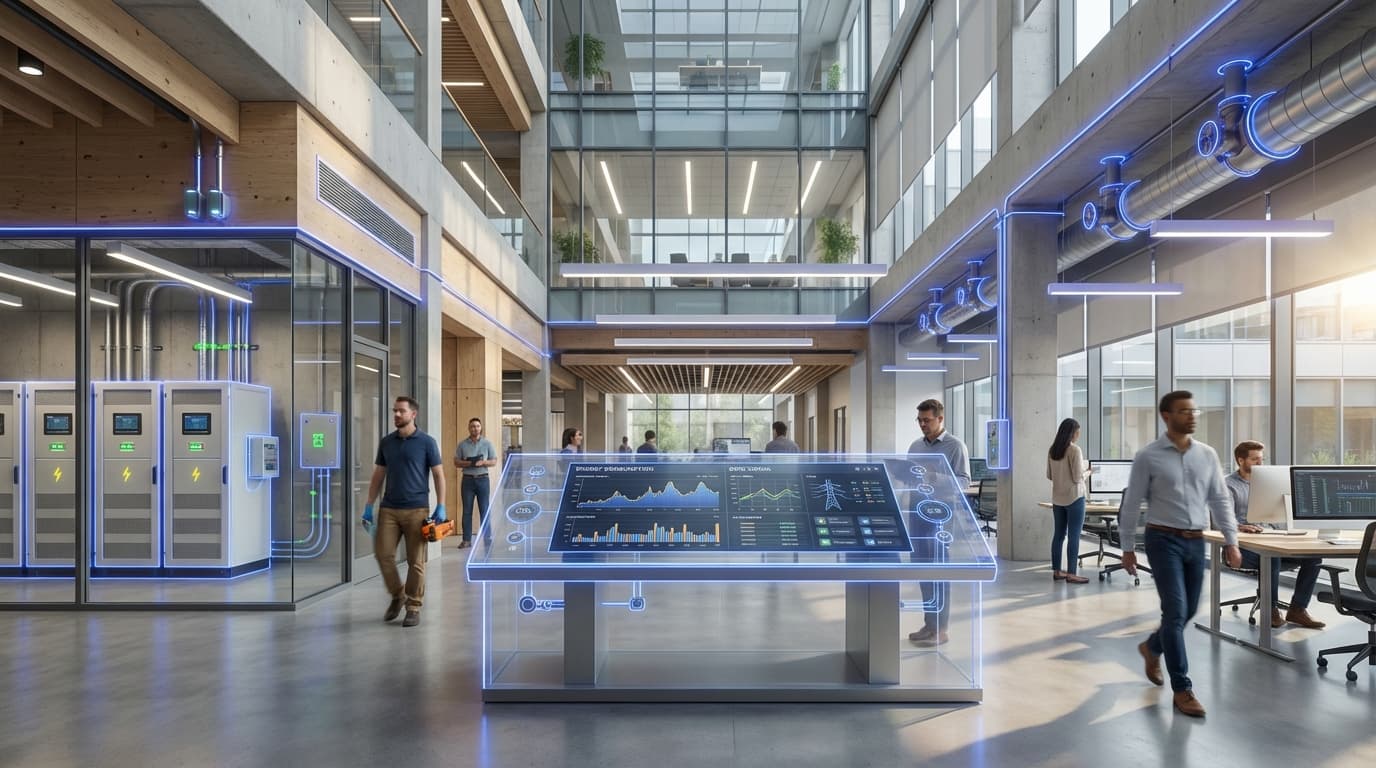
Grid-Interactive Efficient Buildings
Grid-Interactive Efficient Buildings represent a fundamental shift in how structures interact with the electrical grid, transforming passive consumers into active participants in energy management. These buildings employ sophisticated control platforms that orchestrate multiple building systems—including heating, ventilation, and air conditioning (HVAC), battery storage, electric vehicle chargers, water heaters, and other flexible loads—to respond dynamically to grid conditions and price signals. The technology relies on advanced sensors, machine learning algorithms, and predictive analytics to forecast building occupancy patterns, weather conditions, and electricity prices. By integrating these data streams, the control systems can make intelligent decisions about when to consume, store, or reduce electricity demand. The buildings typically connect to the grid through automated demand response protocols, allowing utilities or grid operators to send signals that trigger pre-programmed responses, such as pre-cooling spaces before peak hours or discharging stored energy during periods of high demand.
The emergence of grid-interactive buildings addresses several critical challenges facing modern electrical grids, particularly as renewable energy sources like solar and wind introduce greater variability into power supply. Traditional buildings contribute to demand peaks that strain grid infrastructure and require utilities to maintain expensive peaking power plants that operate only during high-demand periods. Grid-interactive buildings help flatten these demand curves by shifting consumption to off-peak hours when electricity is abundant and inexpensive, often generated from renewable sources that would otherwise be curtailed. This capability becomes increasingly valuable as grids integrate higher percentages of intermittent renewables. The buildings also provide ancillary services—such as frequency regulation and voltage support—that help maintain grid stability, services traditionally supplied by conventional power plants. For building owners and operators, this flexibility creates new revenue streams through participation in demand response programs and energy markets, effectively monetizing assets like thermal mass, battery storage, and flexible scheduling that previously offered no financial return beyond basic energy savings.
Early deployments of grid-interactive building technologies have emerged primarily in commercial and institutional settings, where larger energy loads and more sophisticated building management systems make implementation more straightforward. Universities, corporate campuses, and large retail facilities have begun piloting these systems, often in conjunction with on-site solar generation and battery storage. Residential applications are expanding as smart thermostats, home energy management systems, and residential battery storage become more affordable and interconnected. Industry analysts note that the convergence of declining battery costs, advancing artificial intelligence capabilities, and evolving utility rate structures is accelerating adoption. Looking forward, grid-interactive buildings are expected to play an essential role in the broader transition to decentralized, renewable-heavy electrical grids. As building codes increasingly emphasize not just energy efficiency but grid flexibility, and as utilities develop more sophisticated programs to compensate buildings for their grid services, this technology represents a pathway toward built environments that actively contribute to grid resilience and sustainability rather than merely consuming resources.
Related Organizations

Maintains the efficiency charts for solar cells and conducts foundational research on perovskite stability.

The Building Technologies Office (BTO) leads the national GEB initiative to integrate buildings with the grid.

Technology company that turns buildings into flexible power plants by managing excess energy (acquired by BP).

The advanced energy services arm of Enel Group, focusing on demand response and flexibility.

Home to 'FLEXLAB', the world's most advanced building efficiency simulator for grid interaction research.

Develops enterprise software that unlocks the value of distributed energy resources (DERs) through Virtual Power Plants (VPPs).

Provides energy management and optimization technology that decarbonizes commercial buildings and connects them to the grid.

Creator of GridRewards, an app that connects to utility meters and smart devices to incentivize energy reduction during peak events.

Platform for utilities to manage distributed energy resources (thermostats, EV chargers) at the grid edge.

A global leader in AI-driven clean energy solutions and services.
Supporting Evidence
Research this in Signals
Signals turns a topic into a sourced research record you can inspect and rerun. Your first scan is free, and this one starts with Grid-Interactive Efficient Buildings already loaded, so edit it or scan as is.