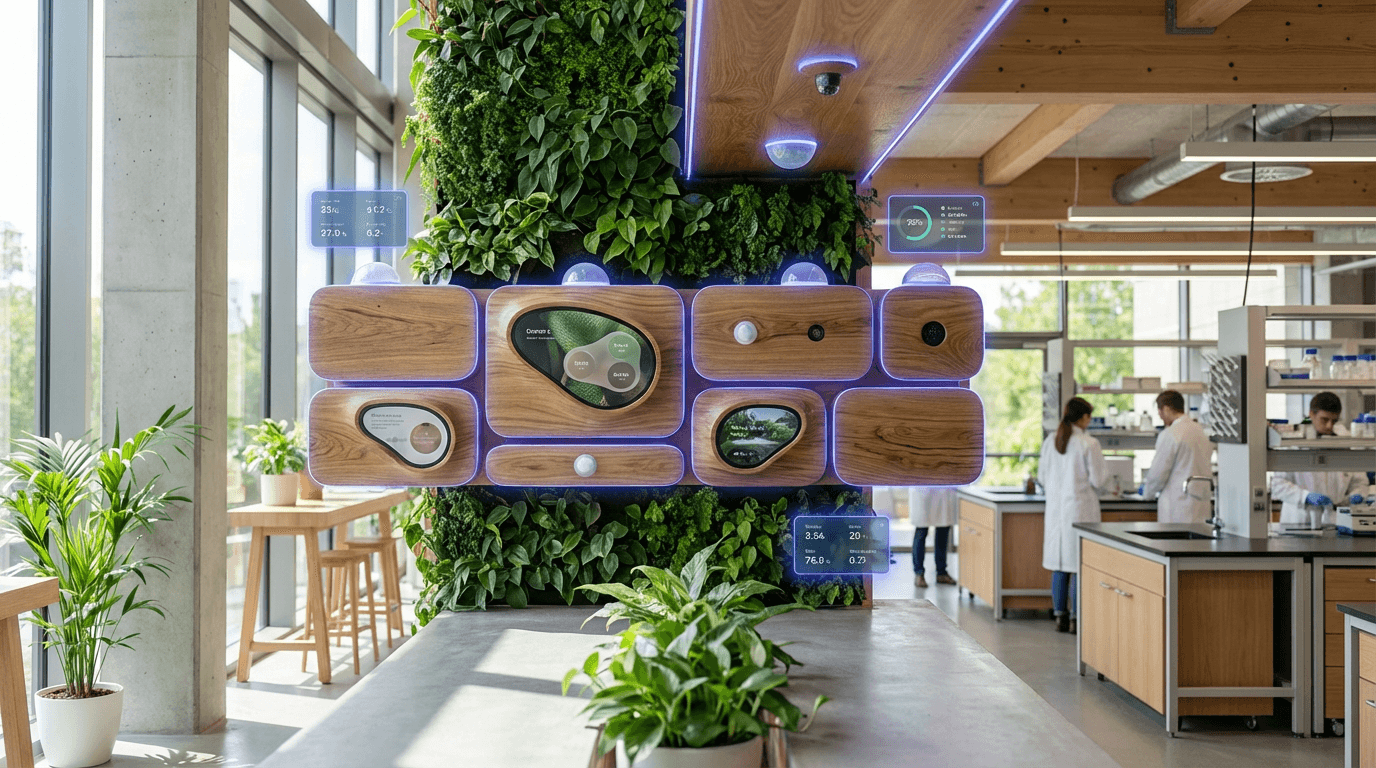
Biophilic IoT Sensors
Biophilic IoT sensors represent a convergence of environmental monitoring technology and biophilic design principles, creating intelligent systems that continuously assess and optimize indoor conditions for human health. These networks deploy arrays of interconnected sensors throughout buildings to measure multiple environmental parameters simultaneously, including air quality metrics (such as CO2 levels, volatile organic compounds, and particulate matter), lighting characteristics (intensity, color temperature, and spectral composition), acoustic properties (noise levels, reverberation, and sound masking), temperature, humidity, and even the presence of natural elements like plants and water features. The sensors communicate wirelessly, forming a mesh network that provides real-time, granular data about the indoor environment. Advanced algorithms process this information, comparing current conditions against established biophilic design standards and circadian rhythm research to identify opportunities for optimization. The system's intelligence lies in its ability to understand how these environmental factors interact and affect human physiology, drawing on research linking natural environmental patterns to improved cognitive performance, stress reduction, and physical wellbeing.
The built environment industry has long struggled with the disconnect between energy-efficient building design and occupant health outcomes. Traditional building management systems prioritize operational efficiency and cost reduction, often creating sealed, artificially lit environments that bear little resemblance to the natural settings in which humans evolved. This approach has contributed to what researchers term "sick building syndrome," characterized by reduced productivity, increased absenteeism, and various health complaints among building occupants. Biophilic IoT sensors address this challenge by enabling a more holistic approach to building management, one that balances energy efficiency with human-centric design. By continuously monitoring how well indoor environments align with natural patterns—such as daylight cycles, fresh air circulation, and acoustic variability—these systems provide facility managers with actionable insights for creating healthier spaces. The technology also enables new business models in commercial real estate, where landlords can differentiate properties based on measurable health and wellness metrics, potentially commanding premium rents while reducing tenant turnover and improving satisfaction scores.
Early deployments of biophilic IoT sensor networks have emerged primarily in premium office buildings, healthcare facilities, and educational institutions, where the return on investment from improved occupant performance and wellbeing can be most readily quantified. These systems typically integrate with existing building automation platforms, allowing for dynamic adjustments to HVAC systems, motorized window shades, and tunable LED lighting that shifts color temperature throughout the day to support natural circadian rhythms. Some implementations incorporate feedback mechanisms where occupants can report their comfort levels, creating a closed-loop system that learns individual and collective preferences over time. The technology aligns with broader industry movements toward wellness certifications and human-centric building standards, which increasingly recognize that the healthiest buildings are those that maintain strong connections to natural environmental patterns. As sensor costs continue to decline and evidence mounts regarding the productivity and health benefits of biophilic design, these monitoring systems are positioned to become standard infrastructure in new construction and major renovations, fundamentally reshaping how we conceive of and manage indoor environments for human flourishing.
Related Organizations


The organization leading the global movement to transform buildings in ways that help people thrive.


Manufacturer of air quality monitors including the Laser Egg, a compact device for home and travel.

IoT-based building management system that uses smart sensors and cloud computing to predictively control HVAC and lighting.

Global tech company producing radon and indoor air quality monitors for homeowners and businesses.

Provides comprehensive indoor air quality monitoring solutions for businesses.

Manufactures smart glass that automatically tints to control heat and glare.

IoT platform for commercial buildings (acquired by Siemens) with sensors for light, heat, and occupancy.

Provides AI-powered sensors to measure occupancy and space utilization in real-time.
Supporting Evidence
Research this in Signals
Signals turns a topic into a sourced research record you can inspect and rerun. Your first scan is free, and this one starts with Biophilic IoT Sensors already loaded, so edit it or scan as is.