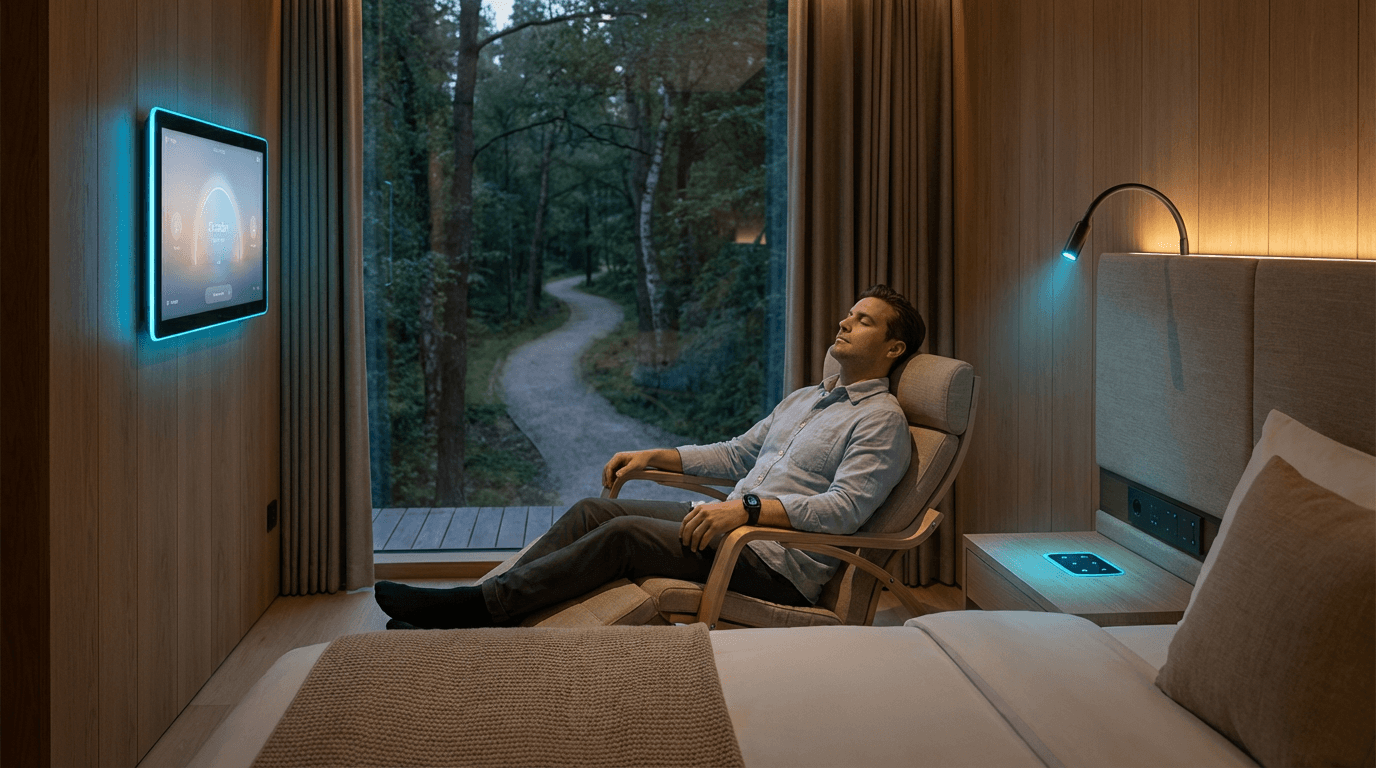
Neuro-Adaptive Environments
Neuro-adaptive environments represent a convergence of environmental psychology, sensor technology, and automated building systems designed to create spaces that respond dynamically to human physiological and neurological states. These systems employ non-invasive biometric sensors—including wearable devices, bed-embedded pressure sensors, thermal cameras, and ambient electromagnetic field detectors—to continuously monitor indicators such as heart rate variability, skin conductance, body temperature, movement patterns, and sleep architecture. The collected data feeds into machine learning algorithms that interpret stress levels, circadian phase, and sleep quality in real-time. Based on this analysis, the environment automatically modulates multiple sensory parameters: circadian-aligned lighting that shifts color temperature and intensity to support melatonin production or suppression, acoustic environments that adapt from white noise to binaural beats depending on detected sleep stages, HVAC systems that optimize temperature and humidity for thermoregulation, and scent diffusion systems that release compounds like lavender or eucalyptus calibrated to promote relaxation or alertness.
The travel and hospitality industry faces a persistent challenge in addressing the physiological disruption experienced by modern travelers, particularly those crossing multiple time zones or maintaining irregular schedules. Jet lag, characterized by misalignment between internal circadian rhythms and external time cues, can impair cognitive performance, mood, and overall guest satisfaction for days following arrival. Traditional hotel rooms offer static environments that cannot accommodate the dynamic recovery needs of individual guests. Neuro-adaptive environments address this limitation by creating personalized recovery protocols that accelerate circadian realignment and enhance sleep quality. Research in chronobiology suggests that properly timed light exposure, temperature regulation, and sensory stimulation can significantly reduce jet lag symptoms and improve restorative sleep. For the hospitality sector, this technology represents an opportunity to differentiate premium offerings, increase guest loyalty, and command higher rates by delivering measurable wellness outcomes rather than merely comfortable accommodations.
Early implementations of neuro-adaptive environments have appeared in luxury hotel chains and wellness-focused resorts, often marketed as part of sleep optimization or recovery suites. Some airlines have begun exploring similar concepts for premium cabin designs, where long-haul passengers could benefit from adaptive lighting and temperature control synchronized with destination time zones. The technology builds upon broader trends in personalized wellness, smart building automation, and the quantified self movement, where individuals increasingly expect their environments to respond intelligently to their needs. As sensor costs decline and machine learning models become more sophisticated at interpreting biometric data, these systems are likely to expand beyond premium travel segments into mainstream hospitality offerings. The long-term trajectory points toward environments that not only react to current physiological states but also anticipate needs based on travel itineraries, historical patterns, and individual preferences, potentially transforming how the industry approaches guest wellness and the fundamental purpose of accommodation spaces in an era of global mobility.
Related Organizations

Develops AI-powered restorative mattresses that adjust firmness and temperature in real-time based on the sleeper's biometrics.


Develops a smart mattress cover (Pod) that uses AI to autonomously adjust temperature based on sleep stages and biometrics.

A major provider of In-Flight Entertainment and Connectivity (IFEC) systems for commercial airlines.

Luxury resort group offering 'Grow a New Body' and biohacking retreats that integrate sleep tracking, neuro-wellness, and aesthetics.

Collins Aerospace
United States · Company
A major aerospace and defense contractor, a subsidiary of RTX Corporation.

Parent company of Philips Hue, which offers the 'Hue Sync' protocol to align smart lighting with HDMI video signals.

Leader in lighting control, owner of Ketra which produces natural light simulation.

A design consultancy specializing in travel and aerospace, researching future cabin concepts that respond to passenger health data.
Supporting Evidence
Research this in Signals
Signals turns a topic into a sourced research record you can inspect and rerun. Your first scan is free, and this one starts with Neuro-Adaptive Environments already loaded, so edit it or scan as is.