









Retrofitting Old Homes With New Technology
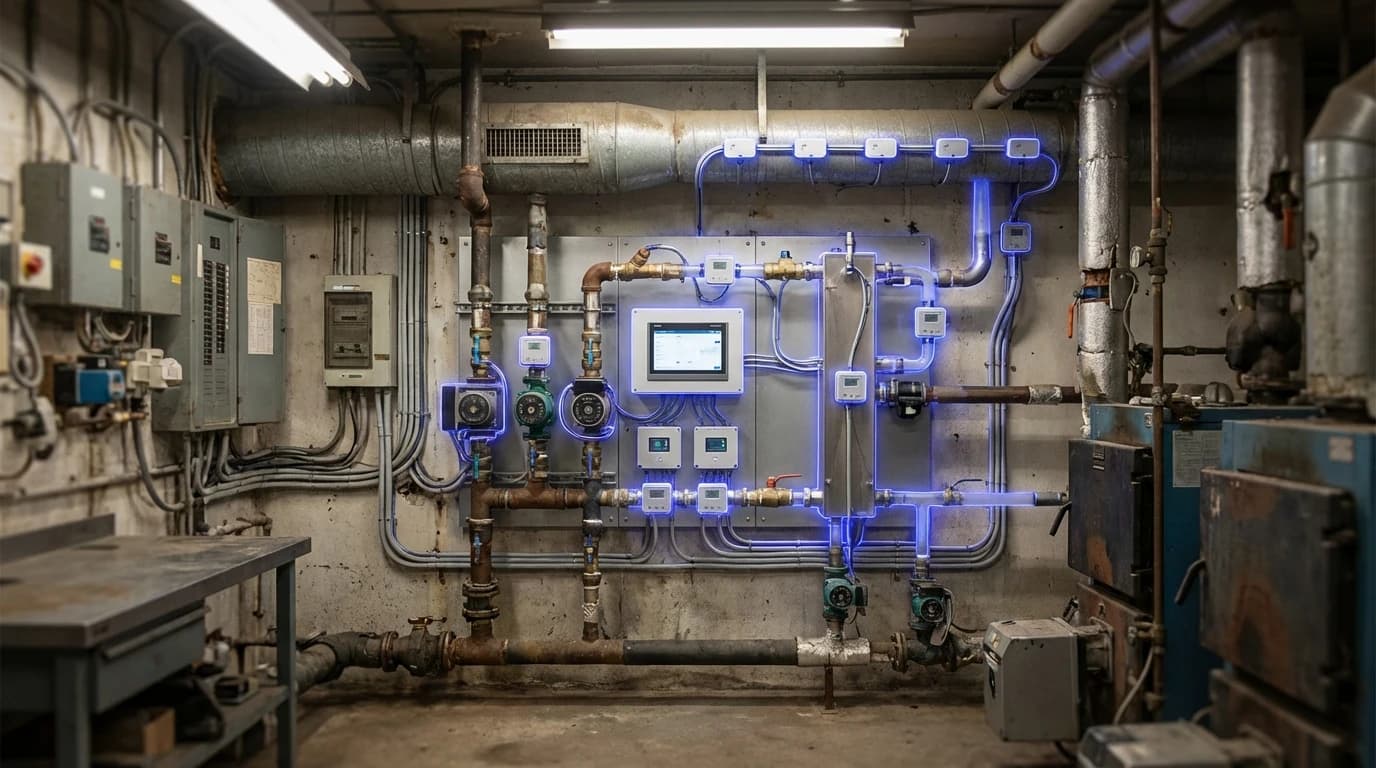
Smart Retrofit Platforms
Modular kits that add sensors, controls, and connectivity to older buildings without major construction
The built environment faces a critical challenge: the vast majority of buildings standing today were designed and constructed decades ago, long before the advent of modern energy management systems, IoT sensors, or data-driven optimization. Replacing this aging infrastructure is neither economically feasible nor environmentally sustainable, yet these legacy structures consume disproportionate amounts of energy and lack the digital capabilities expected in contemporary urban environments. Smart Retrofit Platforms address this gap by providing standardized, modular solutions that can be deployed across diverse building types without requiring extensive custom engineering for each installation. These platforms typically bundle hardware components—such as wireless sensors for temperature, occupancy, and air quality monitoring—with edge computing devices, actuators for HVAC and lighting control, and cloud-based analytics software. The standardization approach allows manufacturers and service providers to achieve economies of scale, reducing both the upfront cost and installation complexity that have historically made building upgrades prohibitively expensive for all but the most premium properties.
The value proposition extends beyond mere technology deployment. Traditional building retrofits have suffered from fragmented vendor ecosystems, uncertain return-on-investment timelines, and the need for specialized technical expertise that many building owners lack. Smart Retrofit Platforms tackle these barriers by offering integrated packages that include not only the physical equipment but also pre-validated control strategies, automated commissioning processes, and ongoing performance monitoring. Many platforms incorporate financing mechanisms directly into their business models, allowing building owners to pay for upgrades through the energy savings generated, thereby eliminating the capital expenditure barrier. Performance guarantees further de-risk adoption, with providers committing to specific energy reduction targets and assuming responsibility when systems underperform. This shift from product sales to outcome-based service models fundamentally changes the economics of building modernization, making it accessible to mid-market commercial properties, multifamily housing, and institutional facilities that represent the bulk of existing building stock.
Early deployments have demonstrated measurable results, with installations reporting energy consumption reductions ranging from fifteen to thirty percent alongside improved occupant comfort and operational visibility. The platforms prove particularly effective in buildings with aging mechanical systems where simple control upgrades—optimizing setpoints, implementing demand-based ventilation, or scheduling equipment more intelligently—can yield substantial savings without replacing major capital equipment. As regulatory pressure intensifies around building emissions and energy disclosure requirements in major cities, these solutions provide a pragmatic pathway for compliance. The technology aligns with broader trends toward building decarbonization and the integration of structures into smart city ecosystems, where real-time data from thousands of buildings can inform grid management, urban planning, and climate resilience strategies. Looking forward, the continued maturation of wireless sensor networks, edge AI capabilities, and interoperability standards promises to make these platforms even more powerful and cost-effective, potentially transforming the retrofit market from a niche specialty into a mainstream infrastructure upgrade category.
TRL
3/9Conceptual
Impact
4/5
Investment
3/5
Category
Applications
Related Organizations
Uses autonomous AI to optimize HVAC systems in real-time, predicting thermal behavior to save energy.
Developer
A climate tech startup that trains and hires local workforces in underserved communities to install heat pumps and green building tech.
Deployer
IoT-based building management system that uses smart sensors and cloud computing to predictively control HVAC and lighting.
Developer
Provides Energy-as-a-Service, funding and installing energy-saving retrofits (lighting, HVAC) monitored by their data platform.
Deployer
Smart building platform combining IoT sensors with AI to measure occupancy, air quality, and energy efficiency.
Developer
Creates wireless sensor and control systems specifically for retrofitting old steam and hydronic heating systems in cities.
Developer
Develops smart motor systems and building automation controls to drastically reduce HVAC energy consumption.
Developer

Kelvin
United States · Startup
Formerly Radiator Labs, they produce 'The Cozy', an insulated smart cover for old steam radiators to control heat distribution.
Developer
Develops the first autonomous building platform, allowing buildings to make their own control decisions using physics-based digital twins.
Developer
Uses AI and sensor networks to uncover energy waste in commercial buildings and guarantees savings through retrofits.
Developer
The advanced energy services arm of Enel Group, focusing on demand response and flexibility.
Deployer
What was expected
Published forecasts about this technology, graded against what happened in Hindsight.
Supporting Evidence
Evidence data is not available for this technology yet.
Research this in Signals
Scan Smart Retrofit Platforms for yourself.
Signals turns a topic into a sourced research record you can inspect and rerun. Your first scan is free, and this one starts with Smart Retrofit Platforms already loaded, so edit it or scan as is.