Solid-State Transformers
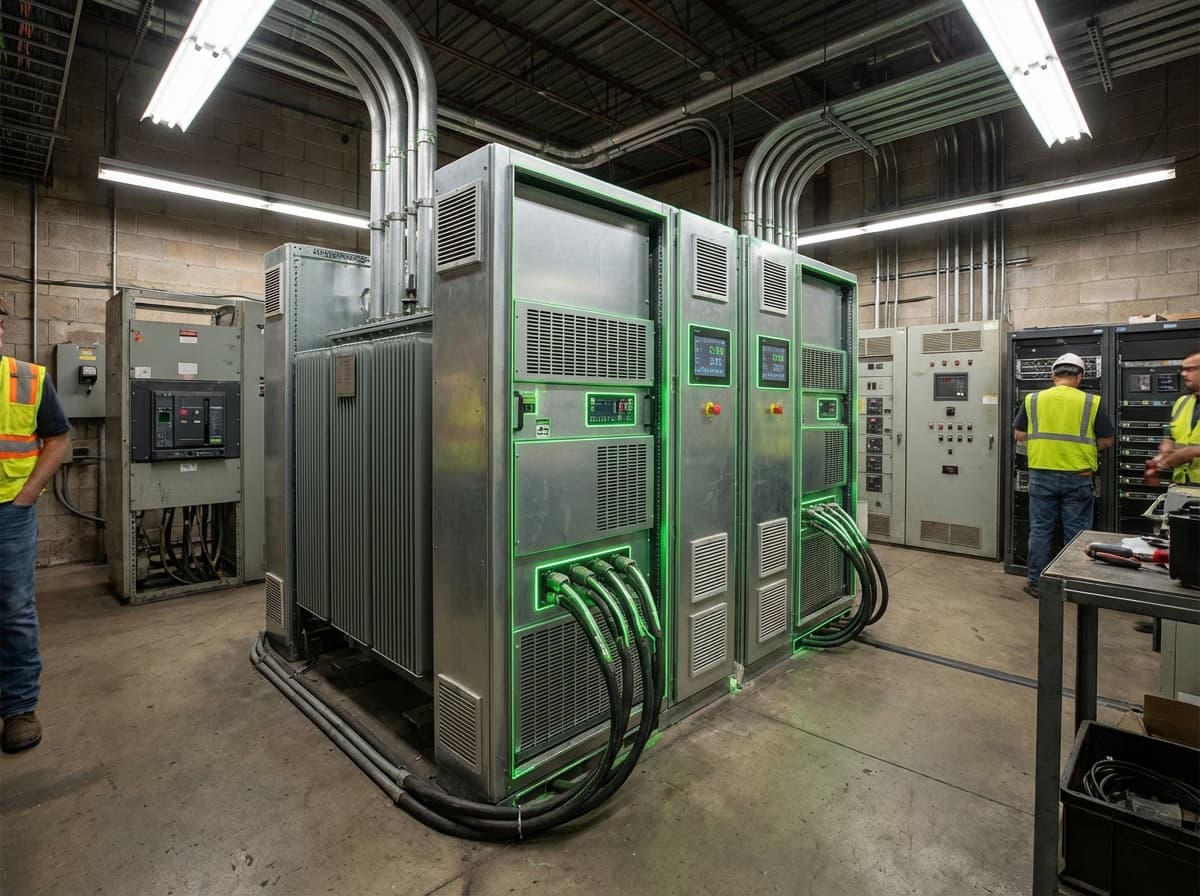
Solid-state transformers represent a fundamental reimagining of the traditional electromagnetic transformer, replacing mechanical components with advanced power electronics to enable far more sophisticated control over electrical power distribution. Unlike conventional transformers that rely on electromagnetic induction through iron cores and copper windings, solid-state transformers use semiconductor devices such as insulated-gate bipolar transistors (IGBTs) and silicon carbide (SiC) switches to perform voltage conversion through high-frequency switching operations. This architecture allows for precise, real-time control of voltage levels, power quality, and energy flow direction. The technology integrates multiple functions into a single device: voltage transformation, power factor correction, harmonic filtering, and fault isolation. By operating at higher frequencies than traditional transformers, solid-state transformers can achieve comparable performance with significantly reduced size and weight, while simultaneously providing digital communication capabilities that enable them to serve as intelligent nodes within smart grid networks.
The electric grid faces mounting challenges as it transitions from a centralized, unidirectional power distribution model to a complex ecosystem incorporating distributed renewable energy sources, energy storage systems, electric vehicle charging infrastructure, and bidirectional power flows. Traditional transformers, designed over a century ago, lack the flexibility and control capabilities required for this modern context. Solid-state transformers address these limitations by enabling seamless integration of both AC and DC power sources and loads without requiring separate conversion equipment. They provide dynamic voltage regulation that can respond to grid fluctuations within milliseconds, protecting sensitive equipment and maintaining power quality even as renewable generation introduces variability. The bidirectional power flow capability is particularly crucial for managing distributed energy resources, allowing excess solar generation from rooftop panels or power from electric vehicle batteries to flow back into the grid efficiently. Furthermore, their built-in protection and isolation features enhance grid resilience by quickly detecting and containing faults, preventing cascading failures that could lead to widespread outages.
Research institutions and utilities have begun deploying solid-state transformers in pilot programs focused on microgrids, renewable energy integration points, and critical infrastructure protection. Early implementations demonstrate particular value in applications requiring high power quality, such as data centers and advanced manufacturing facilities, where the technology's ability to provide clean, stable power justifies its current cost premium over conventional transformers. The technology is also finding traction in electric vehicle fast-charging stations, where its compact form factor and ability to interface directly with DC charging systems offer significant advantages. As semiconductor manufacturing advances continue to reduce costs and improve efficiency—particularly with wide-bandgap materials like silicon carbide and gallium nitride—industry analysts note that solid-state transformers are positioned to play an increasingly central role in grid modernization efforts. The convergence of declining costs, growing renewable energy penetration, and the need for more resilient distribution infrastructure suggests that solid-state transformers will transition from niche applications to mainstream deployment over the coming decade, fundamentally reshaping how electrical power is managed and distributed at the grid edge.
Related Organizations
NSF Engineering Research Center headquartered at NC State University.

A global leader in HVDC technology, specifically HVDC Light (VSC), supplying converter stations for major interconnectors worldwide.

Develops the 'Hybrid Intelligent Transformer' (HIT), which combines magnetics with power electronics for grid control.
CEPRI
China · Research Lab
China Electric Power Research Institute, conducting massive R&D into power electronics for the State Grid Corporation of China.

The energy portfolio of GE (formerly GE Digital), offering Asset Performance Management (APM) software powered by AI.

Provides Cooper Power series reclosers and Yukon feeder automation software.


Global provider of power and thermal management solutions.

Home to a Chair of Power Electronics that is a global leader in Smart Transformer research.
SPX Transformer Solutions
United States · Company
A transformer manufacturer (now part of Prolec GE) exploring advanced regulation technologies.
Supporting Evidence
Research this in Signals
Signals turns a topic into a sourced research record you can inspect and rerun. Your first scan is free, and this one starts with Solid-State Transformers already loaded, so edit it or scan as is.