Federated Learning for Grid Optimization
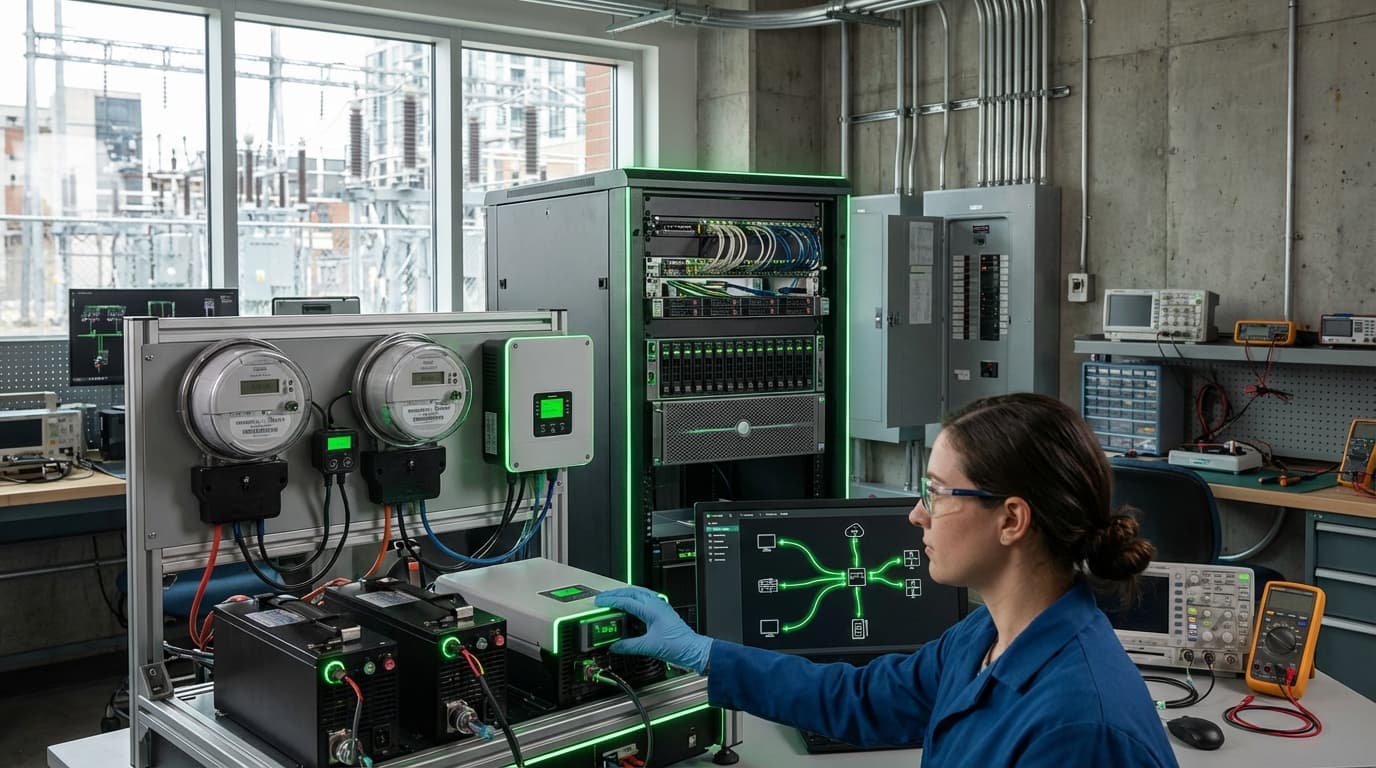
Federated learning represents a paradigm shift in how utilities and grid operators can harness machine learning for optimization while respecting data privacy constraints. Unlike traditional centralized machine learning approaches that require aggregating sensitive data from smart meters, distributed energy resources, and customer usage patterns into a single repository, federated learning trains algorithms directly on decentralized devices and systems. The core mechanism involves deploying a shared model architecture across multiple grid assets—such as smart meters, inverters, battery storage systems, and substation controllers—where each device trains the model locally using its own data. Only the model updates, not the raw data itself, are transmitted back to a central coordinator, which aggregates these updates to improve the global model. This architecture fundamentally addresses the tension between the data-intensive requirements of modern AI systems and the stringent privacy regulations governing utility customer information and critical infrastructure operations.
The energy sector faces mounting pressure to optimize grid operations amid increasing complexity from renewable integration, electric vehicle charging, and demand response programs, yet utilities have historically struggled to leverage customer and asset data due to privacy concerns, regulatory barriers, and competitive sensitivities. Federated learning directly addresses these challenges by enabling collaborative model development across organizational boundaries without exposing proprietary operational data or personally identifiable customer information. For instance, multiple utilities can jointly develop load forecasting models that benefit from diverse geographic and demographic patterns without sharing actual consumption records. Similarly, aggregators managing distributed energy resources can optimize dispatch strategies across their fleet while maintaining the confidentiality of individual asset performance characteristics and customer preferences. This capability unlocks new business models for grid services, allowing smaller utilities to access sophisticated AI capabilities previously available only to large organizations with extensive data science resources.
Early deployments in grid applications have demonstrated promising results in areas such as demand forecasting, fault detection, and renewable energy prediction, with pilot programs exploring collaborative model development among utility consortia. The technology shows particular promise for optimizing virtual power plants, where coordinating thousands of distributed batteries, solar installations, and flexible loads requires sophisticated algorithms but faces significant data-sharing barriers. Research initiatives are also investigating federated learning for grid resilience applications, enabling utilities to collectively improve outage prediction and restoration strategies by learning from each other's historical incidents without exposing sensitive infrastructure vulnerabilities. As regulatory frameworks increasingly mandate both grid modernization and data protection—exemplified by privacy legislation in various jurisdictions—federated learning is positioned to become a foundational technology for the smart grid. The approach aligns with broader industry trends toward edge computing and distributed intelligence, suggesting that future grid optimization will increasingly rely on collaborative learning architectures that preserve privacy while enabling the data-driven insights necessary for managing increasingly complex energy systems.
Related Organizations

A transit tech company that partners with cities to provide on-demand microtransit, often filling gaps in transit deserts.

Maintains the efficiency charts for solar cells and conducts foundational research on perovskite stability.

US DOE lab conducting environmental monitoring and materials research relevant to marine energy, including OTEC environmental impacts.

An independent, non-profit energy research and development organization.

Industrial giant offering the 'Senseye Predictive Maintenance' suite and MindSphere IoT platform.

Long-standing leader in neuro-symbolic AI, combining neural networks with logical reasoning for enterprise applications.


Develops silicon spin qubits using advanced 300mm wafer manufacturing processes.

Cloud computing and virtualization technology company (now part of Broadcom).
Supporting Evidence
Research this in Signals
Signals turns a topic into a sourced research record you can inspect and rerun. Your first scan is free, and this one starts with Federated Learning for Grid Optimization already loaded, so edit it or scan as is.