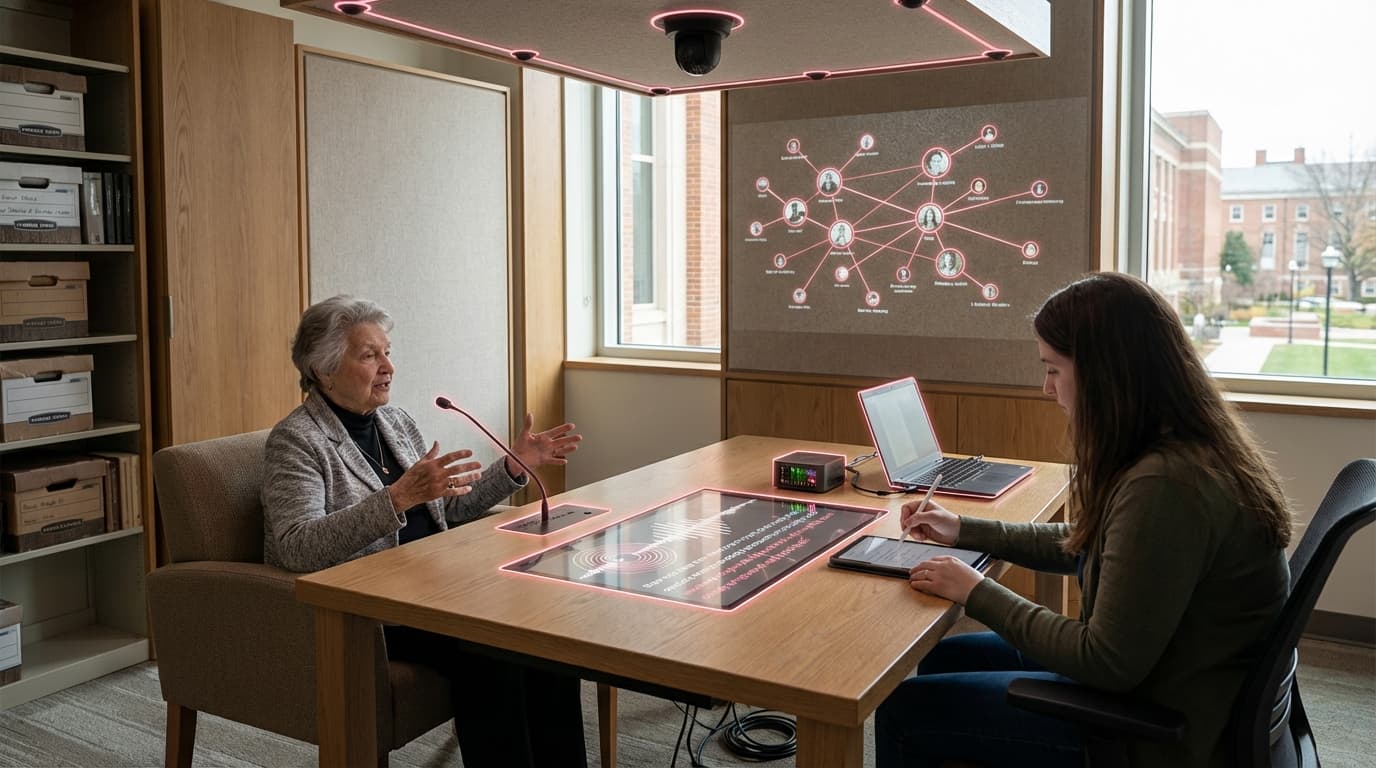
Oral History Intelligence Platforms
Oral History Intelligence Platforms represent a convergence of speech recognition, natural language processing, and archival science designed to unlock the knowledge embedded in spoken narratives. These systems employ automated transcription engines that convert audio recordings into text, often achieving accuracy rates exceeding 90% for clear speech in well-documented languages. Beyond simple transcription, they apply speaker diarization algorithms to distinguish between multiple voices in a single recording, topic modeling to identify thematic patterns across collections, and sentiment analysis to capture emotional tenor. Machine translation capabilities extend accessibility across language barriers, while temporal indexing creates navigable timelines within lengthy interviews. The technical architecture typically combines cloud-based processing for computational intensity with local storage options that respect data sovereignty requirements, particularly crucial when handling testimonies from Indigenous communities or sensitive historical accounts.
The fundamental challenge these platforms address is the vast backlog of audio archives that remain effectively inaccessible due to the labor-intensive nature of manual transcription and cataloging. Research institutions, museums, and cultural heritage organizations often possess thousands of hours of recorded interviews that cannot be systematically searched or analyzed without prohibitive human effort. Traditional archival methods might take a trained transcriber four to six hours to process a single hour of audio, creating bottlenecks that leave valuable historical materials effectively dormant. Oral History Intelligence Platforms compress this timeline dramatically while simultaneously generating metadata layers that would be impractical to create manually—cross-referencing place names, identifying recurring themes, and flagging potential connections between disparate interviews. This capability proves particularly transformative for projects documenting underrepresented communities, where oral traditions often carry knowledge not captured in written records.
Current deployments span Holocaust survivor testimonies, Indigenous language preservation initiatives, and civil rights movement documentation projects. The USC Shoah Foundation's Visual History Archive, while predating some recent AI advances, pioneered many indexing approaches now being enhanced by contemporary platforms. Smaller institutions are increasingly adopting commercial solutions that offer tiered pricing models, making sophisticated analysis tools accessible beyond major research universities. However, implementation requires careful attention to consent frameworks—ensuring that automated processing aligns with the original agreements under which interviews were conducted. Looking forward, these platforms are evolving to incorporate multimodal analysis that considers not just words but vocal qualities, pauses, and when paired with video, facial expressions and gestures. This trajectory positions oral history archives not merely as static repositories but as dynamic knowledge systems that can surface patterns, preserve linguistic diversity, and ensure that spoken memories remain discoverable for future generations navigating an increasingly digital information landscape.
Related Organizations

Information management consulting and software development firm.
A remote interviewing platform designed specifically for oral history and community archiving.

Develops 'Dimensions in Testimony', an interactive biography system that often utilizes holographic and AR display technologies to allow visitors to converse with survivors at memorial sites.
Memria
United States · Company
A platform helping organizations collect, curate, and share stories.

A technology firm specializing in oral history software.

An organization dedicated to recording, preserving, and sharing the stories of Americans from all backgrounds.

A company providing AI and human transcription services.

A nonprofit providing secure, permanent cloud storage for individuals and organizations to preserve their digital legacy.
Supporting Evidence
Research this in Signals
Signals turns a topic into a sourced research record you can inspect and rerun. Your first scan is free, and this one starts with Oral History Intelligence Platforms already loaded, so edit it or scan as is.