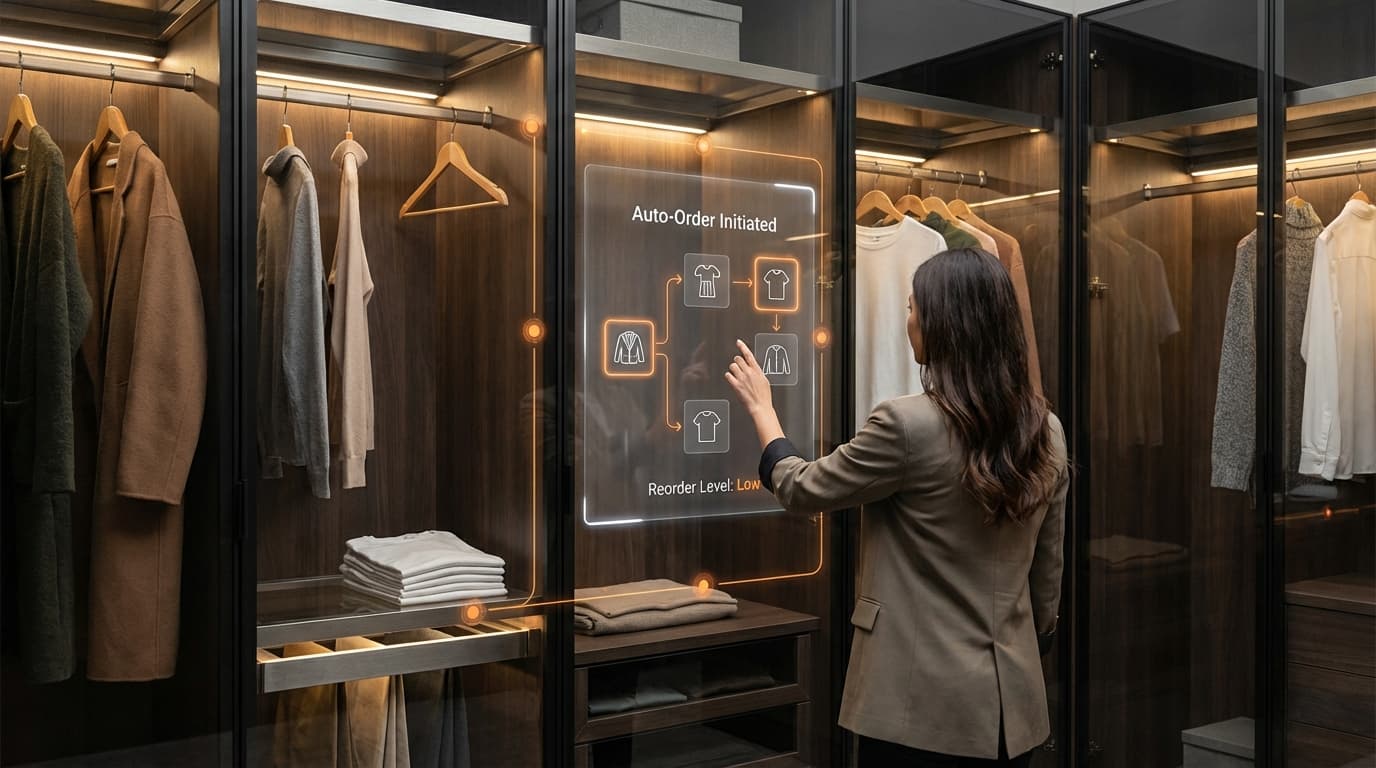
Self-Updating Wardrobes Using Predictive Consumption Models
Self-updating wardrobes use machine learning algorithms and predictive analytics to monitor clothing usage, track wear patterns, and anticipate when items need replacement, automatically ordering new garments to maintain an optimal wardrobe. These systems analyze data including frequency of wear, washing cycles, style preferences, and seasonal needs to predict replacement timing and suggest or automatically purchase appropriate replacements.
This innovation addresses consumer decision fatigue and the challenge of maintaining a functional wardrobe, while also creating new subscription-based business models for fashion brands. By automating wardrobe maintenance, these systems ensure users always have appropriate clothing available without requiring active shopping decisions. The technology is still largely conceptual, with some early implementations in subscription services and smart closet applications, but represents a potential future direction for personalized fashion consumption.
The technology raises important questions about consumer agency, sustainability, and the role of automation in personal consumption decisions. While convenient, self-updating wardrobes could potentially increase consumption if not carefully designed, or they could optimize for longevity and reduce waste if focused on quality replacements and repair. As the technology develops, it will be important to balance convenience with sustainability and consumer choice.
Related Organizations

Online personal styling service that uses recommendation algorithms and data science to personalize clothing items based on size, budget, and style.

Developing Project Kuiper, a satellite constellation that will utilize optical inter-satellite links.

A digital wardrobe app that allows users to digitize their closet, track wears, and receive styling suggestions.

The pioneer of the fashion rental economy, offering subscription plans for designer apparel and accessories.

Tech platform focusing on post-purchase care, repairs, and inventory management to extend garment life.

European e-commerce giant that acquired Fision (Meepl) to integrate mobile body scanning directly into their shopping app.


Multinational retail corporation investing heavily in supply chain AI and direct-to-fridge/home delivery.

Major supplier of 'UltraGear' gaming monitors specifically marketed to and bulk-sold to PC Bangs.

Supporting Evidence
Research this in Signals
Signals turns a topic into a sourced research record you can inspect and rerun. Your first scan is free, and this one starts with Self-Updating Wardrobes Using Predictive Consumption Models already loaded, so edit it or scan as is.