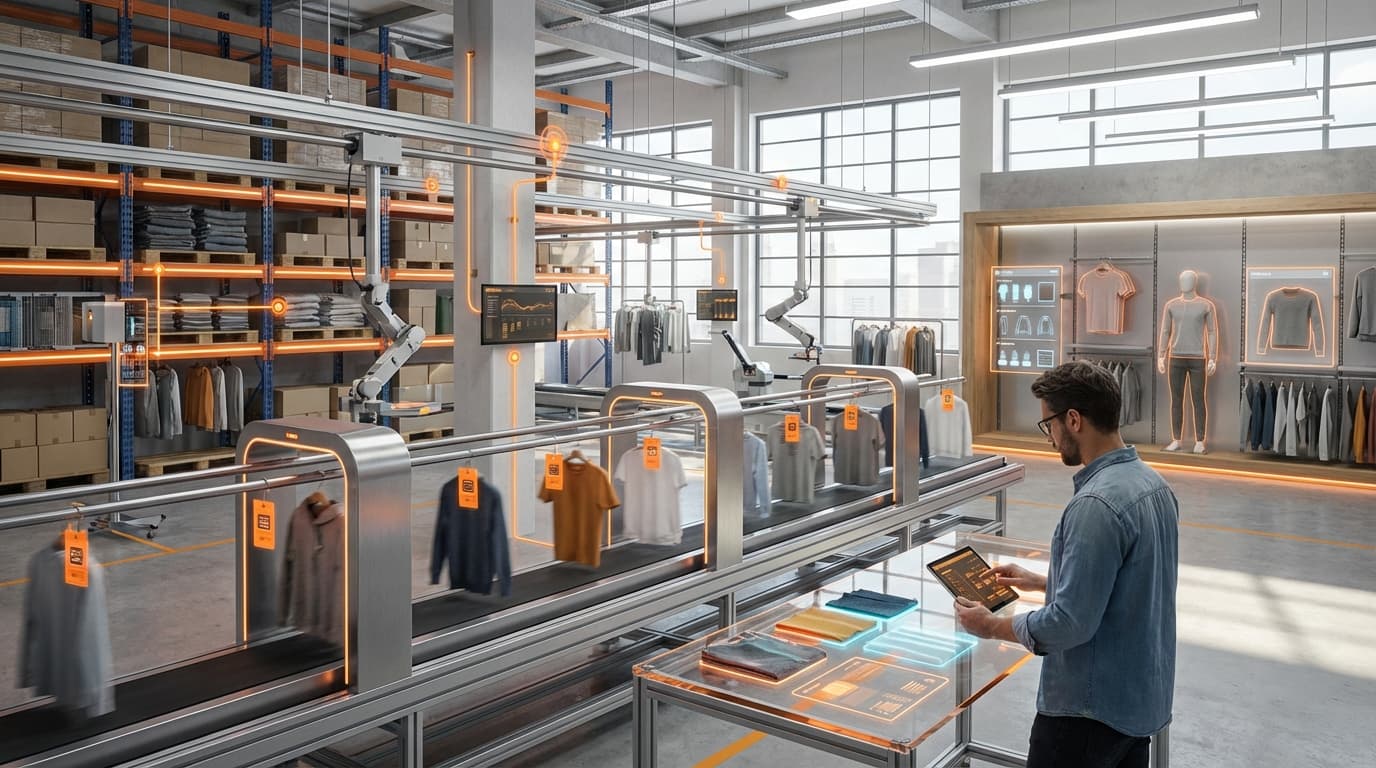
Fast-Fashion Just-in-Time Replenishment Networks
Fast-fashion just-in-time (JIT) replenishment networks create tightly integrated supply chains that connect point-of-sale data directly to manufacturing facilities, enabling rapid response to demand signals. These systems continuously monitor sales in stores and online, automatically triggering small-batch production orders when inventory drops below thresholds, creating a pull-based system where production is driven by actual sales rather than forecasts.
This innovation, pioneered by companies like Zara and H&M, enables fast-fashion retailers to maintain fresh, trend-responsive inventory while minimizing overstock and markdowns. By producing in small batches and replenishing frequently, these systems can respond quickly to emerging trends and adjust production based on real-time sales data. The approach requires sophisticated logistics, flexible manufacturing, and close coordination between retail, design, and production teams.
The technology represents a fundamental shift from push-based (forecast-driven) to pull-based (demand-driven) supply chains, enabling more responsive and efficient operations. While effective for fast-fashion business models, JIT systems also create pressure for rapid production cycles and can contribute to labor and environmental concerns. As the industry evolves toward more sustainable practices, the challenge is maintaining responsiveness while improving working conditions and environmental impact.
Related Organizations

Parent company of Zara, known for pioneering the fast-fashion model with rapid design-to-store turnaround.

Global online fashion retailer utilizing an on-demand manufacturing model with thousands of supplier factories.
Global supply chain manager for brands and retailers, orchestrating a vast network of factories.

E-commerce marketplace owned by PDD Holdings, utilizing a 'Next-Gen Manufacturing' C2M model.

Logistics arm of Alibaba Group, providing the smart logistics backbone for cross-border e-commerce.
Parent company of Uniqlo, known for integrating RFID across its entire supply chain.

The software arm of Coats Group, offering FastReactPlan and GSDCost for production planning and time-cost benchmarking.

Owned by Panasonic, their Luminate platform offers a digital twin of the supply chain for real-time visibility and prediction.

Offers CloudSuite Fashion, an ERP system built to handle the complex matrix of styles, colors, and sizes inherent to the apparel industry.
Supporting Evidence
Research this in Signals
Signals turns a topic into a sourced research record you can inspect and rerun. Your first scan is free, and this one starts with Fast-Fashion Just-in-Time Replenishment Networks already loaded, so edit it or scan as is.