Electrospun Nanofiber Fabrics
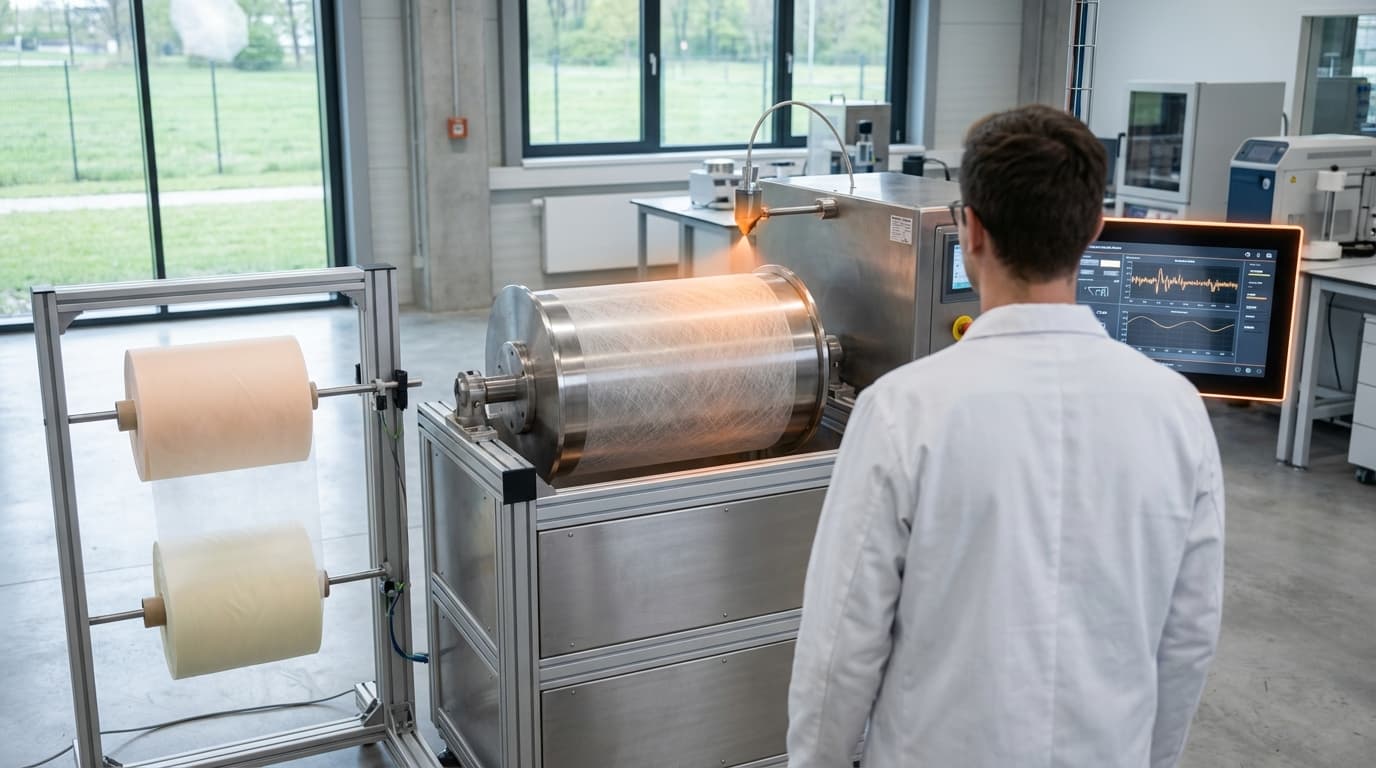
Electrospinning technology uses electrical fields to draw polymer solutions into ultrafine fibers with diameters measured in nanometers, creating non-woven webs with extremely high surface area-to-volume ratios. The process allows precise control over fiber diameter, pore size, and material composition, enabling the creation of fabrics with specific functional properties including breathability, filtration efficiency, and barrier protection.
This innovation has found critical applications in medical textiles, air filtration, and high-performance apparel where the combination of breathability and protection is essential. The technology's ability to create fabrics with pore sizes smaller than bacteria or particles while maintaining air permeability makes it ideal for wound dressings, surgical masks, air filters, and protective clothing. Companies like eSpin Technologies, Elmarco, and Revolution Fibers are commercializing electrospinning for various applications, with the technology gaining prominence during the COVID-19 pandemic for advanced filtration media.
The technology is particularly significant for creating protective textiles that don't compromise on comfort or breathability. As concerns about air quality, infection control, and personal protection grow, electrospun nanofiber fabrics offer a pathway to creating next-generation protective gear that provides superior performance while remaining wearable for extended periods.
Related Organizations

The developer of Nanospider technology, the first industrial-scale electrospinning equipment for nanofiber production.

A global leader in filtration using their Ultra-Web electrospun nanofiber technology.

A global partnership between industry, government, and NC State University focusing on nonwoven and nanofiber research.

Developed FUTURELIGHT, a nanospinning technology that creates an ultra-thin, air-permeable waterproof membrane.

Manufactures laboratory and industrial-scale electrospinning machines for nanofiber research and production.
Develops highly tunable nanofiber materials for medical and filtration applications using proprietary electrospinning.

NanoLayr
New Zealand · Company
Formerly Revolution Fibres, they produce 'Sonic Electrospinning' nanofiber textiles for filtration, skincare, and composites.

Produces 'Nanofront', a high-strength polyester nanofiber used in sportswear, gloves, and skin care applications.

Japanese chemical giant producing advanced textiles, including nanofiber-based nonwovens for medical and industrial use.

Specializes in electrohydrodynamic atomization (EHDA) and electrospinning for pharmaceutical and biomedical textiles.
Supporting Evidence
Research this in Signals
Signals turns a topic into a sourced research record you can inspect and rerun. Your first scan is free, and this one starts with Electrospun Nanofiber Fabrics already loaded, so edit it or scan as is.