Data Ownership Protocols for Wearables
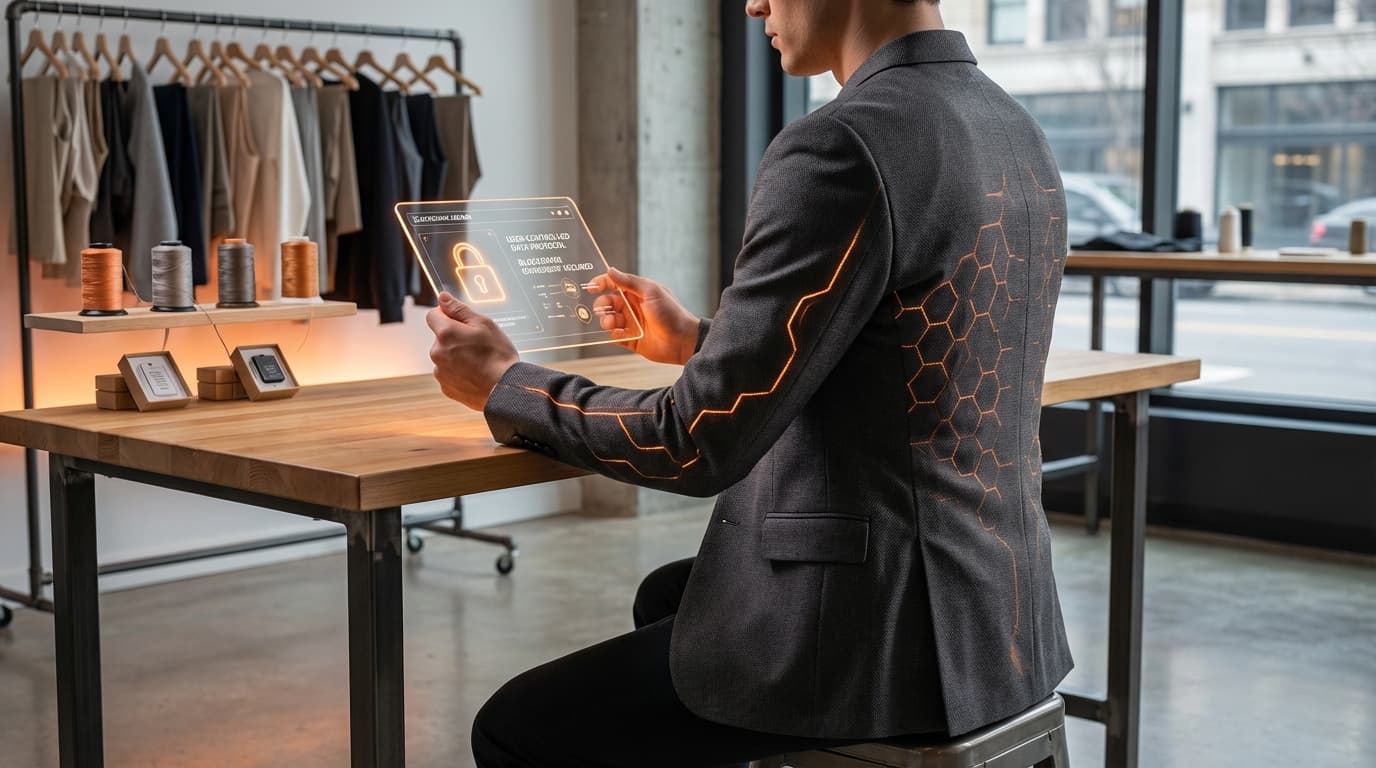
Data ownership protocols use blockchain technology and decentralized systems to give users control and ownership over the sensitive data generated by smart clothing and wearables, including biometric information, movement patterns, location data, and health metrics. These protocols enable users to decide how their data is used, who can access it, and whether they want to monetize it, rather than having data automatically collected and owned by manufacturers or platform companies.
This innovation addresses critical privacy and data sovereignty concerns as smart clothing and wearables become more prevalent and collect increasingly sensitive personal information. Traditional models often give companies broad rights to collect, use, and monetize user data, but data ownership protocols flip this model, putting users in control. These systems use cryptographic techniques and smart contracts to enforce user preferences and enable selective data sharing or monetization.
The technology is particularly significant as concerns about data privacy and surveillance grow, and as regulations like GDPR establish rights around personal data. By giving users control over their wearable data, these protocols could enable new models of data ownership and value distribution. However, implementation faces challenges including technical complexity, user adoption, and the need for industry-wide standards. As smart clothing becomes more common and data collection increases, establishing robust data ownership protocols will be crucial for protecting user privacy and autonomy.
Related Organizations

Building a decentralized platform that connects real-world data from IoT devices to blockchain DApps.

Provides a 'Liberty' platform that aggregates data from sensors and wearables into a personal data cloud owned by the user, not the device manufacturer.

A decentralized data exchange protocol that allows data to be tokenized and sold while preserving privacy (Compute-to-Data).

The web3 evolution of Sweatcoin, validating movement data on-chain to reward users, effectively giving value and ownership to physical activity data.

Develops enterprise blockchain solutions including 'Track & Trust' for supply chain and data sovereignty applications.

Home of the Affective Computing research group led by Rosalind Picard.

Blockchain platform integrating secure enclaves to enable privacy-preserving smart contracts.

A blockchain with data privacy by default, allowing smart contracts to use encrypted inputs (like health data) without exposing the raw data.

International community that develops open standards to ensure the long-term growth of the Web.

Uses cryptographically secure biometric verification to link digital identities to physical humans without revealing the biometric data itself.
Supporting Evidence
Research this in Signals
Signals turns a topic into a sourced research record you can inspect and rerun. Your first scan is free, and this one starts with Data Ownership Protocols for Wearables already loaded, so edit it or scan as is.