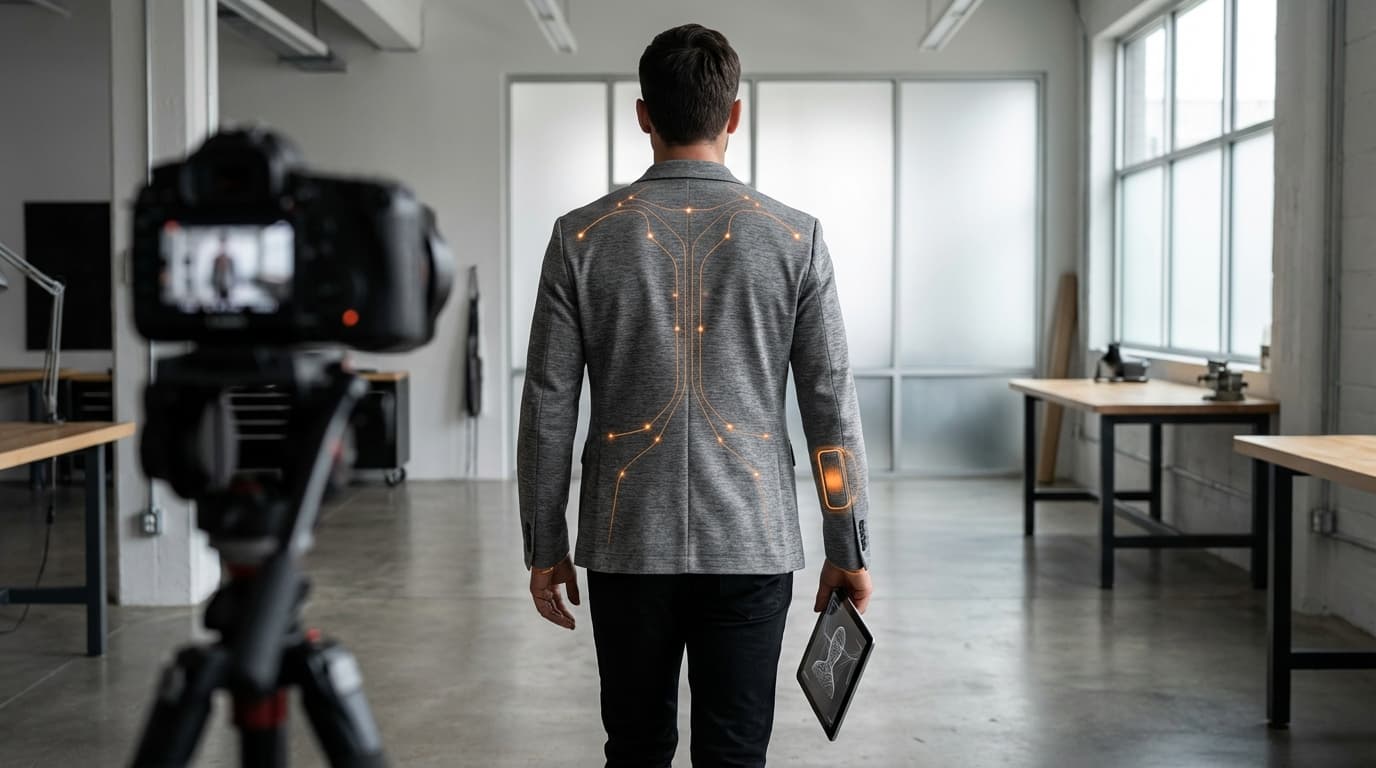
Biometric Fabric Sensors for Identity Verification
Biometric fabric sensors integrate arrays of sensors into textiles that can detect and analyze unique physiological patterns including gait (walking style), body heat signatures, muscle activation patterns, and other biometric characteristics. These systems use machine learning algorithms to create unique biometric profiles for each individual, enabling continuous, passive identity verification without requiring active user interaction like passwords or fingerprint scans.
This innovation enables new security and access control models where clothing itself becomes an authentication device, providing seamless identity verification in various contexts. The technology could be used for secure facility access, device unlocking, or personalized experiences. However, it also raises significant privacy and consent concerns, as continuous biometric monitoring creates new vectors for surveillance and data collection. Research institutions and technology companies are developing these capabilities, though commercial deployment remains limited due to technical and ethical considerations.
The technology represents a convergence of wearable technology, biometrics, and security systems, creating new possibilities for seamless authentication. However, the privacy implications are profound, as continuous biometric monitoring could enable unprecedented tracking and surveillance. As the technology develops, establishing appropriate privacy safeguards, consent mechanisms, and regulatory frameworks will be crucial to ensure that biometric fabric sensors enhance security without compromising individual privacy and autonomy.
Related Organizations

Developer of the Skiin textile computing platform, which knits sensors directly into fabric.

Creates smart socks and garments with textile pressure sensors.

Nextiles
United States · Startup
Materials science company building smart fabrics that capture biomechanical data through sewing technology.

Develops smart fabric sensors originally designed for musical instruments, now used in VR and safety.

Develops smart clothing with integrated body sensors for health tracking.


Creators of CausalImpact, a package for causal inference using Bayesian structural time-series.

A technology company developing electronics for automotive and personal protection, including smart fibers.


Develops medical-grade wearables (Embrace) monitoring EDA and physiological signals.
Supporting Evidence
Research this in Signals
Signals turns a topic into a sourced research record you can inspect and rerun. Your first scan is free, and this one starts with Biometric Fabric Sensors for Identity Verification already loaded, so edit it or scan as is.