Envisioning is an emerging technology research institute and advisory.

LinkedInInstagramGitHub

2011 — 2026

research
  • Reports
  • Newsletter
  • Methodology
  • Origins
  • Vocab
services
  • Research Sessions
  • Signals Workspace
  • Bespoke Projects
  • Use Cases
  • Signal Scanfree
  • Readinessfree
impact
  • ANBIMAFuture of Brazilian Capital Markets
  • IEEECharting the Energy Transition
  • Horizon 2045Future of Human and Planetary Security
  • WKOTechnology Scanning for Austria
audiences
  • Innovation
  • Strategy
  • Consultants
  • Foresight
  • Associations
  • Governments
resources
  • Pricing
  • Partners
  • How We Work
  • Data Visualization
  • Multi-Model Method
  • FAQ
  • Security & Privacy
about
  • Manifesto
  • Community
  • Events
  • Support
  • Contact
  • Login
ResearchServicesPricingPartnersAbout
  1. Home
  2. Research
  3. Fabric
  4. On-Body Edge Computing Textiles

On-Body Edge Computing Textiles

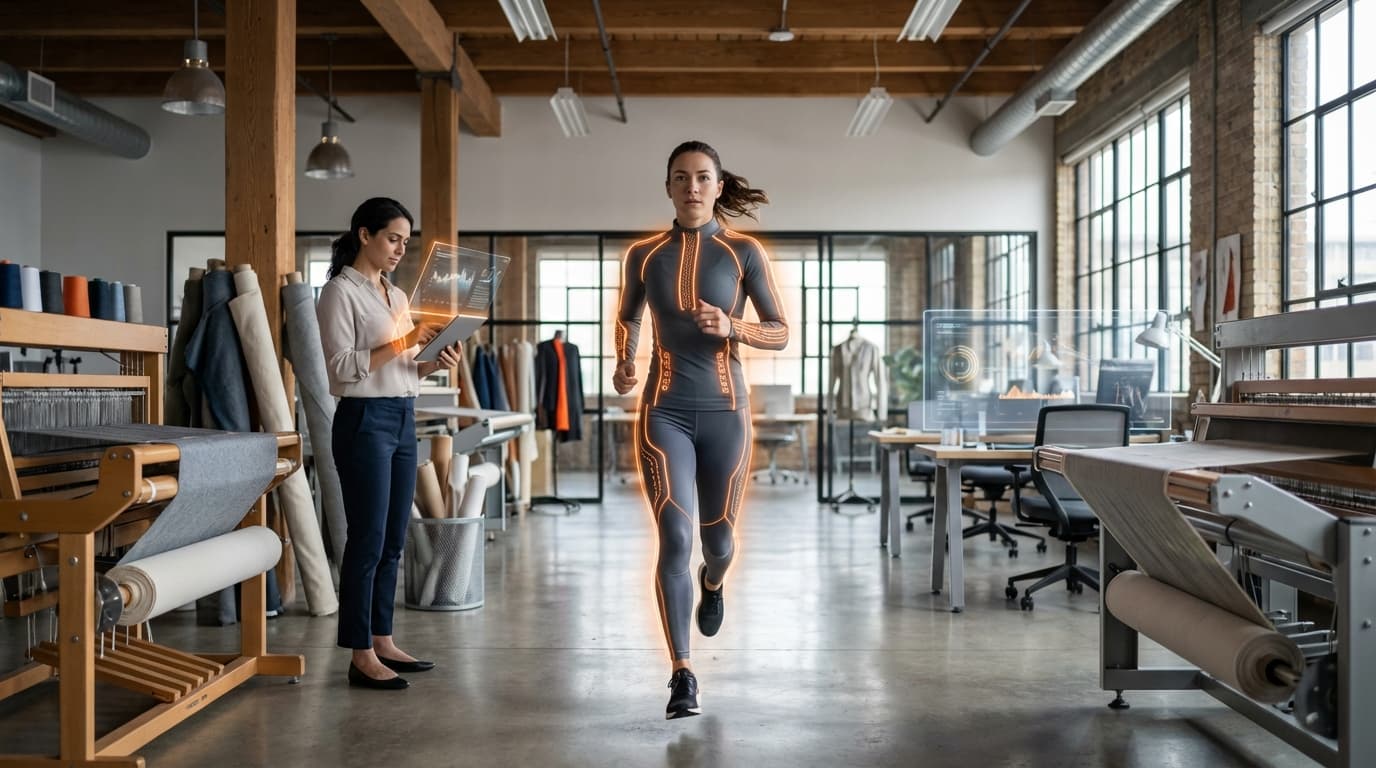
Smart fabrics with embedded processors that analyze sensor data locally in real time
Back to FabricView interactive version

On-body edge computing textiles integrate programmable logic arrays, microprocessors, or specialized computing elements directly into fabric structures, enabling smart garments to process sensor data locally without transmitting information to external devices or cloud servers. This distributed computing architecture allows for real-time data analysis, decision-making, and response directly within the garment itself.

This innovation addresses critical challenges in wearable technology including latency, privacy, and power consumption. By processing data locally, these systems can respond instantly to sensor inputs (such as detecting falls, monitoring vital signs, or adjusting heating) without the delay of cloud communication. Local processing also keeps sensitive health and biometric data on-device, addressing privacy concerns. Research institutions and startups are developing these technologies, though they remain largely in the research and development phase.

The technology is particularly significant for applications requiring real-time response, such as safety monitoring, medical alert systems, or adaptive clothing that responds to environmental conditions. As concerns about data privacy grow and the need for instant response in safety-critical applications increases, on-body edge computing could become essential for next-generation smart textiles, enabling truly autonomous wearable systems that don't depend on external connectivity.

TRL
3/9Conceptual
Impact
2/5
Investment
2/5
Category
Software

Related Organizations

Google logo
Google

United States · Company

95%

Creators of CausalImpact, a package for causal inference using Bayesian structural time-series.

Developer
MIT Media Lab logo
MIT Media Lab

United States · Research Lab

95%

Home of the Affective Computing research group led by Rosalind Picard.

Researcher
Myant logo
Myant

Canada · Company

95%

Developer of the Skiin textile computing platform, which knits sensors directly into fabric.

Developer
Fraunhofer IZM logo
Fraunhofer IZM

Germany · Research Lab

90%

German research institute specializing in reliability and micro-integration, including e-textiles.

Researcher
Loomia logo
Loomia

United States · Startup

90%

Produces the Loomia Electronic Layer (LEL), a soft flexible circuit system for textiles.

Developer
Nextiles logo

Nextiles

United States · Startup

90%

Materials science company building smart fabrics that capture biomechanical data through sewing technology.

Developer
AiQ Smart Clothing logo
AiQ Smart Clothing

Taiwan · Company

85%

Integrates stainless steel yarns into textiles for smart clothing applications.

Developer
Empa logo

Empa

Switzerland · Research Lab

85%

Swiss Federal Laboratories for Materials Science and Technology, researching self-healing elastomers.

Researcher
Hexoskin logo
Hexoskin

Canada · Company

85%

Develops smart clothing with integrated body sensors for health tracking.

Developer
Noble Biomaterials logo
Noble Biomaterials

United States · Company

80%

Manufacturer of conductive solutions like Circuitex for smart soft surface applications.

Developer

Supporting Evidence

Evidence data is not available for this technology yet.

Connections

Ethics Security
Ethics Security
Biometric Fabric Sensors for Identity Verification

Textiles that authenticate wearers through gait, heat signature, or muscle patterns

TRL
4/9
Impact
3/5
Investment
3/5
Applications
Applications
Identity-Linked Apparel Ecosystems

Garments with embedded credentials for access control, loyalty tracking, and digital identity

TRL
6/9
Impact
3/5
Investment
3/5
Hardware
Hardware
Graphene-Enhanced Smart Fabrics

Conductive nanolayers that add sensing, heating, or energy storage to flexible textiles

TRL
5/9
Impact
3/5
Investment
3/5
Applications
Applications
Smart Personal Protective Equipment (PPE)

Protective workwear with embedded sensors for health monitoring and real-time hazard alerts

TRL
7/9
Impact
3/5
Investment
3/5
Applications
Applications
Medical-Grade Compression Textiles

Therapeutic garments with graduated pressure and embedded biosensors for clinical monitoring

TRL
8/9
Impact
5/5
Investment
4/5
Ethics Security
Ethics Security
Data Ownership Protocols for Wearables

Blockchain frameworks letting wearable users control who accesses their biometric and health data

TRL
3/9
Impact
4/5
Investment
2/5

Book a research session

Bring this signal into a focused decision sprint with analyst-led framing and synthesis.
Research Sessions