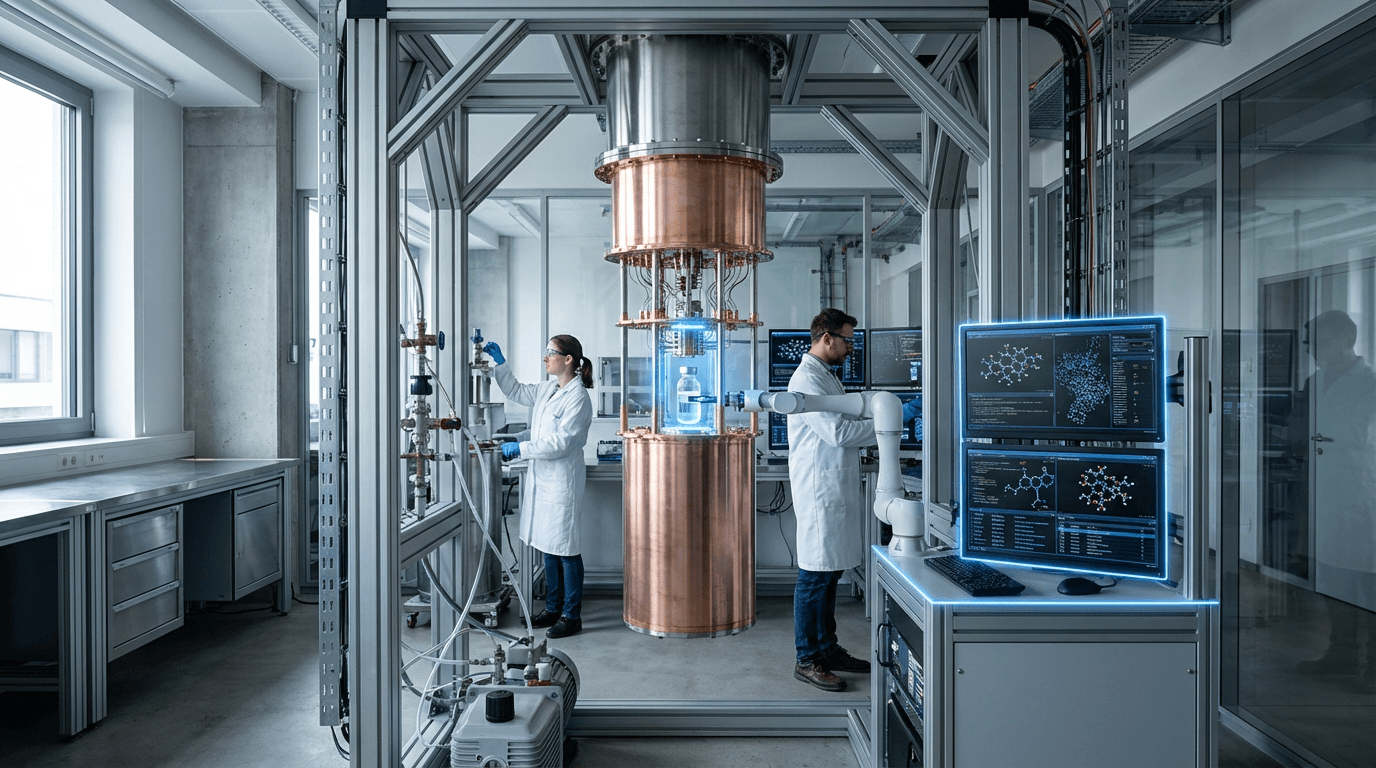
Quantum Drug Discovery
Quantum drug discovery represents a paradigm shift in pharmaceutical research, harnessing the unique computational capabilities of quantum computers to tackle molecular modeling challenges that have long eluded classical computing systems. Unlike traditional computers that process information in binary bits, quantum computers utilize quantum bits or qubits, which can exist in multiple states simultaneously through the principle of superposition. This fundamental difference allows quantum systems to evaluate vast numbers of molecular configurations and interaction pathways in parallel, making them particularly suited for simulating the quantum mechanical behavior of electrons in molecular systems. The technology addresses a critical bottleneck in anti-aging drug development: the accurate prediction of how candidate compounds will interact with complex biological targets such as senescent cells, mitochondrial proteins, and DNA repair mechanisms. Classical computational methods often rely on approximations that sacrifice accuracy for speed, but quantum algorithms can model electron correlations and chemical bonding with a level of precision that more closely mirrors actual molecular behavior.
The pharmaceutical industry has long struggled with the high failure rates and extended timelines inherent in traditional drug discovery processes, particularly for compounds targeting the intricate mechanisms of cellular aging. Quantum drug discovery addresses these challenges by dramatically accelerating the initial screening and optimization phases of drug development. Research suggests that quantum simulations can reduce the time required to identify promising senolytic candidates—compounds that selectively eliminate senescent cells—from years to months by more accurately predicting binding affinities, metabolic stability, and potential off-target effects. This capability is especially valuable for geroprotectors, which must interact precisely with cellular pathways involved in longevity without disrupting normal cellular function. Industry analysts note that the technology enables researchers to explore chemical spaces that were previously computationally inaccessible, potentially uncovering entirely new classes of anti-aging therapeutics. Furthermore, quantum approaches can optimize existing drug candidates by identifying subtle molecular modifications that enhance efficacy or reduce side effects, addressing one of the most resource-intensive aspects of pharmaceutical development.
While fully fault-tolerant quantum computers capable of simulating large biological molecules remain under development, early hybrid quantum-classical systems are already being deployed in research settings to tackle specific aspects of drug discovery. Pharmaceutical companies and research institutions are conducting pilot programs that use current-generation quantum processors to model smaller molecular fragments and validate quantum algorithms against known drug-target interactions. These initial deployments indicate that even near-term quantum devices can provide valuable insights for optimizing lead compounds and predicting molecular properties. As quantum hardware continues to advance, with improvements in qubit count, coherence times, and error correction, the technology is expected to become increasingly central to longevity research. The convergence of quantum computing with artificial intelligence and high-throughput screening platforms suggests a future where anti-aging drug discovery becomes not only faster and more accurate but also capable of addressing previously intractable biological targets, potentially accelerating the translation of longevity science from laboratory findings to clinical interventions that could meaningfully extend healthy human lifespan.
Related Organizations


Combines quantum computing and machine learning to design new peptides and proteins.

Deeptech company accelerating drug discovery with physics-based simulation.

Develops 'Aurora', a drug discovery platform utilizing variational quantum eigensolvers (VQE) with proprietary error mitigation techniques.

Spun out of Alphabet, they provide a Security Suite that discovers cryptographic vulnerabilities and manages the migration to PQC.

Researching sensory feedback in prosthetics (Paul Marasco's lab) to restore the sense of agency and ownership over artificial limbs.

One of the world's largest pharmaceutical companies.

A clinical-stage biotechnology company using generative AI for end-to-end drug discovery and research.

Riverlane
United Kingdom · Company
Builds the operating system for quantum computers, with a strong focus on error correction for chemical simulation.

Develops neutral-atom quantum computers and has published a roadmap specifically targeting logical qubits.
Supporting Evidence
Research this in Signals
Signals turns a topic into a sourced research record you can inspect and rerun. Your first scan is free, and this one starts with Quantum Drug Discovery already loaded, so edit it or scan as is.