Global Crisis Coordination Platforms
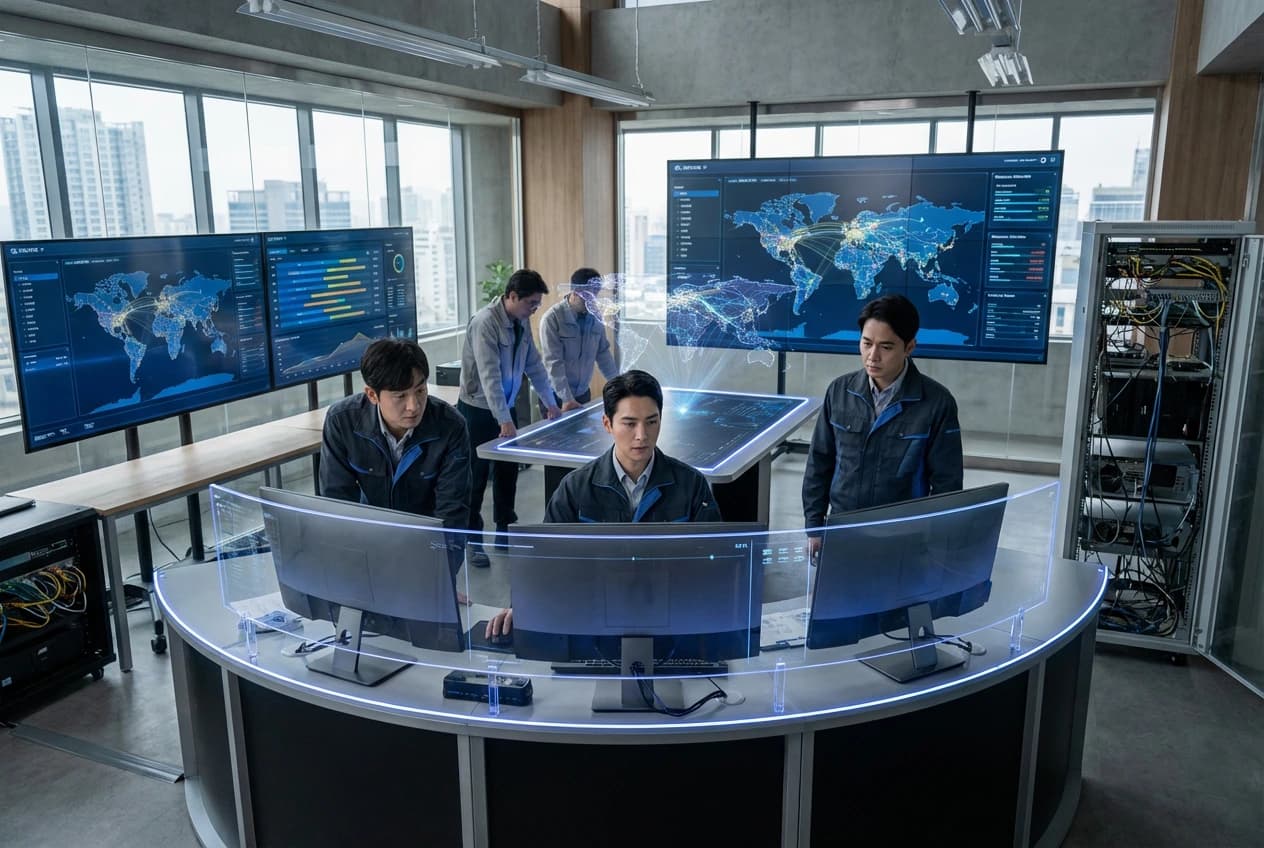
Global crisis coordination platforms represent a new generation of interoperable software systems designed to overcome the fragmentation that has historically plagued international disaster response. When crises strike—whether pandemics, climate disasters, or cascading infrastructure failures—the ability to rapidly mobilize resources across borders often determines the difference between containment and catastrophe. Traditional emergency management systems typically operate within national or regional silos, creating dangerous delays when information must flow between incompatible databases, communication protocols, and institutional hierarchies. These platforms address this fundamental coordination problem by establishing shared digital infrastructure that integrates real-time sensor data, logistics networks, supply chain information, and institutional mandates into a unified operational picture. By creating common data standards and interoperability protocols, they enable disparate organizations—from UN agencies and national governments to NGOs and private sector logistics providers—to see the same information simultaneously and coordinate their responses without the friction of incompatible systems or duplicated efforts.
The operational value of these platforms becomes most apparent during complex emergencies that span multiple jurisdictions and require coordinated deployment of specialized resources. During large-scale disasters, the challenge is rarely an absolute shortage of aid but rather the inability to match available resources with urgent needs quickly enough. Bottlenecks emerge when one region has surplus medical supplies while another faces critical shortages, yet no mechanism exists to identify and route these resources efficiently. Crisis coordination platforms solve this matching problem by maintaining dynamic inventories of available capacities—hospital beds, emergency personnel, water purification equipment, transport assets—and continuously updating need assessments from affected areas. Algorithms can then optimize resource allocation across multiple simultaneous crises, ensuring that limited assets flow to where they will have the greatest impact. This capability is particularly crucial as climate change increases the frequency of concurrent disasters, when traditional response systems become overwhelmed by competing demands.
Early implementations of these platforms have emerged through international humanitarian networks and regional disaster response frameworks, with pilot programs demonstrating significant improvements in response times and resource utilization during recent climate events. The technology builds upon decades of supply chain optimization and logistics management while incorporating advances in real-time data integration and collaborative decision-making tools. As extreme weather events become more frequent and interconnected global risks intensify, these platforms represent essential infrastructure for civilizational resilience. Their development reflects a broader recognition that twenty-first-century crises rarely respect borders and that effective response requires not just national preparedness but coordinated transnational capacity. The trajectory points toward increasingly sophisticated systems that can anticipate cascading failures, pre-position resources based on predictive models, and maintain operational continuity even when individual nodes in the network are compromised—creating a more robust foundation for managing the complex, interconnected risks that define our era.
Related Organizations

United Nations Office for the Coordination of Humanitarian Affairs.

Technology leader in the development of open-source software for information collection, visualization, and interactive mapping.

A global software company that provides critical event management and enterprise safety applications.

Global leader in GIS software (ArcGIS), providing the spatial analytics layer used by thousands of local governments for urban planning and policy.

Builds software that empowers organizations to integrate their data, decisions, and operations (Foundry and AIP).

The impact arm of the digital freight forwarder Flexport.
A GardaWorld company providing integrated risk management, crisis response, and global protective solutions.

Hexagon AB
Sweden · Company
A global leader in sensor, software, and autonomous solutions, providing reality capture for digital twins.

Operates the world's largest autonomous drone delivery network, specializing in medical supplies and e-commerce delivery.

Provides a cloud computing platform to help companies manage digital workflows for enterprise operations.
Supporting Evidence
Research this in Signals
Signals turns a topic into a sourced research record you can inspect and rerun. Your first scan is free, and this one starts with Global Crisis Coordination Platforms already loaded, so edit it or scan as is.