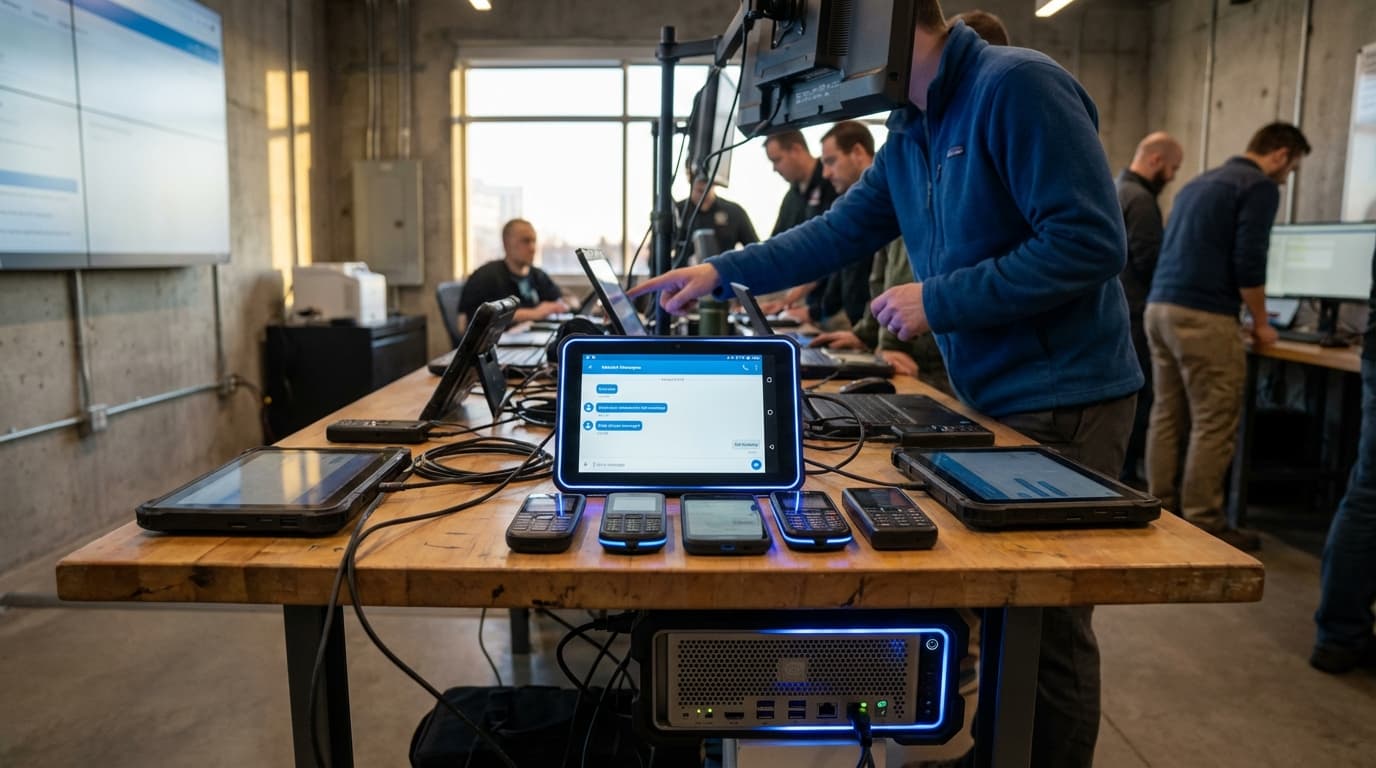
Mobile Resilience Networks
Mobile Resilience Networks represent a critical infrastructure solution that harnesses the ubiquity of basic mobile technology to create robust communication systems for crisis management and disaster response. Unlike contemporary digital platforms that depend on high-speed internet connectivity and smartphones, these networks operate through fundamental mobile technologies including Unstructured Supplementary Service Data (USSD), Short Message Service (SMS), and basic cellular voice networks. USSD, in particular, enables real-time, session-based communication without requiring internet access, functioning through simple menu-driven interfaces accessible on even the most basic feature phones. This technical foundation allows the system to operate reliably in environments where infrastructure is limited, intermittent, or compromised, making it particularly valuable in regions where smartphone penetration remains low and internet connectivity is unreliable or non-existent.
The fundamental challenge these networks address is the persistent digital divide that leaves billions of people vulnerable during emergencies, unable to receive timely warnings or coordinate effective responses when disasters strike. Traditional emergency communication systems often assume access to smartphones, mobile applications, and stable internet connections—assumptions that exclude vast populations in rural areas, informal settlements, and economically constrained communities. Mobile Resilience Networks overcome these limitations by meeting communities where they are technologically, leveraging the infrastructure that already exists in their hands. Research across Sub-Saharan Africa and South Asia indicates that feature phones remain the dominant mobile device in many regions, with basic cellular networks reaching far beyond internet coverage areas. By building resilience systems on this foundation, these platforms enable early warning dissemination for floods, droughts, and other climate-related hazards, facilitate coordination among community responders during emergencies, and support mutual aid networks that connect those in need with available resources.
Early deployments across Kenya, Bangladesh, and parts of West Africa demonstrate the practical viability of this approach, with community-based organizations and humanitarian agencies increasingly incorporating SMS-based alert systems and USSD coordination platforms into their disaster preparedness strategies. These implementations have shown particular promise in agricultural communities, where timely weather alerts and market information can mean the difference between food security and crisis, and in flood-prone regions where hours of advance warning enable life-saving evacuations. The technology also supports ongoing resilience efforts beyond acute emergencies, facilitating community health worker coordination, resource mapping, and knowledge sharing among distributed networks. As climate change intensifies the frequency and severity of natural disasters, particularly in regions with limited digital infrastructure, Mobile Resilience Networks represent an essential complement to more advanced technological solutions, ensuring that the benefits of digital coordination reach every community regardless of their position on the technological spectrum.
Related Organizations

A global network of organizations led by the World Food Programme that provides shared communications services in humanitarian emergencies.

Technology leader in the development of open-source software for information collection, visualization, and interactive mapping.
International Federation of Red Cross and Red Crescent Societies (IFRC)
Switzerland · Nonprofit
The world's largest humanitarian network, which deploys SMS-based early warning systems (like the Tera system) in disaster zones.

Steward of the Community Health Toolkit, an open-source project enabling health workers to coordinate care via basic mobile apps and SMS.

An African nonprofit that builds mobile technology for social impact, including the MomConnect platform.

Creators of AtmaGo, a neighborhood-level social network for disaster warning and community action in Indonesia.

A platform that enables social impact organizations to have personal, guided conversations at scale using WhatsApp.

The social impact arm of Twilio, providing communication infrastructure for nonprofits to send SMS and voice alerts during crises.

AI platform that detects high-impact events and emerging risks from public data signals in real-time.
Supporting Evidence
Research this in Signals
Signals turns a topic into a sourced research record you can inspect and rerun. Your first scan is free, and this one starts with Mobile Resilience Networks already loaded, so edit it or scan as is.