Global Catastrophic Risk Treaties
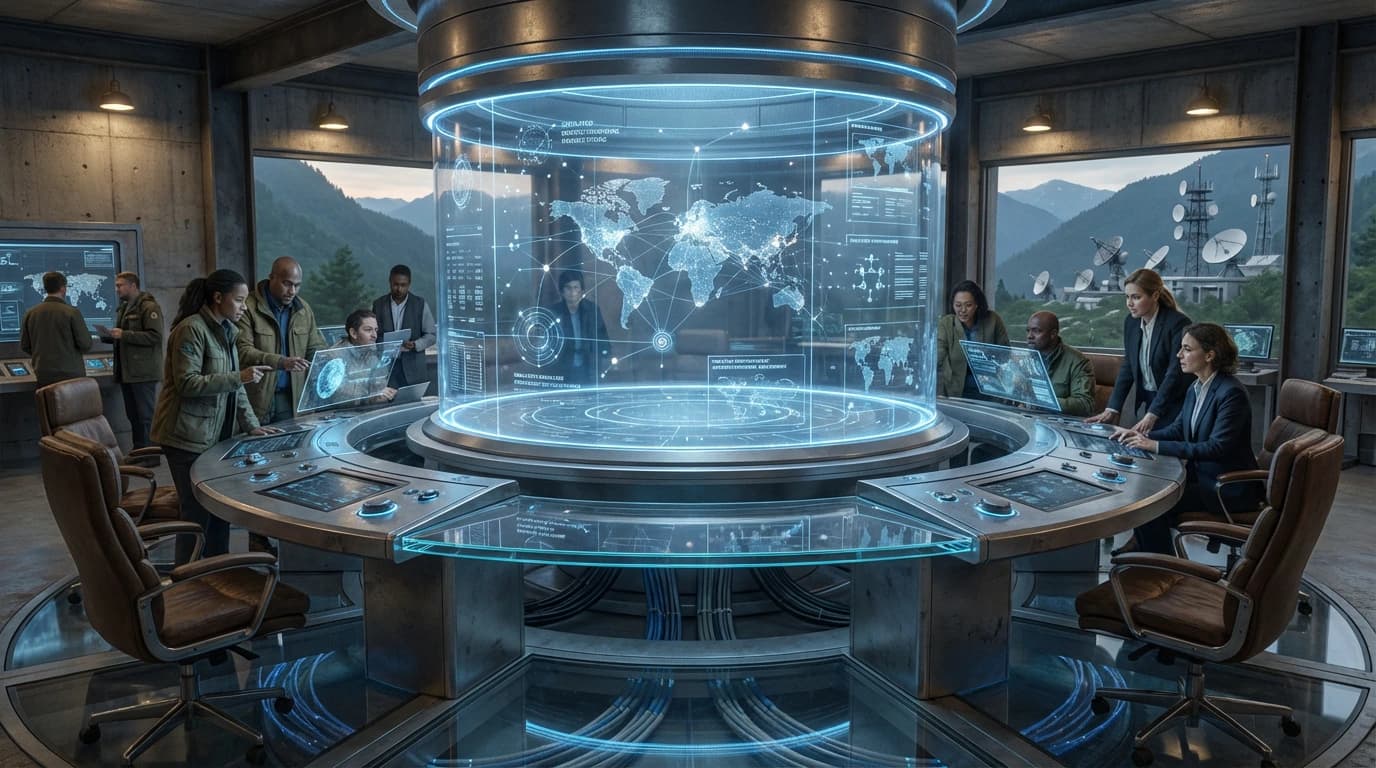
The emergence of technologies with civilizational-scale consequences—ranging from autonomous weapons systems and synthetic biology to climate intervention techniques—has created an unprecedented governance challenge. Traditional international law and treaty frameworks were designed for an era when existential risks were primarily nuclear in nature, with clear state actors and relatively straightforward verification protocols. Today's landscape is far more complex, involving dual-use technologies that can be developed by both state and non-state actors, often with minimal infrastructure and in jurisdictions with varying regulatory capacities. Global catastrophic risk treaties represent a new generation of international agreements specifically designed to address these challenges by establishing binding commitments, verification mechanisms, and enforcement protocols that can operate across diverse technological domains and geopolitical contexts.
These frameworks address several critical gaps in existing international governance structures. First, they create mechanisms for early warning and information sharing about emerging high-risk technologies, allowing the international community to respond proactively rather than reactively to potential threats. Second, they establish common standards and red lines for research and development activities that could pose existential risks, providing clarity for scientists, institutions, and governments about acceptable boundaries. Third, they incorporate novel verification approaches that can adapt to rapidly evolving technologies—including algorithmic monitoring, international inspection regimes, and transparency requirements for high-risk research facilities. Perhaps most importantly, these treaties aim to build consensus around the principle that certain technological capabilities, regardless of their potential benefits, may require international coordination or even prohibition due to their catastrophic risk profiles.
Current efforts in this domain remain largely in exploratory phases, with various international bodies, academic institutions, and policy organizations working to develop model frameworks and build diplomatic momentum. The Biological Weapons Convention and certain provisions of the Outer Space Treaty provide historical precedents, though experts note that contemporary risks require more sophisticated and adaptive governance mechanisms. Research suggests that successful implementation will require unprecedented levels of international cooperation, including participation from major technological powers, robust funding for verification infrastructure, and mechanisms for rapid treaty amendment as new risks emerge. As humanity's technological capabilities continue to expand, the development of effective global catastrophic risk treaties represents not merely a diplomatic priority but a fundamental requirement for long-term civilizational resilience, ensuring that our species can navigate the coming decades without triggering irreversible catastrophes through technological misadventure or malice.
Related Organizations

Research center at the University of Cambridge studying global catastrophic risks, including bio-risk.

A think tank analyzing the risk of significant global catastrophes, focusing on AI, nuclear war, and climate change.

Works with multilateral organizations and governments to embed long-termism into policy-making.
UN body promoting nuclear disarmament and non-proliferation.

A foundation that works to incite deeper understanding of the global risks that threaten humanity and catalyzes collaboration to minimize them.

A nonprofit analyzing systemic risks, with a specific institute (Nolan Center) dedicated to the future of biological risks and governance.

International institute dedicated to research into conflict, armaments, arms control and disarmament.
A media and research organization that sets the Doomsday Clock, assessing man-made threats to human existence.
Supporting Evidence
Research this in Signals
Signals turns a topic into a sourced research record you can inspect and rerun. Your first scan is free, and this one starts with Global Catastrophic Risk Treaties already loaded, so edit it or scan as is.