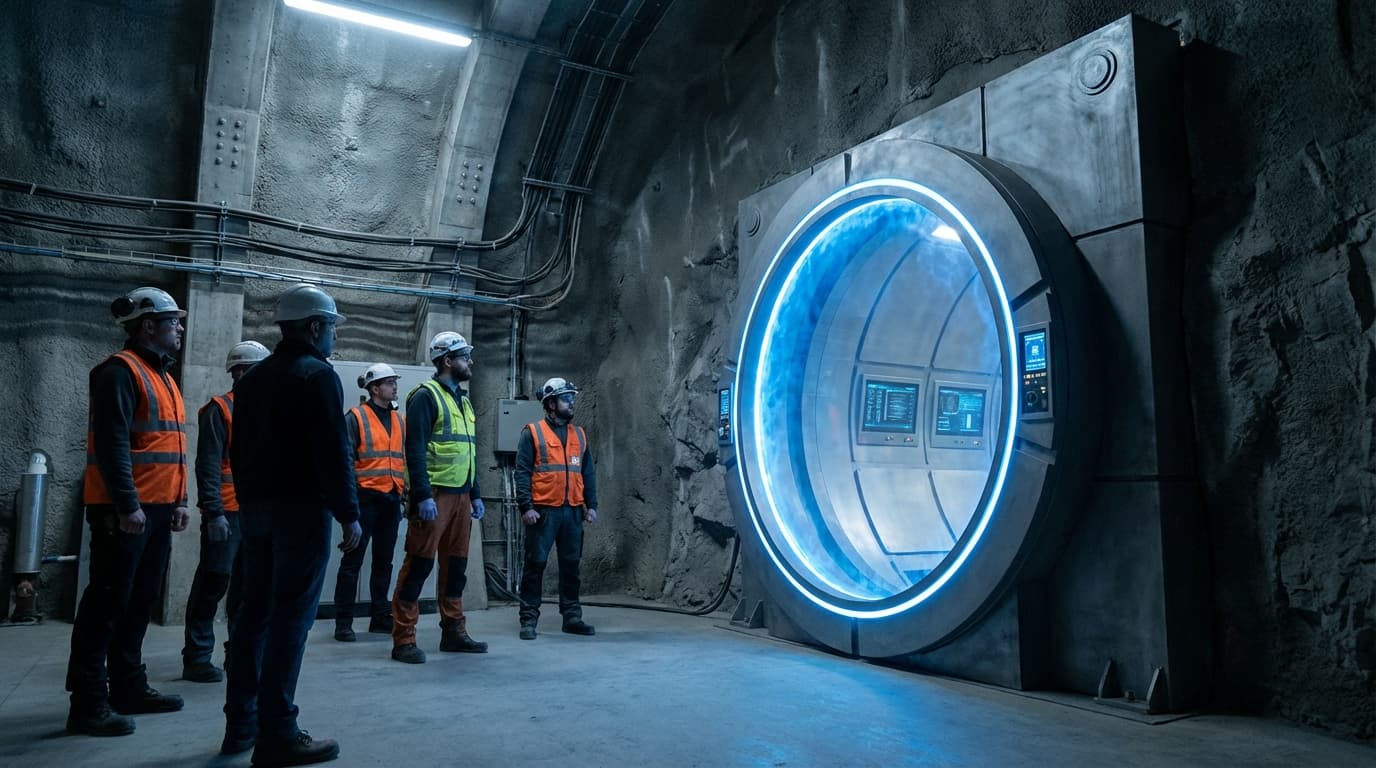
Hardened Refuge Infrastructure
Hardened Refuge Infrastructure represents a paradigm shift in civilizational continuity planning, moving beyond traditional disaster preparedness to address existential-scale threats. These facilities are engineered as self-contained biospheres capable of sustaining human life for extended periods—potentially decades—in complete isolation from the surface environment. The technical architecture integrates multiple redundant systems: geothermal or nuclear power generation for energy independence, hydroponic and aquaponic food production systems, advanced air filtration and atmospheric recycling, and comprehensive knowledge preservation through both digital and analog archives. Construction typically involves deep geological placement—whether in abandoned mines, purpose-built subterranean complexes, beneath ice sheets, or in pressurized submarine structures—with radiation shielding, seismic isolation, and environmental controls designed to withstand scenarios ranging from nuclear fallout to prolonged volcanic winters. These refuges incorporate genetic seed banks, medical facilities, and manufacturing capabilities to enable not just survival but eventual surface recolonization.
The fundamental challenge these systems address is the vulnerability of modern civilization to low-probability, high-consequence events that could disrupt global food systems, communications networks, and governance structures simultaneously. Traditional emergency management focuses on recovery timelines measured in weeks or months, but scenarios such as supervolcanic eruptions, asteroid impacts, or engineered pandemics could render the surface uninhabitable for years or longer. Hardened refuges provide insurance against civilizational collapse by preserving not only human populations but also the accumulated knowledge, genetic diversity, and technical capabilities necessary to rebuild. This approach recognizes that in extreme scenarios, the survival of even a small, carefully selected population with access to preserved information could mean the difference between permanent collapse and eventual recovery. The infrastructure also addresses the "knowledge bottleneck" problem—ensuring that critical scientific, agricultural, and engineering expertise survives catastrophic population reduction.
While fully operational hardened refuges remain limited, research suggests growing interest from both governmental and private entities in developing such capabilities. Norway's Svalbard Global Seed Vault represents an early model of deep-storage preservation infrastructure, though focused solely on agricultural genetics rather than human habitation. Various national security agencies have explored continuity-of-government facilities with extended operational capabilities, while some private ventures have begun developing subscription-based refuge systems for high-net-worth individuals. The technical challenges remain substantial—maintaining psychological health in confined populations, ensuring genetic diversity with limited numbers, and creating governance structures that can function across generational timescales. As awareness grows regarding tail-risk catastrophic scenarios, particularly those involving climate tipping points, nuclear proliferation, and biotechnology risks, investment in hardened refuge infrastructure is likely to increase. These systems represent a form of civilizational insurance, acknowledging that while such extreme scenarios may be improbable, their potential consequences justify preparation measures that extend beyond conventional disaster response frameworks.
Related Organizations

The institution responsible for the daily operation and management of the Svalbard Global Seed Vault.
Builds and manages a global network of hardened underground shelter communities (e.g., Vivos xPoint).

Provides ultra-secure, long-term data storage on film, operating the Arctic World Archive.

Converts decommissioned Atlas missile silos into luxury survival condominiums.

Swiss federal agency responsible for civil defense and the country's extensive shelter network.

Rising S Company
United States · Company
Manufacturer of steel underground bunkers and storm shelters.

Construction management firm specializing in fortified homes and military facilities.
Iron Mountain
United States · Company
An enterprise information management services company.
Supporting Evidence
Research this in Signals
Signals turns a topic into a sourced research record you can inspect and rerun. Your first scan is free, and this one starts with Hardened Refuge Infrastructure already loaded, so edit it or scan as is.