Envisioning is an emerging technology research institute and advisory.

LinkedInInstagramGitHub

2011 — 2026

research
  • Reports
  • Newsletter
  • Methodology
  • Origins
  • Vocab
services
  • Research Sessions
  • Signals Workspace
  • Bespoke Projects
  • Use Cases
  • Signal Scanfree
  • Readinessfree
impact
  • ANBIMAFuture of Brazilian Capital Markets
  • IEEECharting the Energy Transition
  • Horizon 2045Future of Human and Planetary Security
  • WKOTechnology Scanning for Austria
audiences
  • Innovation
  • Strategy
  • Consultants
  • Foresight
  • Associations
  • Governments
resources
  • Pricing
  • Partners
  • How We Work
  • Data Visualization
  • Multi-Model Method
  • FAQ
  • Security & Privacy
about
  • Manifesto
  • Community
  • Events
  • Support
  • Contact
  • Login
ResearchServicesPricingPartnersAbout
  1. Home
  2. Research
  3. Cities
  4. Sponge City

Sponge City

Urban design using permeable surfaces and green infrastructure to absorb, filter, and store rainwater naturally
Back to CitiesView interactive version

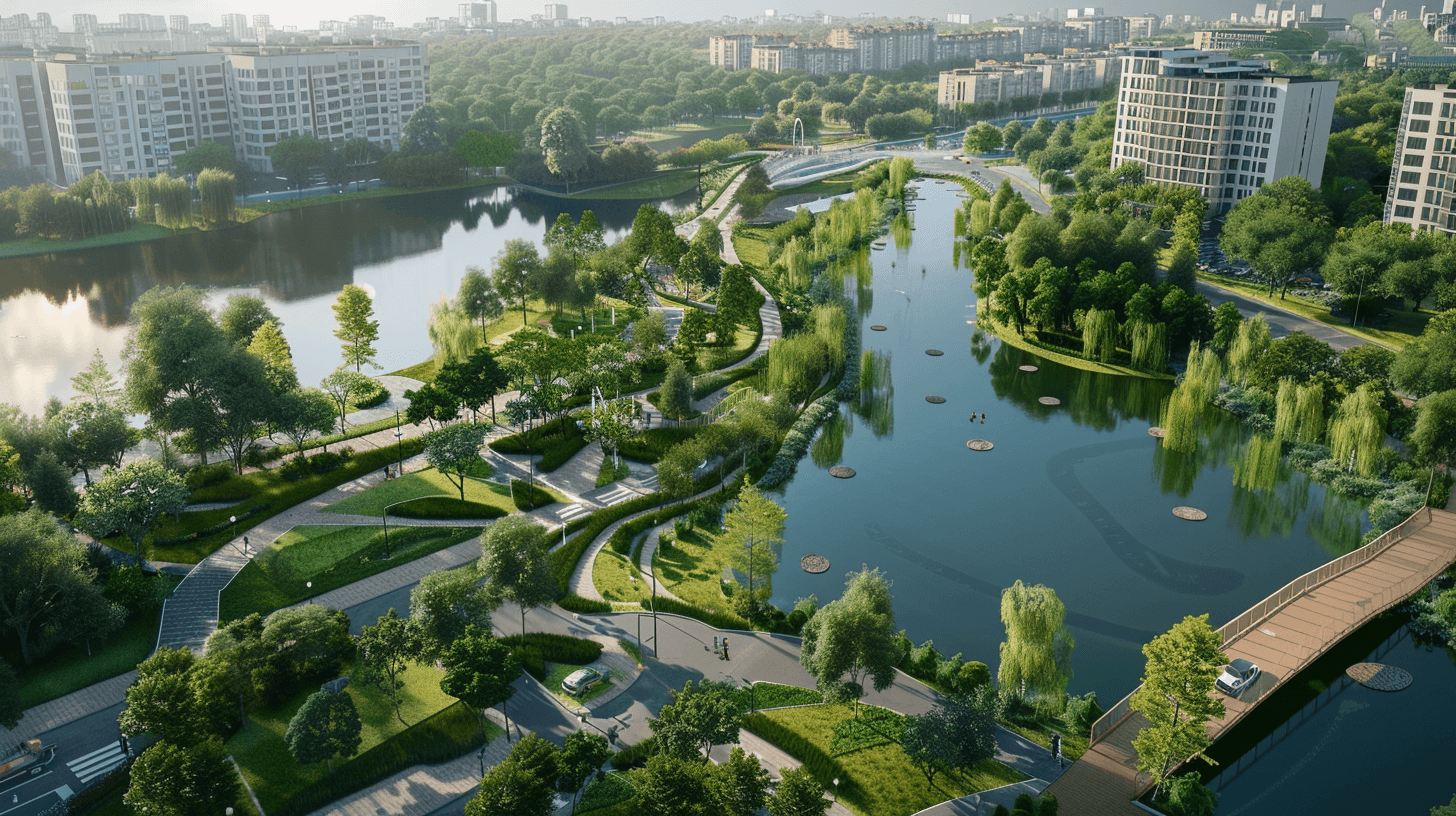
In the face of increasing urbanisation and climate change, cities worldwide are grappling with significant challenges related to water management, including flooding, water scarcity, and pollution. The concept of a Sponge City offers a promising solution to these issues by aiming to make urban areas more permeable and capable of naturally absorbing and purifying rainwater, thereby reducing flood risk and enhancing water quality.

A Sponge City utilises an integrated approach that includes green roofs, permeable pavements, wetlands, rain gardens, and enhanced urban greenery. These features work together to absorb, clean, and store rainwater, which can later be released or reused when needed. By mimicking natural water cycles, this approach not only reduces the strain on traditional drainage systems but also contributes to groundwater replenishment and the reduction of urban heat islands.

Traditional drainage systems in cities are often overwhelmed by heavy rains due to their impervious surfaces, leading to frequent and damaging floods. Sponge Cities addresses this issue at its root by transforming the urban landscape into an active water management participant rather than a passive observer. This transition is vital for sustainable urban development, ensuring cities are resilient against both excess water during rainy periods and water shortages during droughts.

Additionally, the Sponge City model promotes biodiversity and provides more green spaces, which enhance the quality of life for residents and support urban ecosystems. As cities continue to grow, the integration of such green infrastructure will be crucial not only for managing water resources but also for providing healthy environments for urban populations.

Implementing the Sponge City concept does not merely solve an engineering challenge—it redefines how cities interact with their natural environment. For policymakers, urban planners, and environmentalists, the development and expansion of Sponge Cities represent a forward-thinking path to resilient, sustainable, and livable urban futures.
Technology Readiness Level
6/9Prototype Testing
Diffusion of Innovation
3/5Early Majority
Technology Life Cycle
2/4Growth
Category
Applications

Related Organizations

Turenscape logo
Turenscape

China · Company

98%

A landscape architecture firm led by Kongjian Yu, pioneering the 'Sponge City' concept to manage urban floods.

Developer
PUB, Singapore's National Water Agency logo

PUB, Singapore's National Water Agency

Singapore · Government Agency

95%

Manages Singapore's water supply and drainage, implementing the 'Active, Beautiful, Clean Waters' (ABC Waters) programme.

Deployer
Arcadis logo
Arcadis

Netherlands · Company

90%

Global design and consultancy firm for natural and built assets.

Deployer
Ramboll logo
Ramboll

Denmark · Company

90%

Engineering consultancy famous for 'Blue-Green Infrastructure' projects in Copenhagen and globally to manage cloudbursts.

Deployer
Deltares logo
Deltares

Netherlands · Research Lab

88%

Independent institute for applied research in the field of water and subsurface.

Researcher
HafenCity Hamburg GmbH

Germany · Government Agency

88%

Subsidiary of the Free and Hanseatic City of Hamburg responsible for developing the HafenCity district.

Deployer

DeepRoot Green Infrastructure

United States · Company

85%

Manufactures Silva Cells, a suspended pavement system that supports traffic while providing soil volume for stormwater.

Developer
Optigrun

Germany · Company

85%

Specialists in green roof systems, offering solutions for stormwater retention and solar green roofs.

Developer
Polypipe

United Kingdom · Company

85%

Manufacturer of plastic piping and ventilation systems, specializing in water management.

Developer

Supporting Evidence

Paper

From Concept to Practice: Evidence and Lessons from Sponge City Implementation in Shenzhen, China

MDPI · Mar 3, 2026

This study analyzes the implementation of Sponge City concepts in Shenzhen, offering evidence and lessons on transitioning from concept to practice in urban water management to address climate challenges.

Support 95%Confidence 98%

Paper

The mediating effect of urban water system climate resilience in the impact of sponge city pilot policy on ecological welfare

Scientific Reports · Nov 26, 2025

Investigates how sponge city policies impact ecological welfare through the mediating role of urban water system climate resilience, linking policy to environmental outcomes.

Support 89%Confidence 95%

Paper

The mediating effect of urban water system climate resilience in the impact of sponge city pilot policy on ecological welfare

Scientific Reports · Nov 26, 2025

Analyzes how urban water system climate resilience mediates the relationship between sponge city policies and ecological welfare, highlighting the systemic benefits of the technology.

Support 88%Confidence 95%

Paper

Sponge city in existing housing stock – more of a dream or reality?

Frontiers in Environmental Science · Nov 19, 2025

Explores the feasibility of retrofitting existing urban neighborhoods with sponge city elements, comparing prefabricated estates with older built-up districts in Leipzig, Germany.

Support 85%Confidence 92%

Article

What are ‘sponge cities’ and how can they prevent floods?

climatechampions.unfccc.int

A new AI-based study compares cities’ trees and lakes to how much concrete they have, to gauge their ability to respond to climate shocks. ‘Sponge cities’ are urban areas with abundant natural areas such as trees, lakes and parks – or other good designs intended to absorb rain and prevent flooding. Experts say cities need to be designed with this in mind as a growing number of urban areas are experiencing devastating floods due to climate change.

Support 50%Confidence 80%

Article

What Is a Sponge City and How Does It Work?

archdaily.com

The climate crisis has accentuated changes in the amount of rainfall, causing droughts or storms with large volumes of water, which result in floods that can cause great damage to urban infrastructure. To combat this, the sponge city is a solution that has a green infrastructure to operate the infiltration, absorption, storage and even purification of these surface waters.

Support 50%Confidence 80%

Article

What are sponge cities and how do they work?

dw.com

Copenhagen is just one city among many around the world taking a novel approach to prevent repeated flooding. It is becoming a sponge.

Support 50%Confidence 80%

Article

What are sponge cities and could they solve China's water crisis?

euronews.com

Faced with flooding and drought, these new kinds of eco-cities offer a way to incorporate the water cycle into town planning.

Support 50%Confidence 80%

Article

Making cities 'spongy' could help fight flooding — by steering the water underground

npr.org

In the shade of a willow tree, Li Tao and his buddy dabble lines in a slow-moving river channel and occasionally pull out a tiny fish. "It's good to have a place like this for people to relax," says Li, his shirt off in the midday heat.

Support 50%Confidence 80%

Article

SPONGE CITY

biophiliccities.org

Cities structured and designed to capture rain water and utilize it to reduce floods. The “Sponge City” initiative is a Chinese national policy framework that focuses on sustainable urban stormwater management in 16 Chinese cities. In 2016, Shenzhen became a pilot city of the “Sponge City” initiative and has been working to help urban communities in Shenzhen become more resilient to urban flooding with green infrastructure. Sponge Cities utilize various techniques green infrastructure retrofits such as permeable pavements, green rooftops, bioswales and constructed wetlands at a variety of scales to reduce the intensity of rainwater runoff by enhancing and distributing absorption capacities more evenly across targeted areas. The resulting groundwater replenishment increases availability of water for various uses and serves to not only reduces flooding but also enhances water supply security. A massive project, the Sponge Cities Initiative is a collaborative effort among city regulators, property owners, and engineers. The cities of Xiamen and Wuhan have already produced effective Sponge City projects. While the initiative faces some constraints related to funding and enforcement, it initiative has an ambitious goal: by 2020, 80% of urban areas should absorb and re-use at least 70% of rainwater.

Support 50%Confidence 80%

Article

What are 'sponge cities' and how can they prevent floods?

weforum.org

A new AI-based study compares cities' trees and lakes to how much concrete they have, to gauge their ability to respond to climate shocks. 'Sponge cities' are urban areas with abundant natural areas such as trees, lakes and parks - or other good designs intended to absorb rain and prevent flooding. Experts say cities need to be designed with this in mind as a growing number of urban areas are experiencing devastating floods due to climate change.

Support 50%Confidence 80%

Article

How China is designing flood-resistant cities

youtube.com

These "sponge city" designs resist floods and increase biodiversity to help us adapt to a changing climate.

Support 50%Confidence 80%

Article

Sponge Cities: Integrating Green and Gray Infrastructure to Build Climate Change Resilience in the People’s Republic of China

adb.org

Urbanization and climate change have led to a dramatic increase in hazards such as sea-level rise, storm surges, floods, droughts, extreme heat, and desertification. Adapting to the risks of a changing climate is imperative for national and local governments, and it requires both structural measures (such as infrastructure investments) and nonstructural measures (such as disaster preparedness and early warning systems for floods and other potential disasters). Structural measures have traditionally been gray infrastructure, i.e., concrete walls, dikes, drainage pipes, and storage tanks. Green infrastructure and the application of nature-based solutions (NbS) however are now valued more and are being used increasingly around the world. The People’s Republic of China (PRC) has been supporting the development of so-called sponge cities since 2014. A sponge city essentially soaks in rainwater and retains excess stormwater, then filters and releases the water slowly, much like a sponge. Sponge cities primarily utilize NbS like wetlands, greenways, parks, rain gardens, green roofs, and bioswales. Ideally, gray and green measures are systemically integrated and mutually reinforce one another to achieve resilience, such as by using harnessed rainwater during dry periods. NbS provide a range of additional benefits from ecosystem services, like improvement of air and water quality, more cooling microclimates, and recreational green spaces for people.

Support 50%Confidence 80%

Article

Sponge Cities: What is it all about?

worldfuturecouncil.org

The 34 hectares urban storm water park in the city of Harbin in northern China is an example of successful Sponge City intervention. The storm water park provides multiple ecosystems services: it collects, cleanses and stores storm water and lets it infiltrate it into the aquifers. At the same time it protects and recovers the native natural habitats and provides an aesthetically appealing public space for recreational use.

Support 50%Confidence 80%

Connections

Hardware
Hardware
Rain Park

Landscaped urban spaces that capture and filter stormwater to prevent flooding and recharge groundwater

Technology Readiness Level
8/9
Diffusion of Innovation
3/5
Technology Life Cycle
2/4
Hardware
Hardware
Porous Pavement

Permeable surface that filters stormwater, reduces flooding, and cools urban environments

Technology Readiness Level
9/9
Diffusion of Innovation
3/5
Technology Life Cycle
3/4
Hardware
Hardware
Green Road

Roads designed to capture rainwater, reduce flooding, and recharge groundwater through integrated water management

Technology Readiness Level
8/9
Diffusion of Innovation
2/5
Technology Life Cycle
2/4
Hardware
Hardware
Urban Irrigation

Smart sprinkler networks for streets, roofs, and parks that cool surfaces, reduce dust, and manage stormwater

Technology Readiness Level
8/9
Diffusion of Innovation
2/5
Technology Life Cycle
2/4
Hardware
Hardware
Rainwater Harvesting Ground Tank

Underground tanks that collect and store rooftop rainwater for irrigation, flushing, and emergency use

Technology Readiness Level
9/9
Diffusion of Innovation
3/5
Technology Life Cycle
3/4
Hardware
Hardware
Programmable Smart Pavement

Road surfaces with embedded sensors and materials that adapt to weather, traffic, and wear in real time

Technology Readiness Level
3/9
Diffusion of Innovation
1/5
Technology Life Cycle
1/4

Book a research session

Bring this signal into a focused decision sprint with analyst-led framing and synthesis.
Research Sessions