Envisioning is an emerging technology research institute and advisory.

LinkedInInstagramGitHub

2011 — 2026

research
  • Reports
  • Newsletter
  • Methodology
  • Origins
  • Vocab
services
  • Research Sessions
  • Signals Workspace
  • Bespoke Projects
  • Use Cases
  • Signal Scanfree
  • Readinessfree
impact
  • ANBIMAFuture of Brazilian Capital Markets
  • IEEECharting the Energy Transition
  • Horizon 2045Future of Human and Planetary Security
  • WKOTechnology Scanning for Austria
audiences
  • Innovation
  • Strategy
  • Consultants
  • Foresight
  • Associations
  • Governments
resources
  • Pricing
  • Partners
  • How We Work
  • Data Visualization
  • Multi-Model Method
  • FAQ
  • Security & Privacy
about
  • Manifesto
  • Community
  • Events
  • Support
  • Contact
  • Login
ResearchServicesPricingPartnersAbout
  1. Home
  2. Research
  3. Cities
  4. Rain Park

Rain Park

Landscaped urban spaces that capture and filter stormwater to prevent flooding and recharge groundwater
Back to CitiesView interactive version

Urban areas are increasingly grappling with the challenges posed by stormwater runoff. Heavy rainfall often overwhelms traditional drainage systems, leading to flooding, water pollution, and significant damage to infrastructure. This is where the concept of a "Rain Park" comes into play—a multifunctional green space designed to address these pressing urban issues.

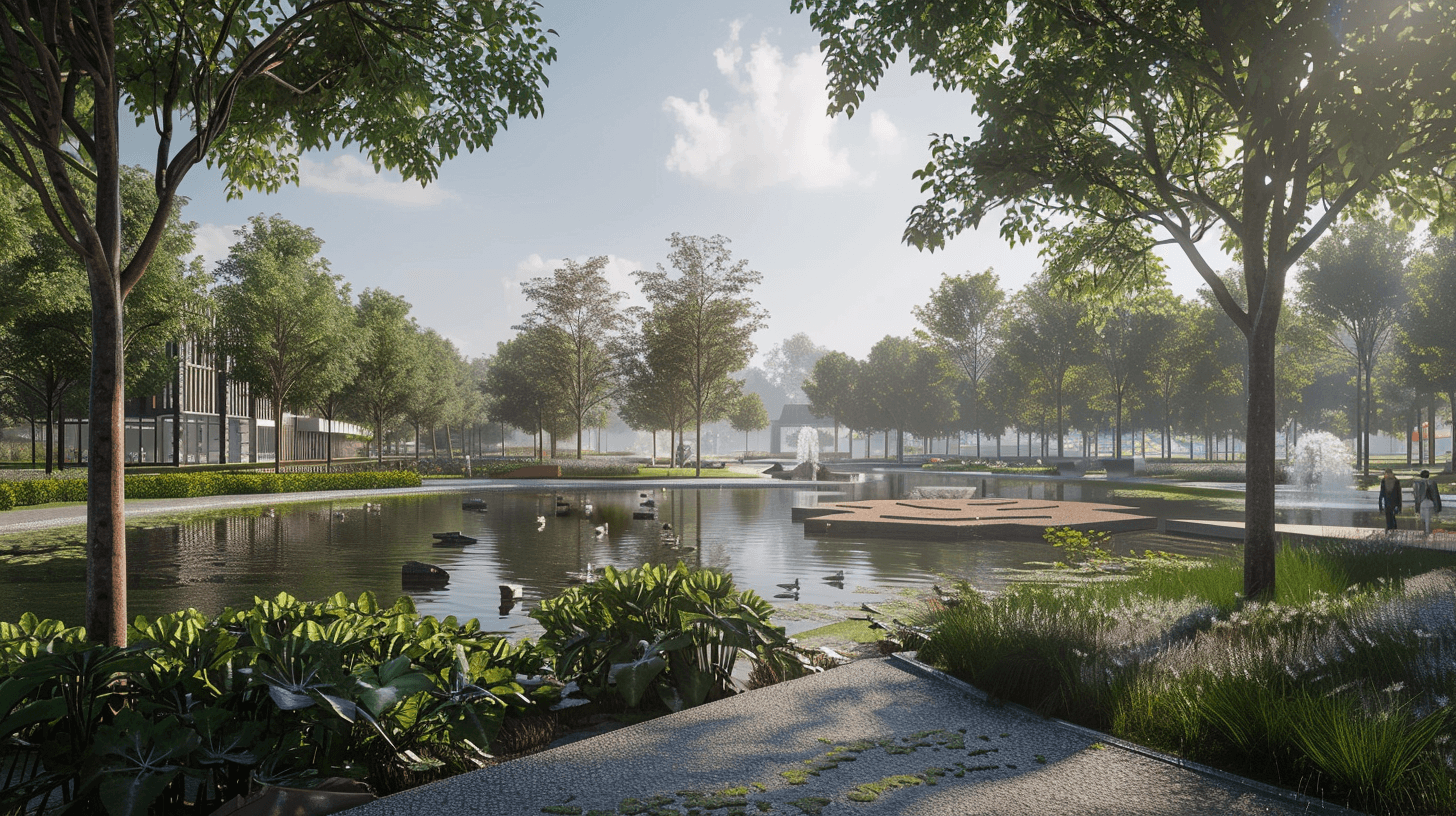
A Rain Park, also known as a rain garden or stormwater park, is a landscaped area specifically engineered to capture, manage, and utilise stormwater runoff. These parks are strategically located in urban settings to intercept rainwater, allowing it to percolate into the ground rather than rushing into storm drains. The core of a Rain Park comprises permeable soil layers and native vegetation, which work together to filter pollutants, reduce runoff speed, and promote groundwater recharge.

The functioning of a Rain Park is elegantly simple yet highly effective. When it rains, water flows into these parks from surrounding impervious surfaces like roads and rooftops. The water is then absorbed by the soil and taken up by plants, which helps to filter out contaminants such as oil, heavy metals, and debris. Any excess water gradually infiltrates deeper into the ground, replenishing local aquifers and reducing the burden on municipal drainage systems.

As cities continue to expand and impermeable surfaces increase, the risks associated with stormwater runoff become more pronounced. Rain Parks offer a sustainable and aesthetically pleasing solution to these issues. By incorporating these green spaces into urban planning, cities can mitigate flooding, enhance water quality, and create recreational areas that improve the quality of life for residents.

Moreover, Rain Parks play a crucial role in the broader context of climate resilience. They help cities adapt to the increasing frequency and intensity of rainfall events brought about by climate change. By reducing the urban heat island effect and supporting biodiversity, these parks also contribute to a healthier urban ecosystem. In essence, Rain Parks are a vital component of forward-thinking urban design, providing both environmental and social benefits.

Technology Readiness Level
8/9Ready for Implementation
Diffusion of Innovation
3/5Early Majority
Technology Life Cycle
2/4Growth
Category
Hardware

Related Organizations

Ramboll logo
Ramboll

Denmark · Company

95%

Engineering consultancy famous for 'Blue-Green Infrastructure' projects in Copenhagen and globally to manage cloudbursts.

Developer
Turenscape logo
Turenscape

China · Company

95%

A landscape architecture firm led by Kongjian Yu, pioneering the 'Sponge City' concept to manage urban floods.

Developer
De Urbanisten

Netherlands · Company

90%

Urban design firm that created the Water Square Benthemplein in Rotterdam, a multifunctional stormwater park.

Developer
PUB, Singapore's National Water Agency logo

PUB, Singapore's National Water Agency

Singapore · Government Agency

90%

Manages Singapore's water supply and drainage, implementing the 'Active, Beautiful, Clean Waters' (ABC Waters) programme.

Deployer
SLA logo
SLA

Denmark · Company

90%

Nature-based design studio known for 'The Soul of Nørrebro', a city park designed to handle cloudbursts.

Developer
Arcadis logo
Arcadis

Netherlands · Company

85%

Global design and consultancy firm for natural and built assets.

Developer
Arup logo

Arup

United Kingdom · Company

85%

A multinational professional services firm dedicated to sustainable development, known for pioneering the use of BIM in complex engineering projects.

Developer
Henning Larsen

Denmark · Company

85%

Architecture firm integrating climate adaptation landscapes and blue-green infrastructure into urban planning.

Developer
Philadelphia Water Department

United States · Government Agency

85%

Runs the 'Green City, Clean Waters' program, a 25-year plan to manage stormwater primarily through green infrastructure.

Deployer
The Nature Conservancy

United States · Nonprofit

80%

Global environmental nonprofit advocating for and implementing nature-based solutions for stormwater.

Researcher

Supporting Evidence

Paper

Effectiveness of Rain Gardens for Managing Non-Point Source Pollution from Urban Surface Storm Water Runoff in Eastern Texas, USA

Sustainability · May 18, 2025

Investigates the effectiveness of rain gardens in mitigating non-point source pollution in urban runoff, a key environmental benefit of the Rain Park technology.

Support 89%Confidence 90%

Article

Urban stormwater management for sustainable and resilient measures and practices: a review

iwaponline.com

Stormwater drainage in urban areas has become a challenge due to the rapid and random growth of urban areas, removal of vegetation, reduction in the effectiveness of drainage infrastructure, and climate change. Sustainable Urban Drainage Systems (SUDS), Low Impact Development (LID), Best Management Practices (BMP), Water Sensitive Urban Design (WSUD) and the Sponge City Programme (SCP) are various aspects for urban stormwater management in a few parts of the world. Urban hydrology plays a vital role in the urban stormwater management system. However, optimal results can only be possible when the combined effect of climate change, land use patterns, reuse, treatment, ecology, and societal aspects are considered. There is a need to provide sustainable and resilient urban drainage systems to manage stormwater more efficiently. The present review has thoroughly discussed various features related to urban stormwater management, highlighted key drivers, identified knowledge gaps in each of the measures and/or practices, recommended future research needs of urban stormwater management to become sustainable and resilient. Integrated modelling approaches considering various key drivers including reuse and real time governance enables stormwater management to be sustainable and resilient in urban environments.

Support 50%Confidence 80%

Article

Building a Climate-Resilient City: Urban ecosystems

weadapt.org

This policy brief looks at how cities can approach urban ecosystems in their municipal adaptation plans to build their resilience to climate change impacts.

Support 50%Confidence 80%

Article

Powering resilient urban environments through public spaces

urbanresiliencehub.org

Public spaces shape how we live. They can also become a driving force for inequality. When public spaces are taken from cars and given back to people, they reach their full potential to provide better accessibility to green spaces and good air quality. They become places where people stay active and connect, economies flourish, and creativity flows. Public spaces planned with a people-centred approach enable inhabitants to feel healthy, secure and part of a community.

Support 50%Confidence 80%

Article

Parks as a Solution to Climate Change

nrpa.org

Creating healthy, prepared communities with climate-smart parks Climate change has emerged as the world’s most critical environmental issue, as well as one of the most pressing social, economic and health challenges of our time. While it is a global issue, its impacts are felt most acutely at the local level. From families that are displaced by flooding to elderly grandparents who are hospitalized because of health complications from extreme heat, the impacts of climate change are very real and very personal.

Support 50%Confidence 80%

Article

Design for flooding: how cities can make room for water

theconversation.com

Science is clearly showing that the world is shifting towards a more unstable climate. Weather events like the flash floods in Sydney last week will be more frequent and extreme, while the intervals between them will become shorter. With rising sea levels and frequent floods, water landscapes will become part of our urban routine.

Support 50%Confidence 80%

Article

WHY WE NEED TO RESTORE FLOODPLAINS

americanrivers.org

FLOODS CAN BE INCONVENIENT. LARGE FLOODS CAN BE DOWNRIGHT DISASTROUS.

Support 50%Confidence 80%

Article

Bangkok is sinking. Here's how a new park can protect the city from flooding

weforum.org

This year has seen extreme weather conditions wreak havoc across the globe, from record-breaking temperatures to heavy rain causing major floods.

Support 50%Confidence 80%

Article

What would an entirely flood-proof city look like?

theguardian.com

The wetter the better. From sponge cities in China to ‘berms with benefits’ in New Jersey and floating container classrooms in the slums of Dhaka, we look at a range of projects that treat storm water as a resource rather than a hazard

Support 50%Confidence 80%

Connections

Hardware
Hardware
Green Road

Roads designed to capture rainwater, reduce flooding, and recharge groundwater through integrated water management

Technology Readiness Level
8/9
Diffusion of Innovation
2/5
Technology Life Cycle
2/4
Hardware
Hardware
Rainwater Harvesting Ground Tank

Underground tanks that collect and store rooftop rainwater for irrigation, flushing, and emergency use

Technology Readiness Level
9/9
Diffusion of Innovation
3/5
Technology Life Cycle
3/4
Applications
Applications
Sponge City

Urban design using permeable surfaces and green infrastructure to absorb, filter, and store rainwater naturally

Technology Readiness Level
6/9
Diffusion of Innovation
3/5
Technology Life Cycle
2/4
Hardware
Hardware
Porous Pavement

Permeable surface that filters stormwater, reduces flooding, and cools urban environments

Technology Readiness Level
9/9
Diffusion of Innovation
3/5
Technology Life Cycle
3/4
Hardware
Hardware
Urban Irrigation

Smart sprinkler networks for streets, roofs, and parks that cool surfaces, reduce dust, and manage stormwater

Technology Readiness Level
8/9
Diffusion of Innovation
2/5
Technology Life Cycle
2/4
Hardware
Hardware
Green Roof

Vegetated rooftop systems that cool buildings, manage stormwater, and create urban habitats

Technology Readiness Level
9/9
Diffusion of Innovation
3/5
Technology Life Cycle
3/4

Book a research session

Bring this signal into a focused decision sprint with analyst-led framing and synthesis.
Research Sessions