
Envisioning is an emerging technology research institute and advisory.

LinkedInInstagramGitHub

2011 — 2026

research
  • Reports
  • Newsletter
  • Methodology
  • Origins
  • Vocab
services
  • Research Sessions
  • Signals Workspace
  • Bespoke Projects
  • Use Cases
  • Signal Scanfree
  • Readinessfree
impact
  • ANBIMAFuture of Brazilian Capital Markets
  • IEEECharting the Energy Transition
  • Horizon 2045Future of Human and Planetary Security
  • WKOTechnology Scanning for Austria
audiences
  • Innovation
  • Strategy
  • Consultants
  • Foresight
  • Associations
  • Governments
resources
  • Pricing
  • Partners
  • How We Work
  • Data Visualization
  • Multi-Model Method
  • FAQ
  • Security & Privacy
about
  • Manifesto
  • Community
  • Events
  • Support
  • Contact
  • Login
ResearchServicesPricingPartnersAbout
  1. Home
  2. Research
  3. Cities
  4. Urban Irrigation

Urban Irrigation

Smart sprinkler networks for streets, roofs, and parks that cool surfaces, reduce dust, and manage stormwater
Back to CitiesView interactive version

Urban irrigation is emerging as a solution to pressing urban challenges, such as urban heat islands, air quality, and flood management. Traditional irrigation systems have focused on maintaining green spaces, but modern urban irrigation expands this concept to include not only parks and gardens but also rooftops and even roads. This holistic approach to irrigation helps mitigate local temperatures, reduce dust, and enhance soil permeability, thereby preparing cities for better flood management.

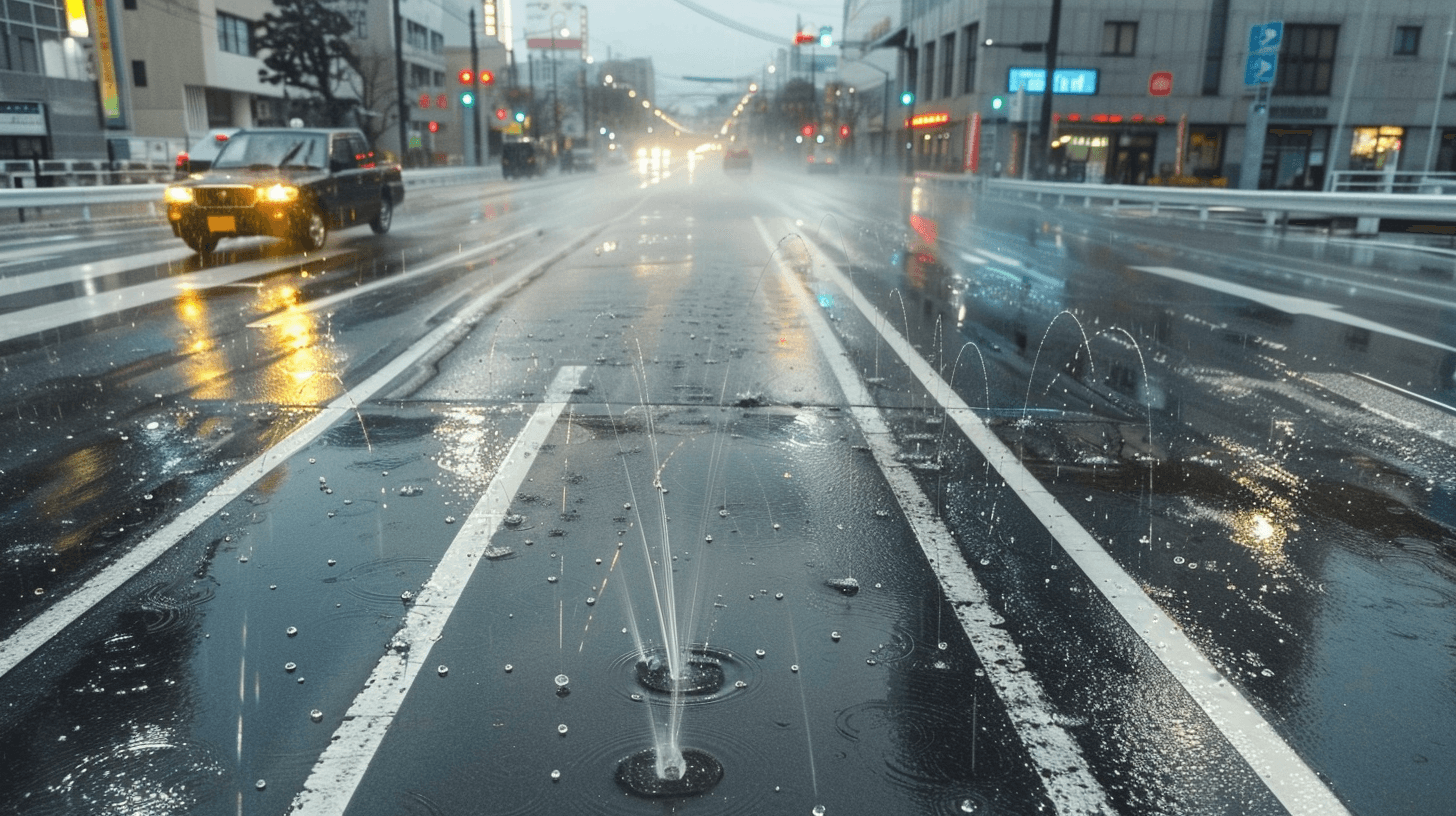
Urban irrigation systems work by deploying an extensive network of sprinklers and drip systems across various urban surfaces. The technology integrates IoT, sensors, and cloud-based platforms to monitor and manage irrigation in real-time, ensuring efficient water use and maintaining healthy urban green spaces. On rooftops, these systems help create cooler microclimates by maintaining vegetation that absorbs heat, reducing the overall urban temperature. Sprinklers installed along roads not only keep dust levels down, enhancing air quality but also lower the temperature of asphalt surfaces, thereby contributing to cooler city environments. Furthermore, by keeping the soil consistently moist, these systems significantly improve its permeability, reducing the risk of flooding during heavy rains.

The integration of urban irrigation into city infrastructure is crucial for the future of urban living. Cities around the world are experiencing increased temperatures and more frequent and intense rainfalls due to climate change. By implementing urban irrigation systems, cities can become more resilient to these changes. The cooling effect of widespread irrigation can lower energy demands for air conditioning, thereby reducing the urban carbon footprint. Additionally, improved air quality through dust suppression enhances the overall health and well-being of city inhabitants.

Moreover, the ability of urban irrigation systems to prepare the soil for heavy rains is particularly important. By activating the irrigation system in advance of a storm, the soil can absorb more water, reducing surface runoff and the likelihood of flash floods. This proactive measure not only protects infrastructure but also preserves natural water cycles and reduces the burden on urban drainage systems.
Technology Readiness Level
8/9Ready for Implementation
Diffusion of Innovation
2/5Early Adopters
Technology Life Cycle
2/4Growth
Category
Hardware

Related Organizations

Calsense

United States · Company

95%

Specializes in resource management and smart irrigation controllers for government and university campuses.

Developer
Hunter Industries

United States · Company

95%

A leading manufacturer of irrigation equipment, including the Hydrawise smart controller platform.

Developer
Rain Bird

United States · Company

95%

A global manufacturer of irrigation products, heavily investing in 'IQ4' central control systems for smart city applications.

Developer

City of Melbourne

Australia · Government Agency

90%

The local government authority for the centre of Melbourne.

Deployer
HydroPoint

United States · Company

90%

Develops WeatherTRAK smart irrigation systems used by commercial sites and cities to reduce water waste.

Developer
Netafim

Israel · Company

90%

The pioneer of drip irrigation, now providing precision irrigation solutions for urban landscapes and green roofs.

Developer
Rachio

United States · Startup

90%

Produces smart sprinkler controllers that use hyper-local weather data to optimize watering schedules.

Developer
The Toro Company

United States · Company

90%

A leading worldwide provider of innovative solutions for the outdoor environment.

Developer
Banyan Water

United States · Company

85%

Provides data-driven water management software for large commercial properties to detect leaks and optimize irrigation.

Developer
Galcon

Israel · Company

85%

A manufacturer of smart monitoring and control irrigation systems.

Developer
Jain Irrigation Systems

India · Company

85%

A multinational conglomerate with a strong focus on water management and irrigation.

Developer
Koolfog

United States · Company

85%

Designers and manufacturers of high-pressure misting systems for cooling and humidification.

Developer
Weathermatic

United States · Company

85%

A provider of smart irrigation technology and water management software.

Developer

Supporting Evidence

Paper

Impact of roof watering on urban cooling during heat waves

Energy and Buildings · Jun 15, 2025

The study analyzes the effects of watering four roof structures under heatwave conditions, finding that watering reduces daytime atmospheric convection and that watered reflective roofs are cooler than standard ones.

Support 92%Confidence 95%

Paper

Impact of soil moisture content on urban tree evaporative cooling and human thermal comfort

npj Urban Sustainability · May 16, 2025

Results show that maintaining high soil moisture through irrigation can generate areas of 'no thermal stress' in Zurich during summer days, primarily via direct soil evaporation.

Support 89%Confidence 95%

Paper

Design and evaluation of a solar powered smart irrigation system for sustainable urban agriculture

Scientific Reports · Apr 6, 2025

Describes the design of a solar-powered smart irrigation system aimed at advancing sustainable urban agriculture, addressing challenges like water scarcity and elevated heat emissions.

Support 85%Confidence 95%

News

15 Smart Irrigation Systems That Save Water & Money in 2025

Sanso Uka · Oct 12, 2025

A guide to modern smart irrigation systems that use real-time data, weather forecasting, and soil moisture monitoring to deliver precision hydration in urban and suburban landscapes.

Support 75%Confidence 90%

Article

Estimating Urban Green Space Irrigation for 286 Cities in China: Implications for Urban Land Use and Water Management

mdpi.com

Urban green space has increased significantly in many cities in China as a result of rapid urbanization. Despite various environmental and societal benefits of urban green space, its irrigation water use has become an important yet under-researched issue in urban water management. Using a newly developed green space evapotranspiration and soil water budgeting model coded in Python, this research estimated the irrigation water requirement of urban green space for 286 cities at the prefecture level and above in China, with daily meteorological data in 1986–2011, the distribution and areas of urban green space from the 30 m resolution “Essential Urban Land-Use Categories in China” database, and green space types from the 10 m resolution “10 m resolution global land cover” database. The estimated annual average irrigation water requirement of urban green space for these 286 cities was 8.7 billion m3 , accounting for over 20% of residential water consumption in the cities where data on residential water use were available. We also investigated the spatiotemporal variation of urban green space irrigation water requirement and the factors that influence such variations. To the best of our knowledge, this study develops the first set of results of urban green space irrigation for all major cities in China, thus providing useful insights for green space irrigation and urban water man-agement in the context of rapid urbanization and sustainable water management.

Support 50%Confidence 80%

Article

Vertical Garden Irrigation Systems

green.org

Vertical garden irrigation systems have gained popularity in recent years for maximizing space and creating visually pleasing greenery in urban environments. This article explores the definition and importance of vertical garden irrigation systems, their historical background, and key concepts. It delves into their benefits, types, and design considerations, and analyzes case studies and current trends. Additionally, it addresses challenges and controversies surrounding these systems and provides insights into their future outlook.

Support 50%Confidence 80%

Article

Soil Water Dynamics

nature.com

What are the relationships between soil moisture storage, soil water flow, and soil properties?

Support 50%Confidence 80%

Article

The potential of urban irrigation for counteracting carbon-climate feedback

nature.com

Global climate changes, especially the rise of global mean temperature due to the increased carbon dioxide (CO2) concentration, can, in turn, result in higher anthropogenic and biogenic greenhouse gas emissions. This potentially leads to a positive loop of climate–carbon feedback in the Earth’s climate system, which calls for sustainable environmental strategies that can mitigate both heat and carbon emissions, such as urban greening. In this study, we investigate the impact of urban irrigation over green spaces on ambient temperatures and CO2 exchange across major cities in the contiguous United States. Our modeling results indicate that the carbon release from urban ecosystem respiration is reduced by evaporative cooling in humid climate, but promoted in arid/semi-arid regions due to increased soil moisture. The irrigation-induced environmental co-benefit in heat and carbon mitigation is, in general, positively correlated with urban greening fraction and has the potential to help counteract climate–carbon feedback in the built environment.

Support 50%Confidence 80%

Article

Floor Sprinklers

x.com

In Seoul, Korea, floor sprinklers pump rain water to clean the roads, prevent the spread of dust and reduce the heat. The clean road system reduced the dust rates by 13% and the average road surface temperatures in summer to 19°C.

Support 50%Confidence 80%

Article

Remotely Controlled Urban Irrigation System

roltek.com.tr

The Remotely Controlled Urban Irrigation System aims to optimize the irrigation needs of city parks and green areas with modern technologies. This is a smart irrigation solution. Parks and green areas offer an escape point from the intensive pace of city life. However, appropriate watering, maintenance of these green spaces is time-consuming and difficult using traditional methods. It is at this point that the Remotely Controlled Urban Irrigation System comes into operation. This system, an intelligent irrigation solution that incorporates modern technology, makes use of sensor data. It constantly monitors the current state of plants, soil and environmental conditions. This system aims to effectively manage the green tissue of cities through irrigation.

Support 50%Confidence 80%

Same technology in other hubs

Horizons
Horizons
Urban Irrigation

Sensor-controlled water systems that cool urban surfaces and manage heat through targeted irrigation

Connections

Applications
Applications
Urban Agriculture

Growing food within cities using rooftop gardens, vertical farms, and hydroponics to improve food security

Technology Readiness Level
8/9
Diffusion of Innovation
2/5
Technology Life Cycle
2/4
Hardware
Hardware
Green Road

Roads designed to capture rainwater, reduce flooding, and recharge groundwater through integrated water management

Technology Readiness Level
8/9
Diffusion of Innovation
2/5
Technology Life Cycle
2/4
Hardware
Hardware
Porous Pavement

Permeable surface that filters stormwater, reduces flooding, and cools urban environments

Technology Readiness Level
9/9
Diffusion of Innovation
3/5
Technology Life Cycle
3/4
Hardware
Hardware
Rain Park

Landscaped urban spaces that capture and filter stormwater to prevent flooding and recharge groundwater

Technology Readiness Level
8/9
Diffusion of Innovation
3/5
Technology Life Cycle
2/4
Applications
Applications
Sponge City

Urban design using permeable surfaces and green infrastructure to absorb, filter, and store rainwater naturally

Technology Readiness Level
6/9
Diffusion of Innovation
3/5
Technology Life Cycle
2/4
Hardware
Hardware
Green Roof

Vegetated rooftop systems that cool buildings, manage stormwater, and create urban habitats

Technology Readiness Level
9/9
Diffusion of Innovation
3/5
Technology Life Cycle
3/4

Book a research session

Bring this signal into a focused decision sprint with analyst-led framing and synthesis.
Research Sessions