Envisioning is an emerging technology research institute and advisory.

LinkedInInstagramGitHub

2011 — 2026

research
  • Reports
  • Newsletter
  • Methodology
  • Origins
  • Vocab
services
  • Research Sessions
  • Signals Workspace
  • Bespoke Projects
  • Use Cases
  • Signal Scanfree
  • Readinessfree
impact
  • ANBIMAFuture of Brazilian Capital Markets
  • IEEECharting the Energy Transition
  • Horizon 2045Future of Human and Planetary Security
  • WKOTechnology Scanning for Austria
audiences
  • Innovation
  • Strategy
  • Consultants
  • Foresight
  • Associations
  • Governments
resources
  • Pricing
  • Partners
  • How We Work
  • Data Visualization
  • Multi-Model Method
  • FAQ
  • Security & Privacy
about
  • Manifesto
  • Community
  • Events
  • Support
  • Contact
  • Login
ResearchServicesPricingPartnersAbout
  1. Home
  2. Research
  3. Cities
  4. Green Road

Green Road

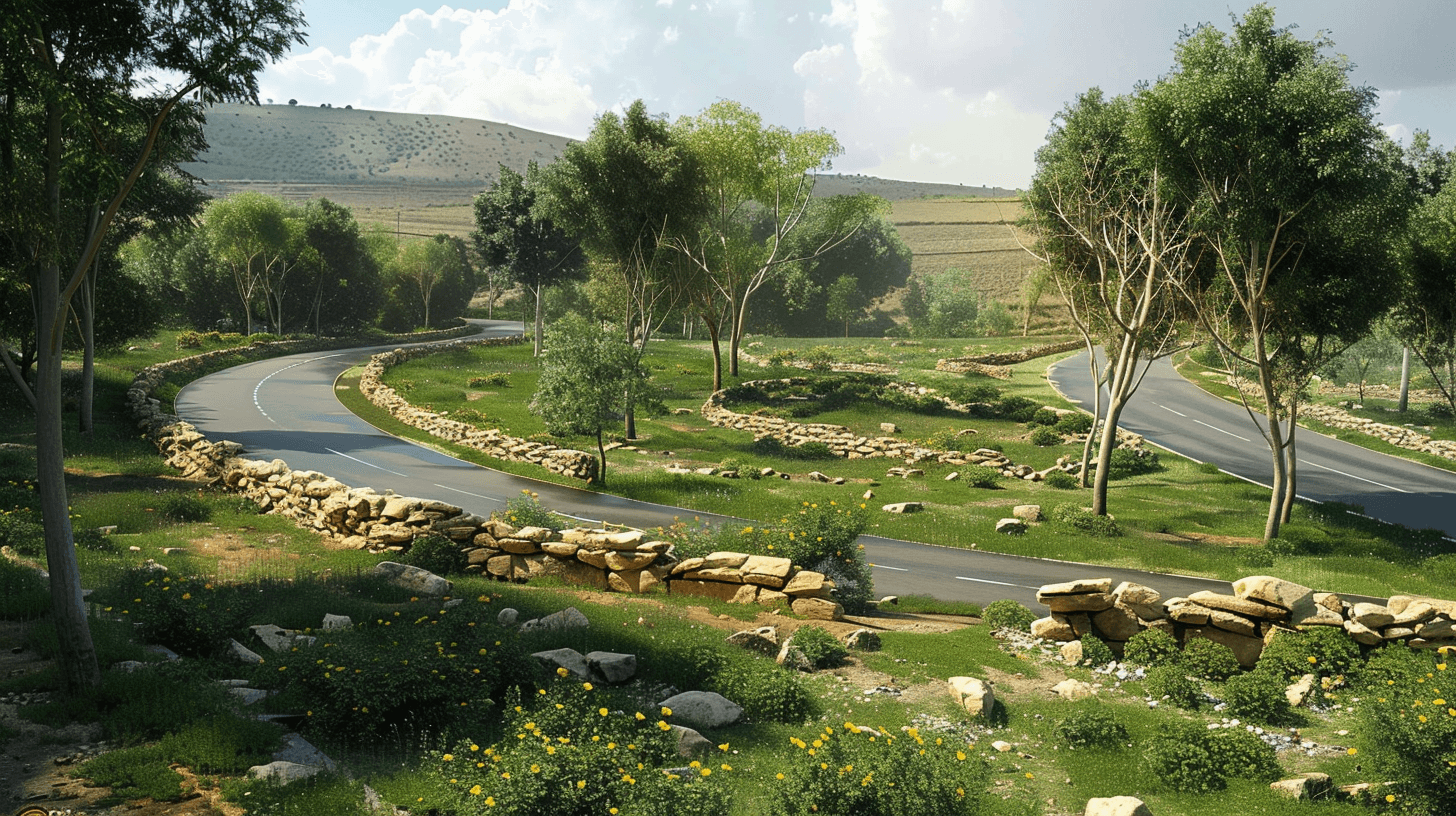
Roads designed to capture rainwater, reduce flooding, and recharge groundwater through integrated water management
Back to CitiesView interactive version

The concept of Green Roads offers a transformative approach to urban and rural infrastructure, addressing the critical issues of water management, climate resilience, and ecological conservation. This technology integrates water management techniques directly into road design, transforming traditional roadways into multifunctional assets that can capture, store, and distribute water effectively.

Green Roads solve multiple problems simultaneously. They mitigate flooding by directing rainwater away from roads and into designated catchment areas, such as irrigation ditches and retention ponds. This reduces the burden on urban drainage systems and decreases the risk of waterlogging. Furthermore, these roads help combat drought by capturing and storing rainwater, which can then be used to irrigate nearby agricultural fields, enhancing crop yields and supporting local food security.

Urban areas worldwide are grappling with the dual challenges of increasing precipitation and ageing infrastructure. Green Roads offer a sustainable solution that reduces the incidence of urban flooding and enhances water availability. Simple infrastructure adaptations, such as the installation of crossbars to guide water off the road or the conversion of gravel pits into rainwater collection points, allow roads to function as water management tools. By integrating natural water management processes into the built environment, Green Roads also contribute to urban cooling, reducing the urban heat island effect and promoting a more comfortable and healthy living environment.

Moreover, Green Roads align with broader green infrastructure initiatives, such as Rain Parks and Sponge Cities, which promote decentralised water management systems to tackle stormwater runoff and sewage overflows. As urban populations grow and climate change intensifies, the scalability and adaptability of Green Roads make them a critical component of resilient and sustainable urban planning.

Technology Readiness Level
8/9Ready for Implementation
Diffusion of Innovation
2/5Early Adopters
Technology Life Cycle
2/4Growth
Category
Hardware

Related Organizations

CEMEX logo
CEMEX

Mexico · Company

95%

Multinational building materials company.

Developer
City of Portland (Bureau of Environmental Services)

United States · Government Agency

95%

Pioneered the 'Green Street' program, installing bioswales and permeable pavement citywide.

Deployer
Holcim logo
Holcim

Switzerland · Company

95%

Global leader in innovative and sustainable building solutions.

Developer
Seattle Public Utilities

United States · Government Agency

95%

Implemented the Street Edge Alternatives (SEA Streets) project, redesigning residential streets for natural drainage.

Deployer

DeepRoot Green Infrastructure

United States · Company

90%

Manufactures Silva Cells, a suspended pavement system that supports traffic while providing soil volume for stormwater.

Developer
KWS

Netherlands · Company

90%

Co-creator of 'PlasticRoad', a modular road system with hollow space for water storage and cabling.

Developer
National Association of City Transportation Officials (NACTO)

United States · Nonprofit

90%

Publishes the 'Urban Street Stormwater Guide', setting standards for designing green streets.

Standards Body
GreenBlue Urban

United Kingdom · Company

85%

Provides urban drainage and tree pit systems that integrate into streetscapes to manage runoff.

Developer

Supporting Evidence

Article

‘Green Roads’ Are Plowing Ahead, Buffering Drought and Floods

e360.yale.edu

As the developing world witnesses a boom in road building, a movement to retrofit existing roads is gathering steam. Using embankments, channels, and dikes, so-called “green roads” help control floods, harvest excess water for use in irrigation, and slash maintenance costs.

Support 50%Confidence 80%

Article

To Tackle Runoff, Cities Turn to Green Initiatives

e360.yale.edu

Urban stormwater runoff is a serious problem, overloading sewage treatment plants and polluting waterways. Now, various U.S. cities are creating innovative green infrastructure — such as rain gardens and roadside plantings — that mimics the way nature collects and cleanses water.

Support 50%Confidence 80%

Article

The UN says climate-smart cities are the future – these 3 projects show their potential

weforum.org

Cities are sprawling and causing close to three-quarters of GHG emissions - while also suffering increasingly from the impact of climate change. Making cities more resilient is one of the United Nations’ Sustainable Development Goals and requires sustained investment. Projects in Chile, Abu Dhabi and Mexico demonstrate that establishing ‘climate-smart’ infrastructure can pay off.

Support 50%Confidence 80%

Article

Take the smart road to a connected, adaptable, eco-friendly future

autodesk.com

The future of road infrastructure is smart, connected, and adapted to both new forms of mobility and energy excellence.

Support 50%Confidence 80%

Article

Sustainable road construction: current practices and future concepts

worldhighways.com

The road sector produces the highest level of greenhouse gas, directly, through fossil energy used in mining, transportation, paving works... and indirectly through the emissions coming from vehicles.

Support 50%Confidence 80%

Article

Design Guidelines: Sustainable buildings in Urban context

re-thinkingthefuture.com

Buildings are an important part of urban fabric. One of the most important areas of intervention is the building and construction sector, which offers opportunities to reduce environmental impact while also contributing to the achievement of sustainable development goals. This industry is expected to generate 5% to 10% of national employment and 5% to 15% of GDP. Furthermore, it provides housing, mobility, water, sanitary infrastructure, as well as the physical context for the social interactions and economic development at the microlevel. Several studies have also found a link between buildings and public health.

Support 50%Confidence 80%

Article

THE GREEN ROAD

saalbach.com

We are taking it one step at a time and without "greenwashing" or misleading phrases. We are approaching our goal of making Saalbach Hinterglemm even more sustainable in harmony with ecological and economic aspects in a transparent, self-critical, and authentic manner. On the "Green Path", we are sometimes moving more quickly and sometimes more slowly, but all the time is moving forward. Sometimes we may get caught in congestion, but we never lose sight of our goal. We are aware of our responsibility for humankind and nature. Many first steps have been made. We still have a long way to go on the Green Path: We are on our way.

Support 50%Confidence 80%

Connections

Hardware
Hardware
Rain Park

Landscaped urban spaces that capture and filter stormwater to prevent flooding and recharge groundwater

Technology Readiness Level
8/9
Diffusion of Innovation
3/5
Technology Life Cycle
2/4
Hardware
Hardware
Programmable Smart Pavement

Road surfaces with embedded sensors and materials that adapt to weather, traffic, and wear in real time

Technology Readiness Level
3/9
Diffusion of Innovation
1/5
Technology Life Cycle
1/4
Hardware
Hardware
Green Roof

Vegetated rooftop systems that cool buildings, manage stormwater, and create urban habitats

Technology Readiness Level
9/9
Diffusion of Innovation
3/5
Technology Life Cycle
3/4
Hardware
Hardware
Urban Irrigation

Smart sprinkler networks for streets, roofs, and parks that cool surfaces, reduce dust, and manage stormwater

Technology Readiness Level
8/9
Diffusion of Innovation
2/5
Technology Life Cycle
2/4
Hardware
Hardware
Porous Pavement

Permeable surface that filters stormwater, reduces flooding, and cools urban environments

Technology Readiness Level
9/9
Diffusion of Innovation
3/5
Technology Life Cycle
3/4
Applications
Applications
Sponge City

Urban design using permeable surfaces and green infrastructure to absorb, filter, and store rainwater naturally

Technology Readiness Level
6/9
Diffusion of Innovation
3/5
Technology Life Cycle
2/4

Book a research session

Bring this signal into a focused decision sprint with analyst-led framing and synthesis.
Research Sessions