LiDAR (Light Detection and Ranging)
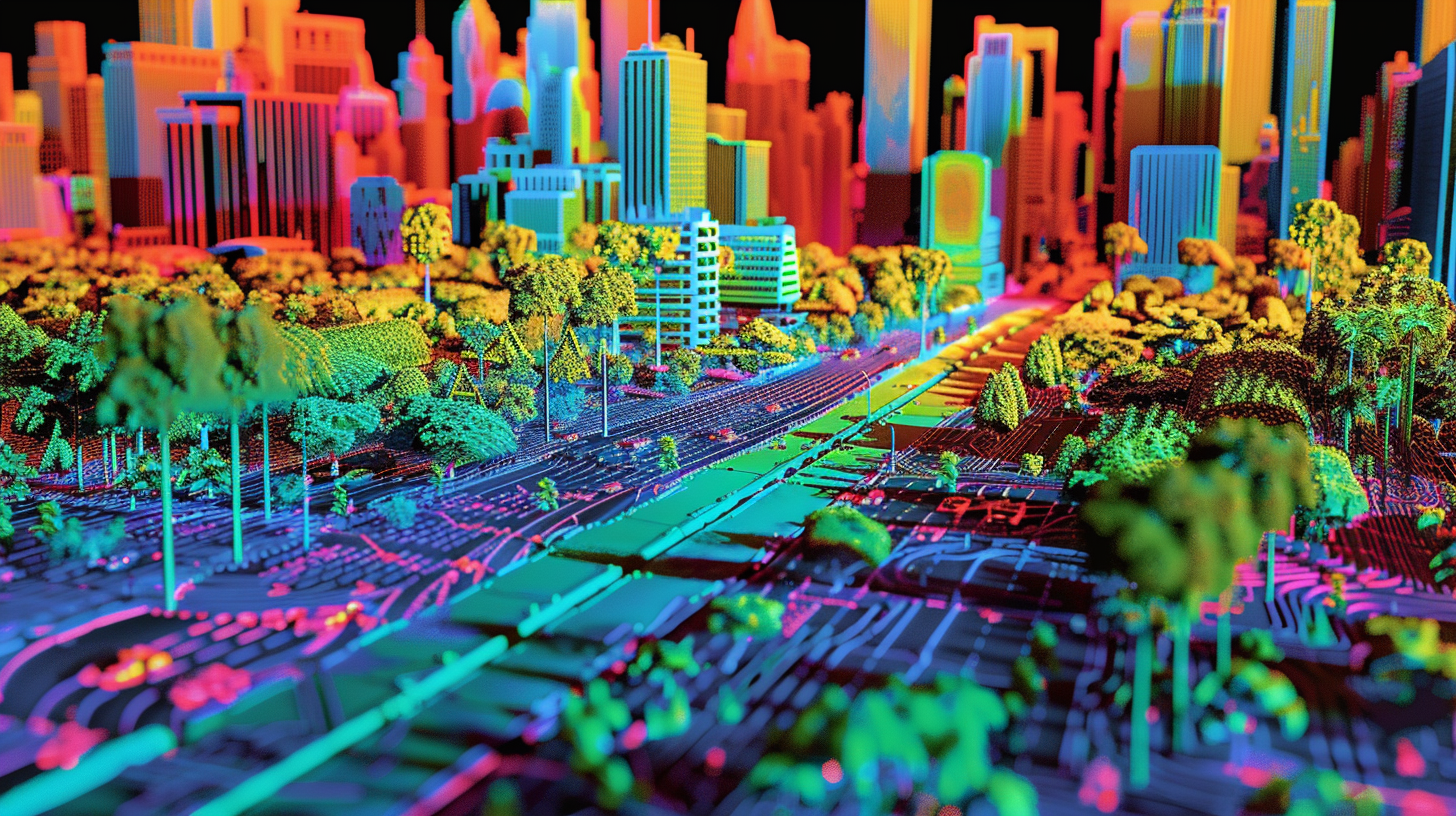
Light Detection and Ranging (LiDAR) technology provides precise, real-time data that can enhance city planning, transportation systems, and environmental monitoring. Often referred to as laser scanning, this remote sensing technology measures distances by illuminating a target with laser light and analysing the reflected light.
LiDAR systems consist of a laser, a scanner, and a GPS receiver, and they can be mounted on vehicles, drones, satellites, stationary platforms or even smartphones. They work by emitting rapid laser pulses and capturing the time it takes for these pulses to bounce back from surfaces, allowing for precise measurements and high-resolution 3D modelling. This data is used to monitor traffic flow, assess the structural integrity of infrastructure, map green spaces, and manage utility networks.
The primary function of LiDAR is to produce detailed, high-resolution spatial data, which is invaluable for urban planning and management. For instance, in transportation, LiDAR can monitor traffic flow and density in real-time, helping to reduce congestion and optimise traffic light timings, making it an essential feature of self-driving vehicles. In environmental management, it can map green spaces, monitor tree canopies, and assess air quality, contributing to more sustainable urban development. Additionally, LiDAR is instrumental in infrastructure maintenance, detecting structural issues in buildings, bridges, and roads before they become critical problems.
Moreover, by integrating this solution into urban systems, cities can enhance their resilience to climate change challenges. For example, LiDAR can model flood risks by mapping terrain elevations and water flow patterns, empowering cities to implement effective flood mitigation strategies. In disaster response, LiDAR's quick, detailed assessments of affected areas significantly improve emergency services' response times and effectiveness.