3D Printed Architecture
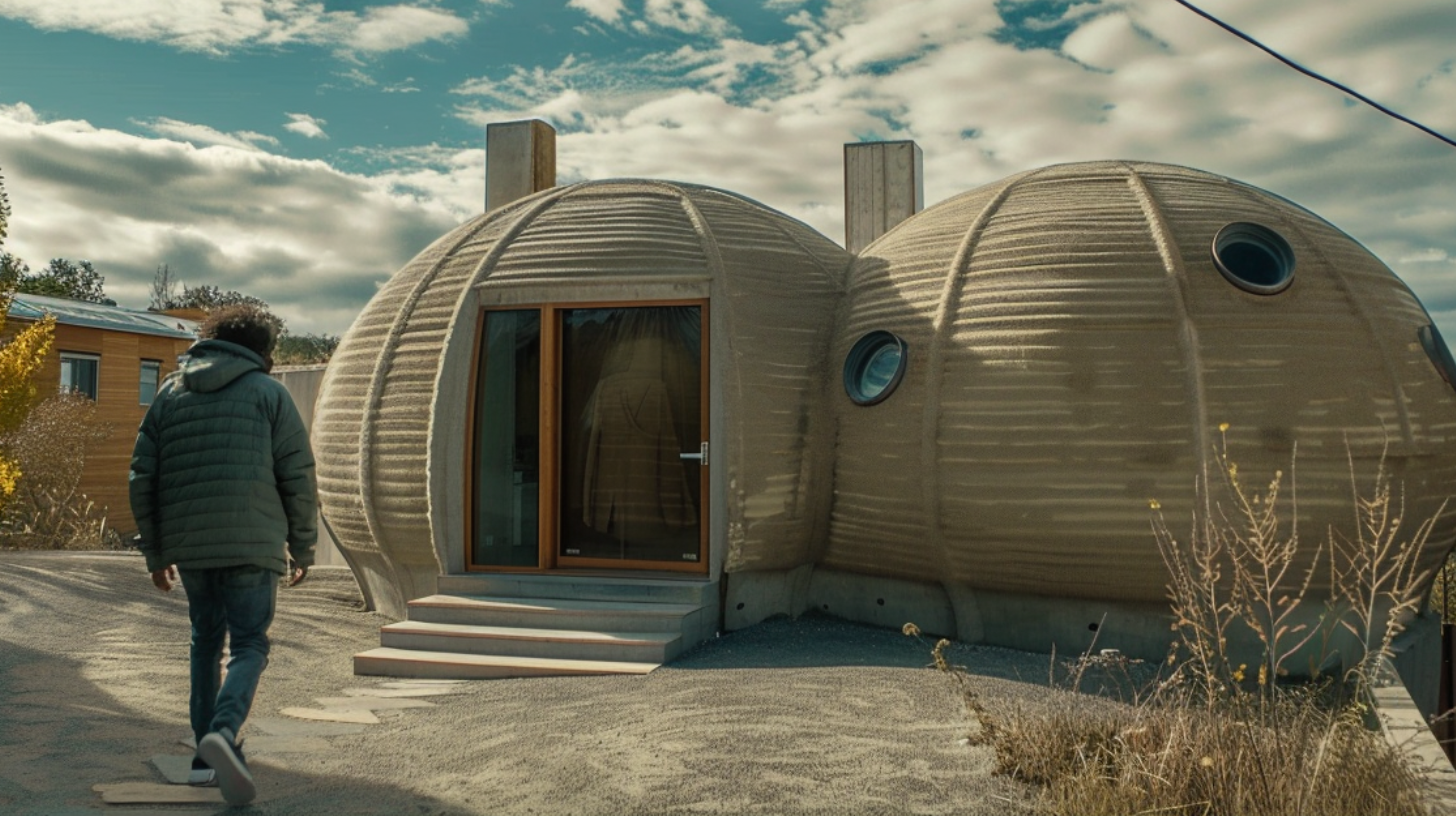
Three-dimensional (3D) printed architecture offers a solution to urban problems like the urgent need for sustainable and affordable housing. This construction method involves using large-scale 3D printers that layer building materials—commonly a mixture of concrete and recycled polymers—to create buildings directly from digital designs. This technology, also known as additive manufacturing in construction, automates and streamlines the building process, reducing labour costs and material waste.
Cities worldwide are facing the challenges of housing shortages and environmental sustainability. Traditional construction methods are often time-consuming, labour-intensive, and resource-heavy. In contrast, 3D-printed buildings can be constructed faster and with fewer raw materials, accelerating the housing supply and reducing the carbon footprint of construction projects. The precision of digital fabrication minimises errors, and the modular design allows for high levels of customisation without additional costs.
Another critical advantage of 3D-printed architecture is its potential to revolutionise affordable housing projects. The reduced cost of construction makes it feasible to provide low-cost housing options in areas where conventional construction would be prohibitively expensive. Additionally, the flexibility of 3D printing technology means that buildings can be tailored to fit the specific needs and constraints of urban sites, which is often not possible with standard construction methods.
Looking forward, the integration of 3D-printed architecture into urban planning and development is poised to make cities more adaptable and resilient. The technology's ability to utilise a variety of materials, including local and recycled materials, further enhances its appeal as a sustainable solution. As urban populations grow, embracing 3D-printed architecture could be vital in developing more sustainable, efficient, and inclusive urban spaces.