Green Road
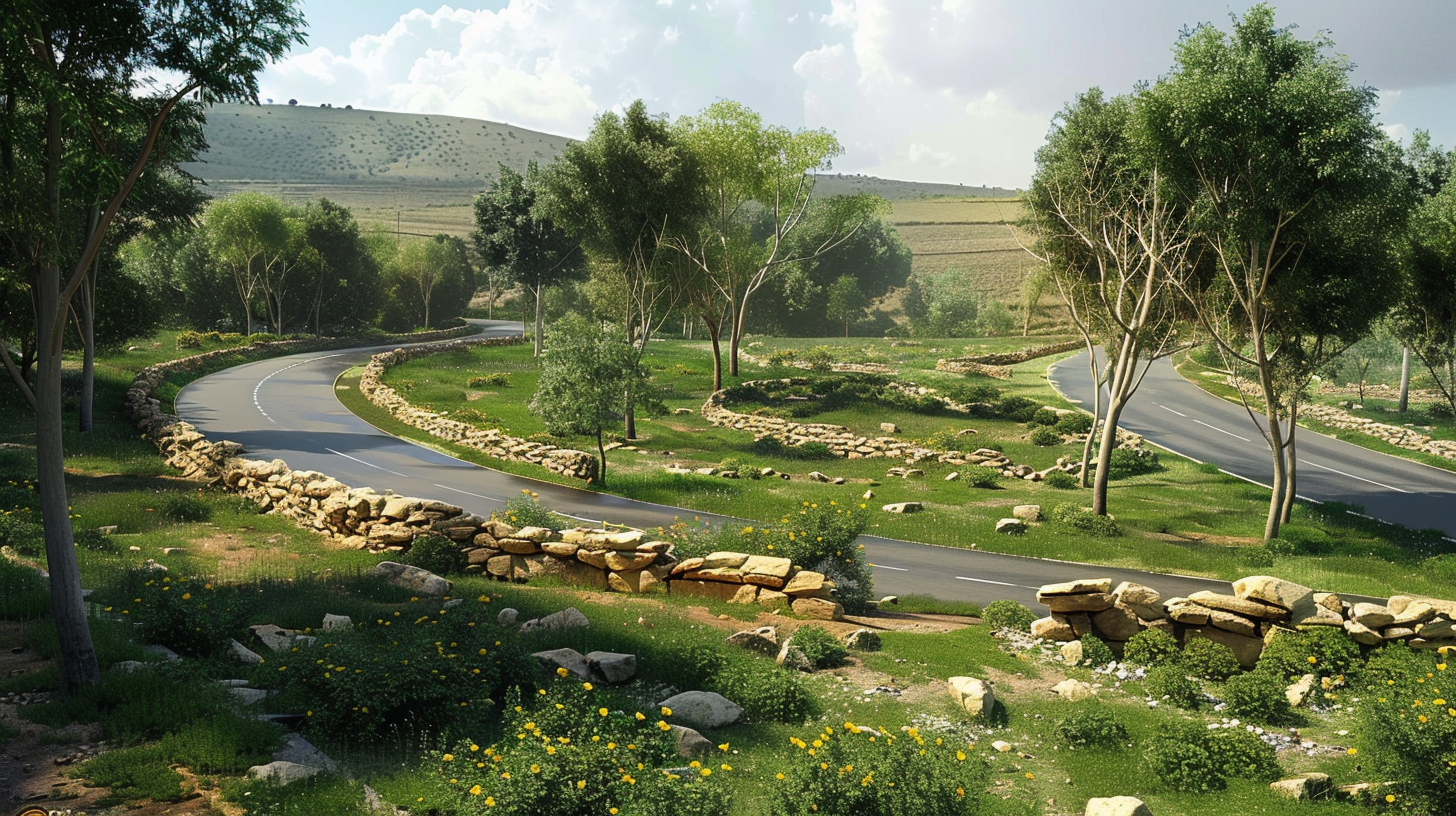
The concept of Green Roads offers a transformative approach to urban and rural infrastructure, addressing the critical issues of water management, climate resilience, and ecological conservation. This technology integrates water management techniques directly into road design, transforming traditional roadways into multifunctional assets that can capture, store, and distribute water effectively.
Green Roads solve multiple problems simultaneously. They mitigate flooding by directing rainwater away from roads and into designated catchment areas, such as irrigation ditches and retention ponds. This reduces the burden on urban drainage systems and decreases the risk of waterlogging. Furthermore, these roads help combat drought by capturing and storing rainwater, which can then be used to irrigate nearby agricultural fields, enhancing crop yields and supporting local food security.
Urban areas worldwide are grappling with the dual challenges of increasing precipitation and ageing infrastructure. Green Roads offer a sustainable solution that reduces the incidence of urban flooding and enhances water availability. Simple infrastructure adaptations, such as the installation of crossbars to guide water off the road or the conversion of gravel pits into rainwater collection points, allow roads to function as water management tools. By integrating natural water management processes into the built environment, Green Roads also contribute to urban cooling, reducing the urban heat island effect and promoting a more comfortable and healthy living environment.
Moreover, Green Roads align with broader green infrastructure initiatives, such as Rain Parks and Sponge Cities, which promote decentralised water management systems to tackle stormwater runoff and sewage overflows. As urban populations grow and climate change intensifies, the scalability and adaptability of Green Roads make them a critical component of resilient and sustainable urban planning.