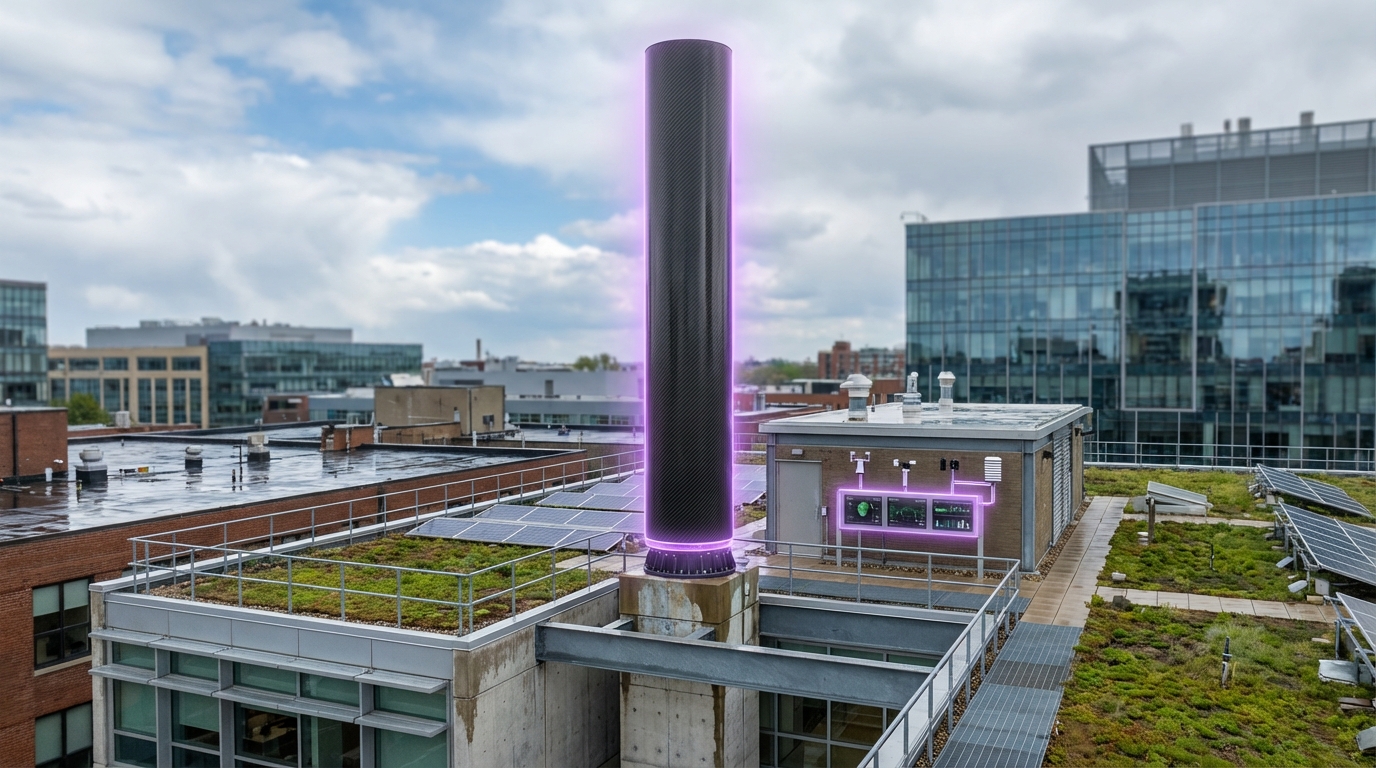



Bladeless Wind Turbine

Unlike conventional turbines that rely on large, rotating blades, bladeless turbines utilise vortex-induced vibrations to generate electricity. It significantly reduces noise pollution, minimises visual impact, and eliminates the risk of bird and bat collisions, which are common with traditional turbines. Furthermore, the compact design of bladeless turbines allows for easier installation on rooftops and other urban structures, promoting efficient land use and local energy generation.
Bladeless Wind Turbine

As urban areas grapple with the pressing need for sustainable energy solutions, traditional wind turbines pose significant challenges with their towering blades and extensive space requirements. These conventional turbines can be noisy, visually intrusive, and even pose risks to local wildlife. Enter the bladeless wind turbine, an innovative answer to the demand for cleaner, quieter, and more aesthetically pleasing energy generation in urban environments.

Bladeless wind turbines offer a revolutionary approach to harnessing wind energy. Unlike its traditional counterpart, this "motionless" turbine eschews blades entirely, instead utilising the principles of vortex-induced vibrations. When wind passes through the cylindrical structure of the bladeless turbine, it creates oscillations. These oscillations are then converted into electrical energy through an alternator. This method of energy conversion not only reduces noise but also eliminates the risks associated with spinning blades, making it safer for both humans and wildlife. Other models use a rotor-stator system with a permanent magnet generator.

These wind harvesting platforms are designed to generate power closer to where it is needed, in facilities such as hospitals, factories, warehouses or apartment buildings. To collect enough energy, at least ten units should be installed on the same flat unobstructed rooftop, on the edge facing the predominant wind direction. They can work independently or in tandem with solar panels, incrementing a robust decentralised renewable power grid.

The adoption of bladeless wind turbines represents a pivotal step towards decentralised energy production. By enabling buildings, parks, and other urban infrastructures to generate their own power, cities can reduce their reliance on centralised power grids, enhancing energy resilience and sustainability. This shift not only mitigates the environmental impact but also promotes energy security and economic savings for urban dwellers.

TRL
5/9Validated
Category
Support for Least Developed Countries
Support least developed countries, including through financial and technical assistance, in building sustainable and resilient buildings utilising local materials.

Related Technologies