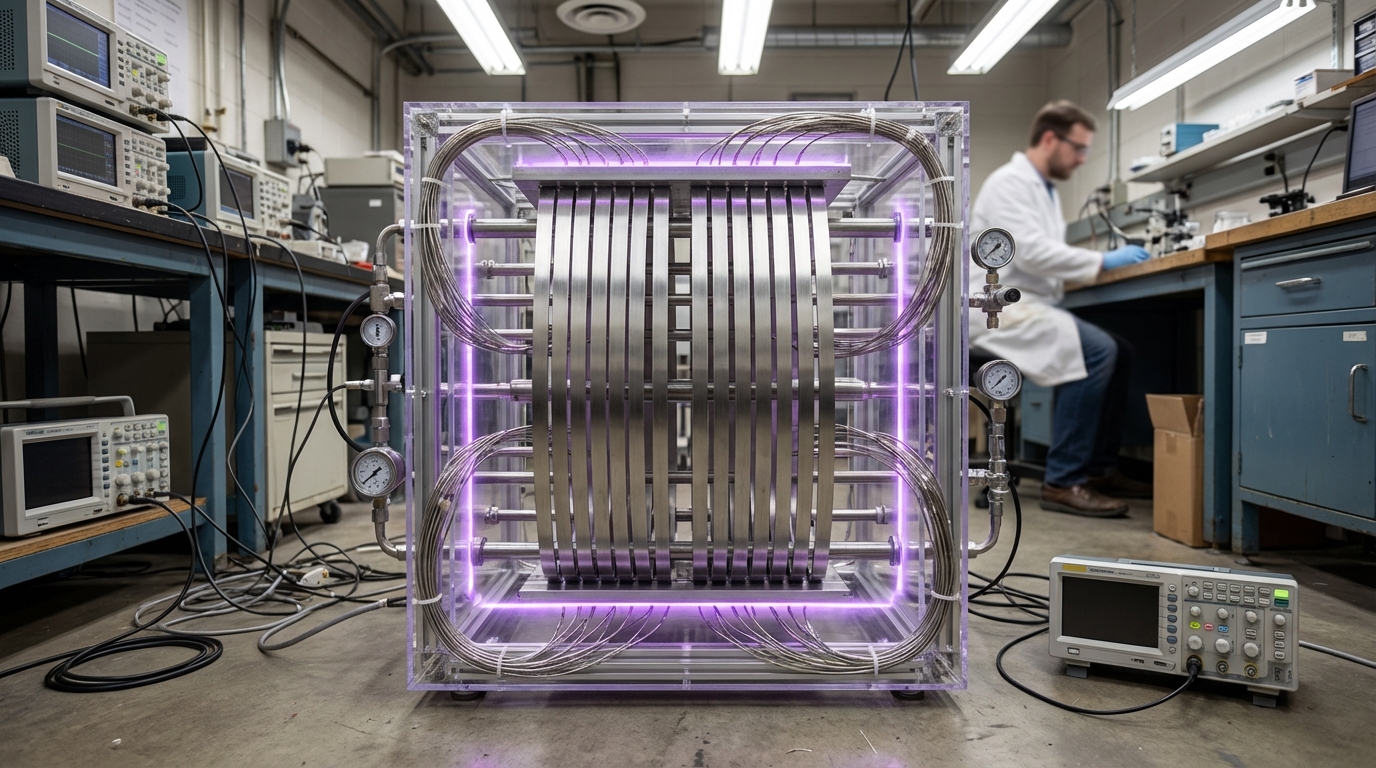
As global temperatures continue to climb, the demand for efficient and sustainable cooling solutions is becoming increasingly urgent. Traditional cooling systems, while effective, often consume significant amounts of energy, contributing to greenhouse gas emissions and exacerbating the very problem they seek to mitigate. This is where elastocalorics, a promising new technology, steps in as a game-changing solution. By leveraging the unique properties of certain materials to release and absorb heat under mechanical stress, elastocaloric technology offers a more energy-efficient and environmentally friendly alternative to conventional cooling methods.
Elastocalorics work by exploiting the elastocaloric effect, a phenomenon observed in certain solid-state materials that undergo significant temperature changes when subjected to stress, such as stretching or compressing. When these materials are mechanically manipulated, they can either absorb or release heat, depending on the nature of the stress applied. In practical terms, this means that elastocaloric systems can be used to transfer heat in a controlled manner, cooling spaces or objects with minimal energy input. Unlike traditional vapour-compression systems, which rely on refrigerants that are often harmful to the environment, elastocalorics use solid materials, making them a cleaner and safer option.
As cities grow denser and more populous, the strain on energy resources will only increase. Elastocaloric technology promises to alleviate some of this pressure by providing a highly efficient cooling mechanism that could be integrated into various urban applications, from residential air conditioning to industrial refrigeration. Furthermore, the reduction in energy consumption associated with elastocalorics could lead to a decrease in urban heat islands, a common issue in large cities where human activity and infrastructure cause localized temperature increases.