Green Roof
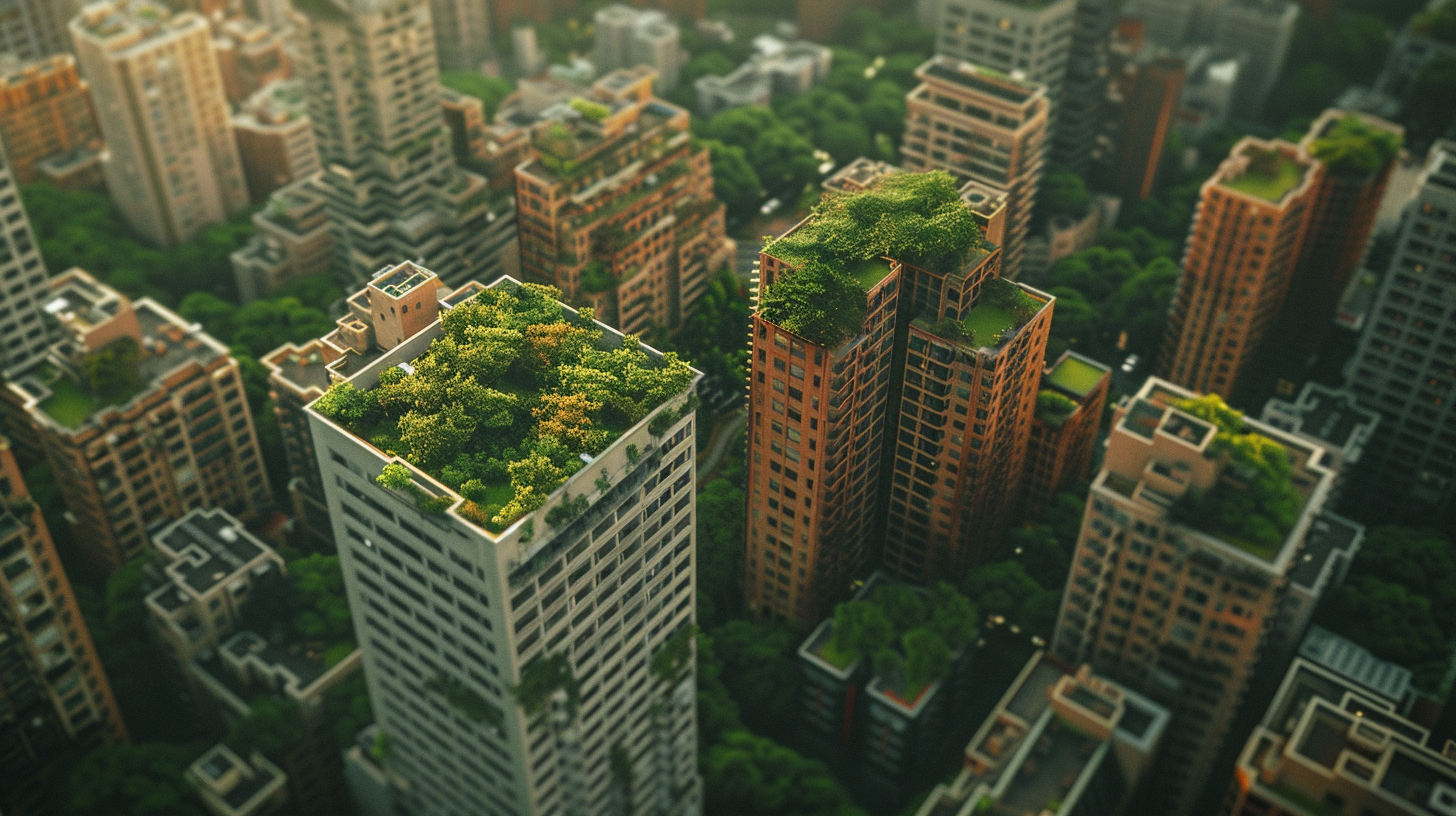
Green roofs, also known as living roofs or eco-roofs, present an innovative solution to some urban problems. Cities today face challenges such as air pollution, urban heat islands, stormwater runoff, and limited green space. Traditional roofing materials absorb heat and contribute to higher temperatures in urban areas while also offering no benefits for water absorption or air quality improvement. Green roofs address these issues by transforming rooftops into living ecosystems.
A green roof consists of a vegetative layer grown on a rooftop. This layer typically includes a waterproof membrane, a drainage system, a growing medium, and plants. By replacing conventional roofing materials with greenery, green roofs offer a multitude of benefits. They work by absorbing rainwater, providing insulation, creating a habitat for wildlife, and helping to lower urban air temperatures. Moreover, green roofs can improve the aesthetic appeal of buildings, contributing to a more pleasant urban environment.
The functioning of green roofs is simple yet highly effective. The waterproof membrane prevents water from leaking into the building, while the drainage layer ensures excess water is efficiently managed. The growing medium supports plant life, and the plants themselves are chosen for their ability to thrive in rooftop conditions. These plants absorb rainwater, reducing runoff and decreasing the burden on urban drainage systems. Additionally, by insulating buildings, green roofs can reduce heating and cooling costs, making them a sustainable option for energy efficiency.
As urban areas continue to grow, the demand for sustainable infrastructure solutions increases. Green roofs help mitigate the adverse effects of urbanisation, such as increased air pollution and higher temperatures. They also contribute to biodiversity by providing habitats for birds, insects, and other wildlife in densely populated areas. Furthermore, by enhancing the aesthetic value of buildings, green roofs can improve the overall quality of life for city dwellers.