Sponge City
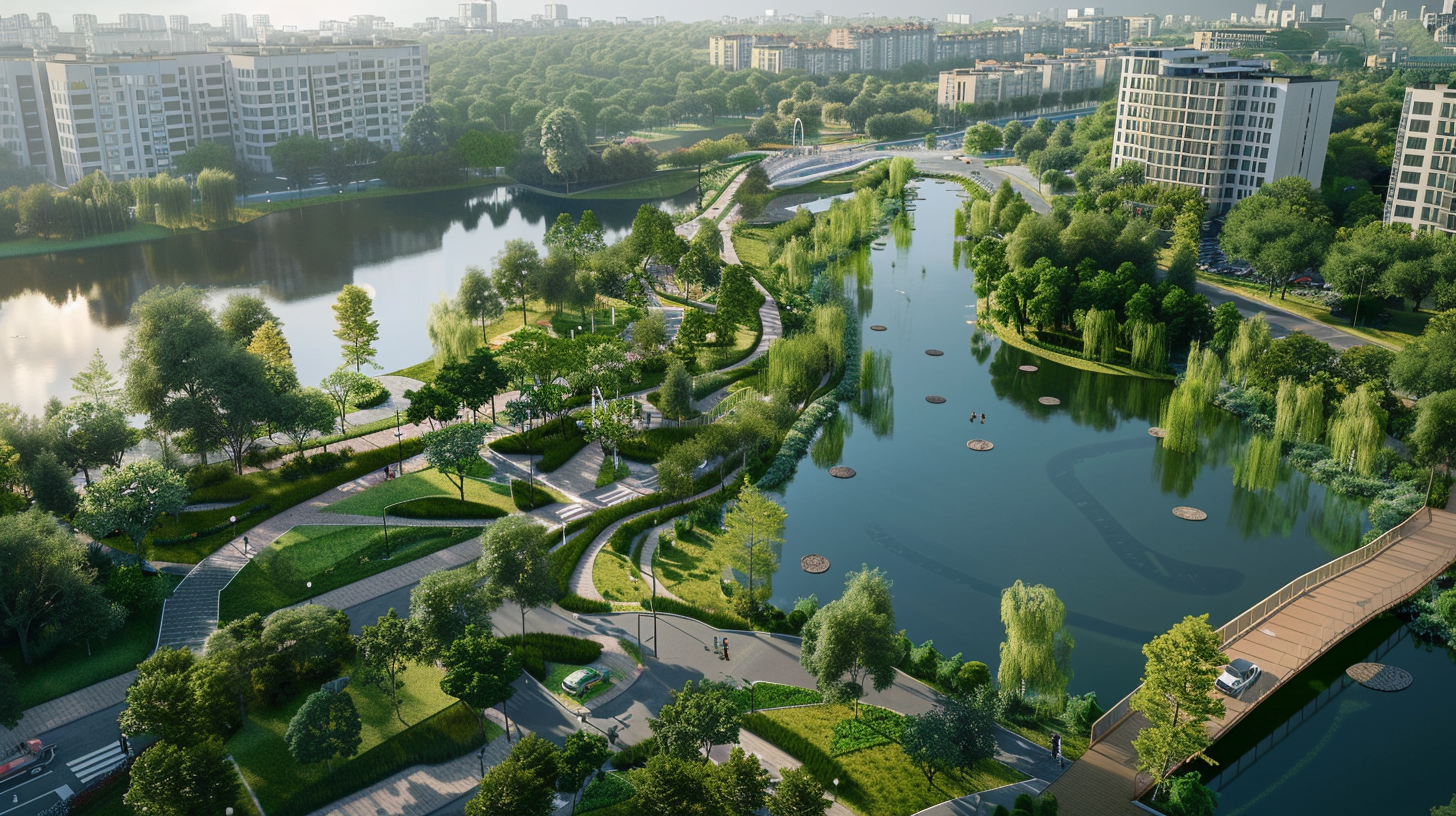
In the face of increasing urbanisation and climate change, cities worldwide are grappling with significant challenges related to water management, including flooding, water scarcity, and pollution. The concept of a Sponge City offers a promising solution to these issues by aiming to make urban areas more permeable and capable of naturally absorbing and purifying rainwater, thereby reducing flood risk and enhancing water quality.
A Sponge City utilises an integrated approach that includes green roofs, permeable pavements, wetlands, rain gardens, and enhanced urban greenery. These features work together to absorb, clean, and store rainwater, which can later be released or reused when needed. By mimicking natural water cycles, this approach not only reduces the strain on traditional drainage systems but also contributes to groundwater replenishment and the reduction of urban heat islands.
Traditional drainage systems in cities are often overwhelmed by heavy rains due to their impervious surfaces, leading to frequent and damaging floods. Sponge Cities addresses this issue at its root by transforming the urban landscape into an active water management participant rather than a passive observer. This transition is vital for sustainable urban development, ensuring cities are resilient against both excess water during rainy periods and water shortages during droughts.
Additionally, the Sponge City model promotes biodiversity and provides more green spaces, which enhance the quality of life for residents and support urban ecosystems. As cities continue to grow, the integration of such green infrastructure will be crucial not only for managing water resources but also for providing healthy environments for urban populations.
Implementing the Sponge City concept does not merely solve an engineering challenge—it redefines how cities interact with their natural environment. For policymakers, urban planners, and environmentalists, the development and expansion of Sponge Cities represent a forward-thinking path to resilient, sustainable, and livable urban futures.