Aerial Urban Gondola
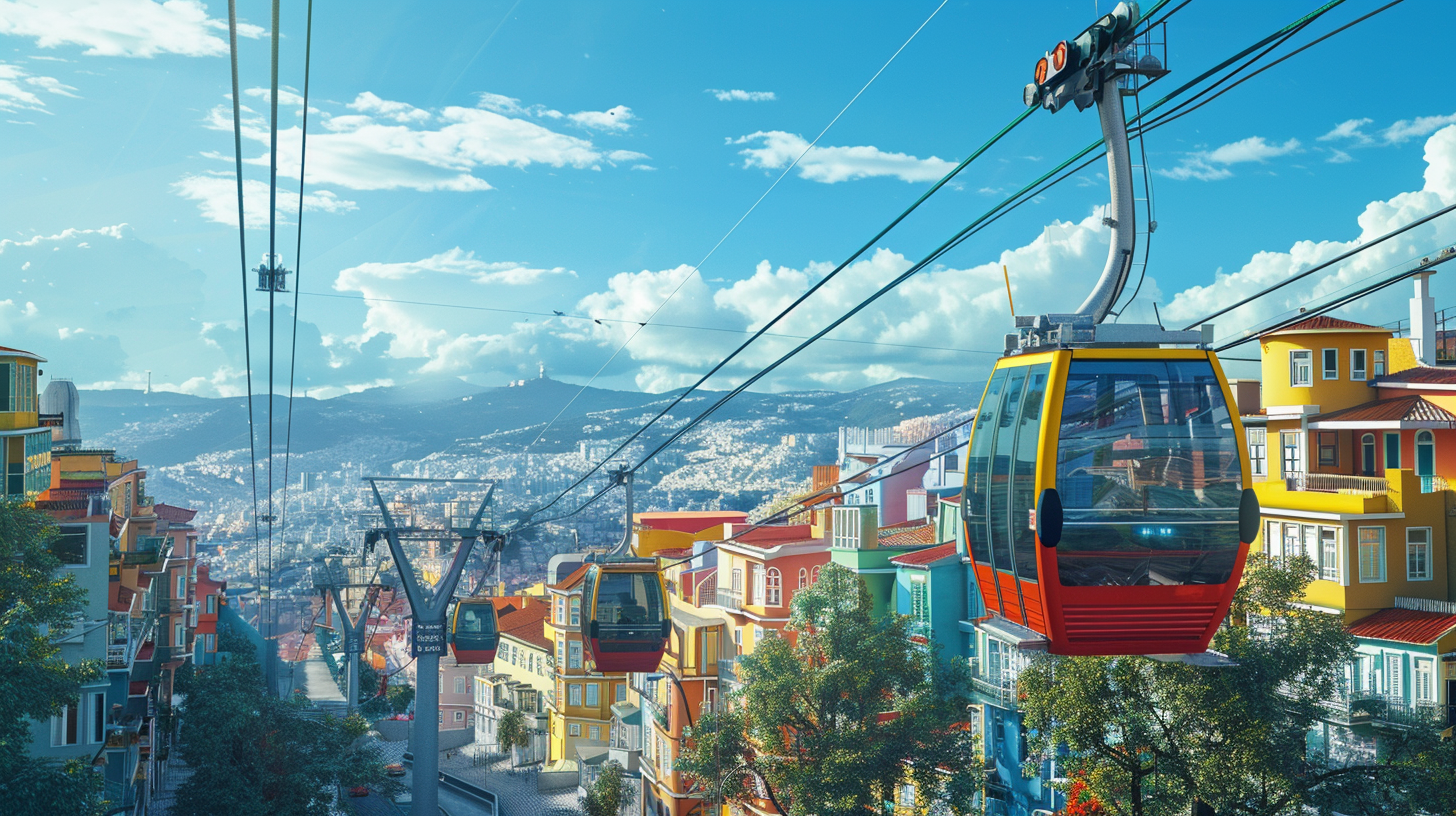
Urban congestion and limited space for expanding road infrastructure pose significant challenges to modern cities. Aerial urban gondolas, also known as cable cars or aerial trams, offer an innovative solution to these problems by providing an efficient and sustainable mode of transportation. Unlike traditional ground-based systems, these gondolas glide above the city, bypassing traffic and utilising underused airspace.
An aerial urban gondola system comprises a network of suspended cabins supported by cables anchored to strategically placed towers. These cabins, often running on electric power, can transport passengers swiftly across urban landscapes, reducing travel time and minimising the environmental footprint. The cabins move continuously along the cable, with passengers boarding and disembarking at designated stations. This seamless operation ensures a steady flow of movement, reducing wait times and enhancing the overall efficiency of the urban transit network.
As urban populations continue to grow, the need for innovative and scalable transportation solutions becomes increasingly critical. Cable cars offer a viable alternative to traditional public transit systems, which often struggle with congestion and delays. By providing a reliable and quick means of transport, these systems can alleviate pressure on existing infrastructure, reduce traffic congestion, and improve air quality by decreasing reliance on fossil-fuel-powered vehicles.
Furthermore, aerial urban gondolas can be integrated into the existing public transport network, providing last-mile connectivity and enhancing the city's overall accessibility, especially to hilly urban areas. Their installation is typically less disruptive than constructing new roads or rail lines, making them an attractive option for cities looking to upgrade their transport infrastructure with minimal environmental and social impact.