As cities continue to expand and grow denser, traditional navigation systems, which rely heavily on satellite signals, are increasingly challenged by urban canyons, underground environments, and interference. These obstacles lead to a loss of accuracy in positioning, affecting everything from autonomous vehicles to pedestrian navigation within large buildings. The quantum compass, a breakthrough in quantum technology, offers a solution to these limitations, promising precise navigation without the need for external signals.
The quantum compass, also called a quantum gyroscope or quantum inertial navigation system, operates based on the principles of quantum mechanics. It measures minute changes in atomic states caused by movement, allowing it to determine orientation and position with unparalleled precision. Unlike GPS, which requires satellites and can be disrupted by environmental factors, the quantum compass is entirely self-contained. It functions independently of external signals, making it particularly valuable in environments where GPS is unreliable or unavailable, such as deep urban centres, tunnels, or even underwater.
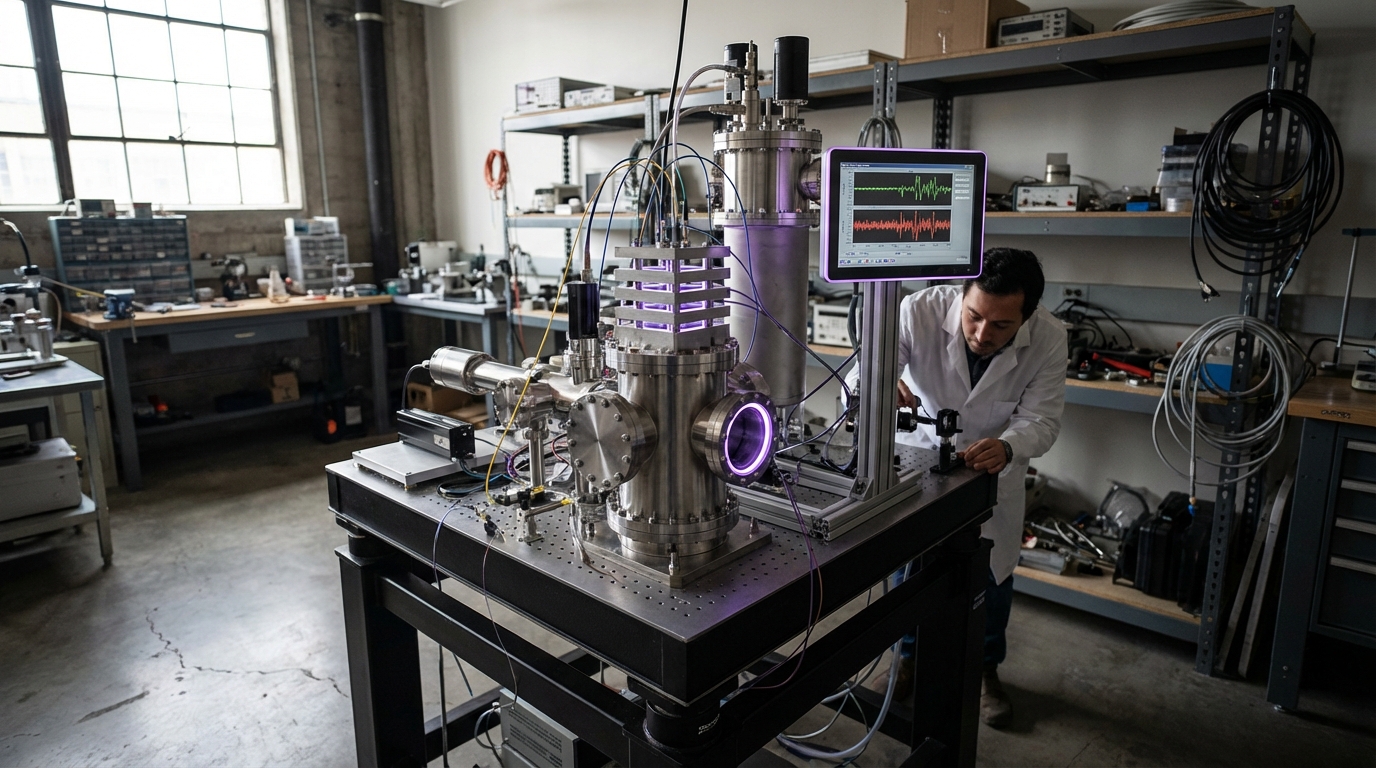
The technology works by using cold atoms or other quantum particles, which are highly sensitive to changes in motion. These particles are manipulated and measured in such a way that their response to motion can be interpreted as highly accurate data about the device’s position and orientation. The data generated by quantum compasses can be integrated into various urban applications, from enhancing the safety and reliability of autonomous vehicles to improving the efficiency of urban logistics by enabling precise tracking in areas where traditional navigation systems falter.
As urban environments become more complex, the need for reliable, uninterrupted navigation will only increase. This technology offers a robust solution, ensuring that navigation remains accurate regardless of the surrounding environment. Moreover, as cities push towards smarter and more autonomous systems, the quantum compass will be a cornerstone technology, enabling seamless operation across various platforms and in challenging conditions.