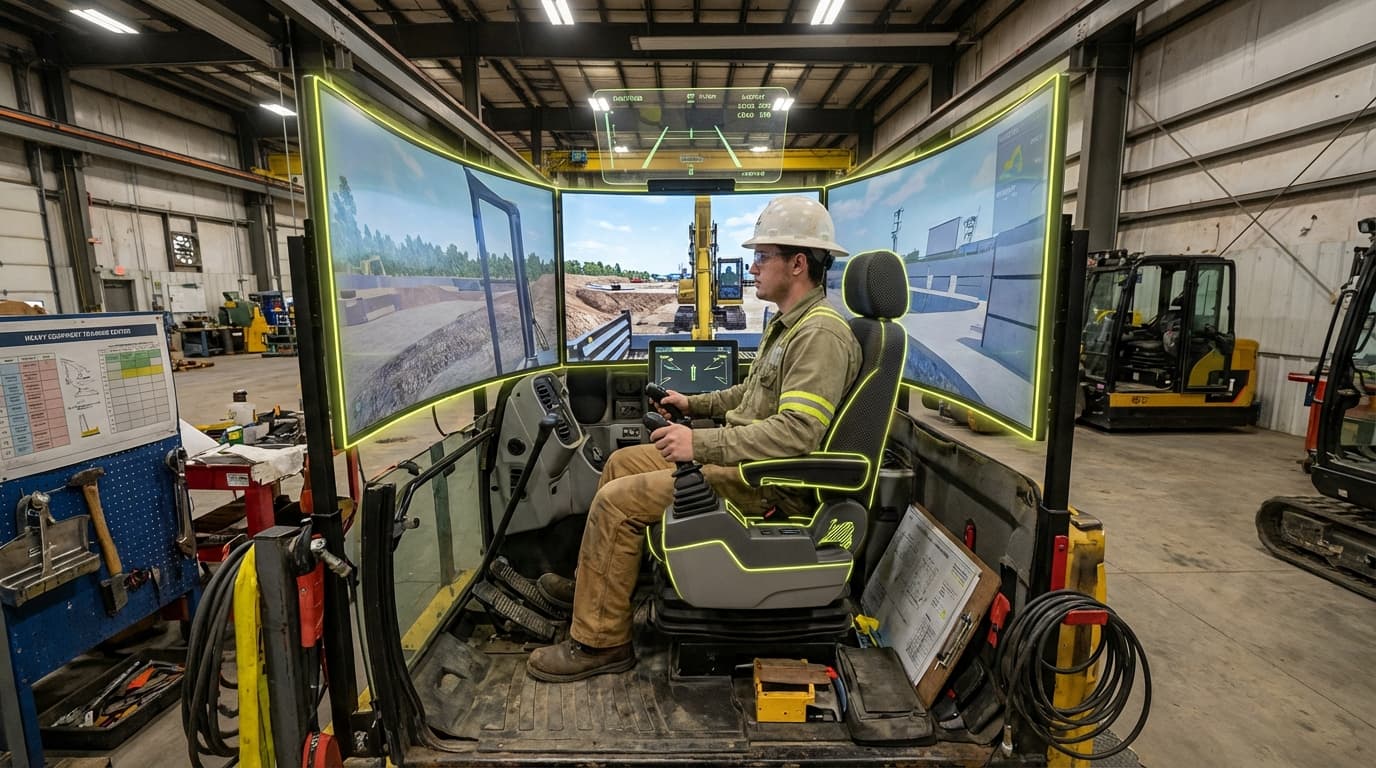
Skill Simulation & Transfer Frameworks
Skill simulation and transfer frameworks are sophisticated virtual environments that enable learners to practice complex cognitive and procedural skills in safe, controlled settings before applying them in real-world contexts. These systems create realistic simulations of challenging scenarios—surgical procedures, engineering design problems, business negotiations, emergency response situations—allowing learners to rehearse mental models, test problem-solving strategies, and develop expertise through repeated practice without real-world consequences. Advanced frameworks incorporate realistic physics, dynamic scenarios that respond to learner actions, and detailed feedback systems that help learners understand the consequences of their decisions and refine their approaches.
This innovation addresses the challenge of learning complex skills that are difficult, expensive, or dangerous to practice in real-world settings, where mistakes can have serious consequences. By providing safe, repeatable practice environments, these frameworks enable learners to develop expertise and confidence before facing real challenges. Companies developing these capabilities include medical simulation companies, flight simulators, business simulation platforms, and various training technology providers, with simulation-based training already proven effective in fields like aviation, medicine, and military training.
The technology is particularly significant for professional training and skill development, where simulation-based practice can accelerate learning and improve outcomes. As simulation technology improves and becomes more accessible, skill simulation frameworks could become standard tools for training in many fields. However, ensuring simulation realism, managing transfer of learning to real contexts, and creating effective feedback systems remain challenges. The technology represents a proven approach to skill development, with clear benefits for complex, high-stakes learning.
Related Organizations

Provides virtual laboratory simulations for science education and training.

A surgical training and assessment platform using VR to allow surgeons to practice procedures.
Delivers haptic VR flight simulators for surgery, allowing doctors to feel tissue resistance.

Develops VR simulations for vocational training in manufacturing, skilled trades, and hospitality.

Creator of SkillMill, a platform for VR and 3D simulation training for HVAC, solar, and electrical trades.
Uses a blend of AI and live human interaction within a virtual simulation to train soft skills and leadership.

A VR learning platform for math and science that allows students to experience real-world problems physically.

Spatial computing platform for workplace skills, recently acquired by Cornerstone OnDemand.
A global leader in simulation and training for civil aviation, defense, and healthcare.

Provides authoring tools (SIMTICS) for creating branching simulations and procedural training.
Supporting Evidence
Research this in Signals
Signals turns a topic into a sourced research record you can inspect and rerun. Your first scan is free, and this one starts with Skill Simulation & Transfer Frameworks already loaded, so edit it or scan as is.