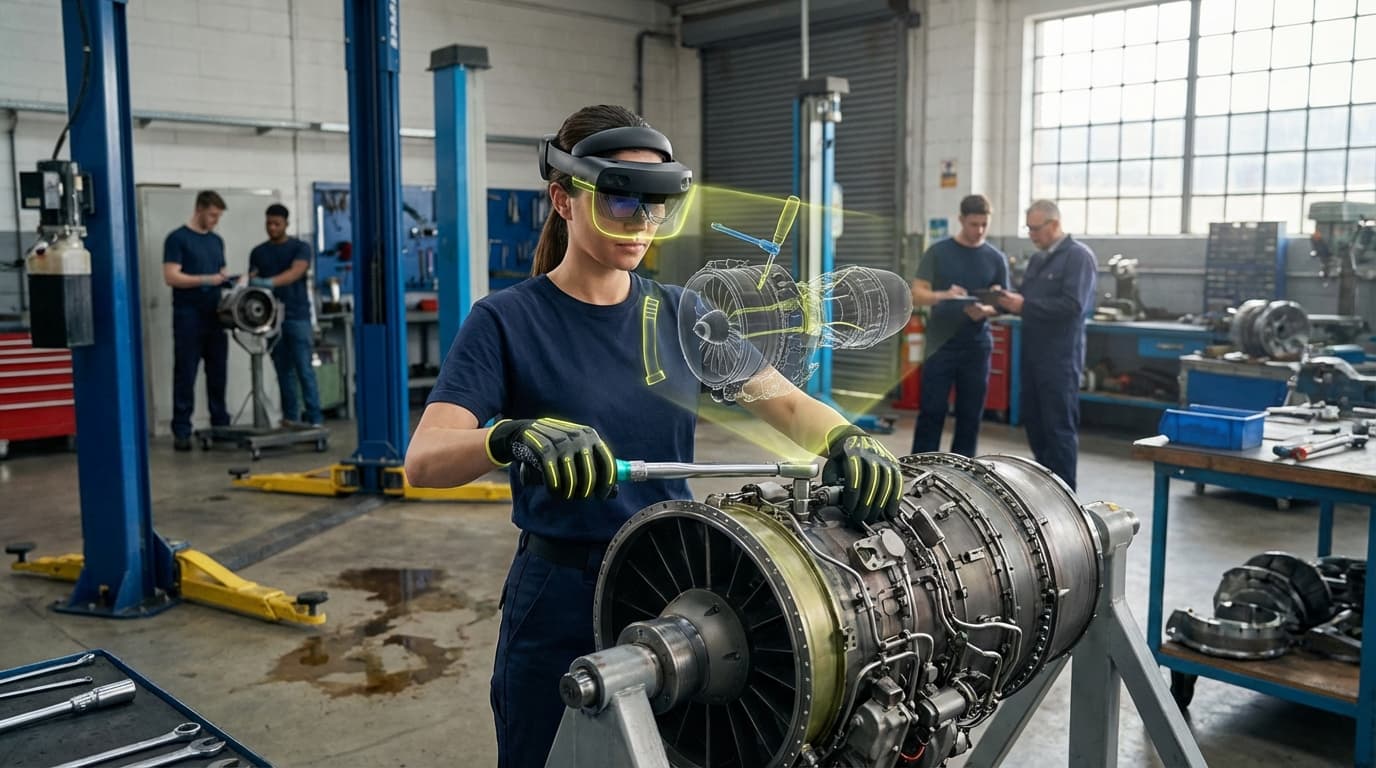
Mixed-Reality Instruction Rigs
Mixed-reality instruction rigs combine lightweight augmented reality (AR) headsets with haptic feedback systems to create immersive learning experiences that overlay digital information, 3D models, and interactive simulations onto the physical world. These systems use spatial computing to anchor virtual content to real objects and environments, enabling learners to manipulate virtual molecules, practice surgical procedures on virtual patients, or learn mechanical skills with haptic feedback that simulates resistance, texture, and force. Haptic gloves and tactile surfaces provide force feedback, vibration, and temperature simulation, enabling kinesthetic learning where physical interaction enhances understanding and skill development in STEM subjects, crafts, and vocational training.
This innovation addresses the limitation of traditional learning methods for spatial and hands-on skills, where abstract concepts or expensive/dangerous equipment make certain types of learning difficult or inaccessible. By providing immersive, interactive experiences with realistic haptic feedback, these systems enable safe, repeatable practice of complex skills and visualization of abstract concepts. Companies like Microsoft (HoloLens), Magic Leap, and various educational technology providers are developing these capabilities, with applications already being tested in medical training, engineering education, and vocational programs.
The technology is particularly significant for skill-based and spatial learning, where hands-on practice and 3D visualization can dramatically improve understanding and retention. As AR technology improves and becomes more affordable, mixed-reality instruction could become standard for many types of training and education. However, ensuring content quality, managing motion sickness, maintaining engagement, and making these systems accessible remain challenges. The technology represents a powerful tool for immersive learning, but requires careful design and implementation to achieve educational benefits.
Related Organizations

Through Copilot and the 'Recall' feature in Windows, Microsoft is integrating persistent memory and agentic capabilities directly into the operating system.

Develops industrial-grade haptic gloves using microfluidic technology to simulate realistic touch and resistance.

Develops the WorkLink platform for creating AR work instructions and remote assistance without coding.

A multinational manufacturer of welding products.

AR headset manufacturer utilizing dynamic dimming and eye-tracking for optimized rendering.



Offers 'TeamViewer Frontline', an enterprise AR productivity platform (acquired from Ubimax) for logistics and manufacturing.
Supporting Evidence
Research this in Signals
Signals turns a topic into a sourced research record you can inspect and rerun. Your first scan is free, and this one starts with Mixed-Reality Instruction Rigs already loaded, so edit it or scan as is.