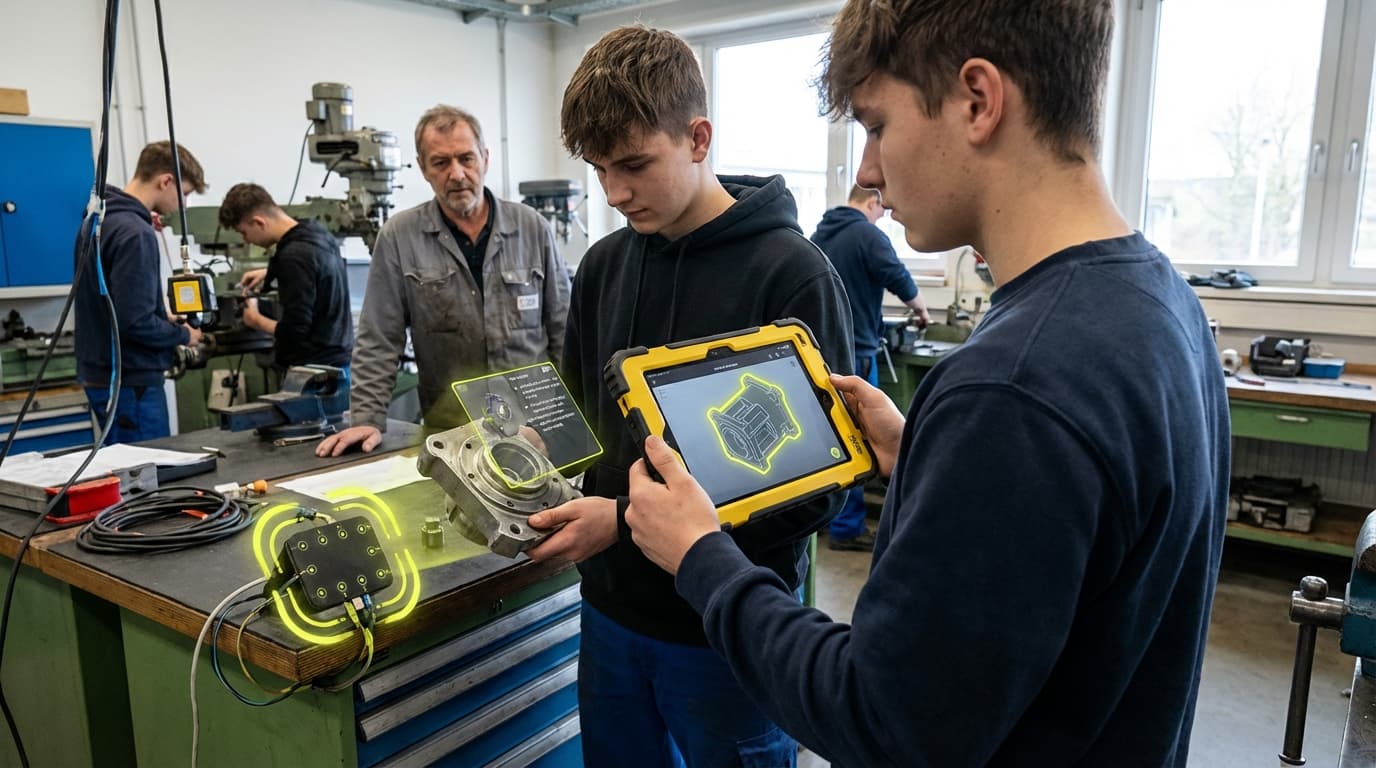
Low-Cost Offline Learning Appliances
The global education landscape faces a persistent challenge: billions of learners in bandwidth-constrained regions lack reliable internet access, effectively excluding them from the benefits of modern digital learning tools and AI-powered instruction. Traditional e-learning platforms assume constant connectivity, rendering them impractical in rural schools, refugee camps, and developing regions where internet infrastructure remains limited or prohibitively expensive. Low-cost offline learning appliances address this fundamental barrier by embedding complete educational ecosystems within rugged, standalone devices that operate independently of network connectivity. These appliances typically feature solid-state storage preloaded with comprehensive curricula, adaptive learning algorithms, multimedia content, and assessment frameworks. The hardware is designed for durability and low power consumption, often incorporating solar charging capabilities and fanless architectures that withstand dust, heat, and rough handling. By running AI models locally rather than in the cloud, these devices can deliver personalized learning experiences, real-time feedback, and intelligent tutoring without requiring bandwidth-intensive data transfers.
This approach fundamentally transforms the economics and accessibility of quality education in underserved markets. Schools and training centers that previously could not justify the infrastructure costs of traditional computer labs can now deploy complete learning environments at a fraction of the expense, eliminating ongoing connectivity fees while maintaining pedagogical sophistication. The devices solve the critical problem of educational equity by ensuring that learners in remote villages have access to the same adaptive learning technologies available in well-connected urban centers. When intermittent connectivity becomes available, these appliances synchronize student progress data, download curriculum updates, and refresh content libraries, creating a hybrid model that maximizes offline capability while leveraging occasional cloud access. This architecture also addresses data sovereignty concerns, as sensitive student information remains primarily on local devices rather than flowing continuously to external servers.
Pilot deployments across sub-Saharan Africa, rural India, and remote Pacific islands have demonstrated the viability of this model, with educational NGOs and government programs increasingly adopting offline appliances as core infrastructure. Current implementations range from tablet-based systems serving individual learners to classroom servers supporting dozens of students simultaneously, with content spanning primary literacy through vocational training. The technology aligns with broader trends toward edge computing and decentralized AI, suggesting a future where sophisticated learning experiences are no longer dependent on constant connectivity. As manufacturing costs continue to decline and local content creation tools improve, these appliances are positioned to become standard educational infrastructure in bandwidth-constrained regions, potentially reaching hundreds of millions of learners who remain digitally excluded under current connectivity-dependent models.
Related Organizations

A community project that consolidates the world's essential knowledge onto a cheap storage device for offline use.

Developers of Kolibri, an ecosystem of open-source educational products designed for offline-first learning.

Creators of RACHEL (Remote Area Community Hotspot for Education and Learning), a portable server for offline content.

A Kenyan technology company that builds rugged modems and the 'Kio Kit', a digital classroom in a box.

Develops an operating system designed for offline use, pre-loaded with educational content.

An offline reader that allows people to download and browse Wikipedia and other content without internet.

A UK charity that works to put the power of computing and digital making into the hands of people all over the world.

Delivers micro-learning courses to mobile devices, originally via dedicated offline tablets.

Provides an open-source app that enables offline learning and peer-to-peer sharing of educational content.

Provides free, open-source learning content and authoring tools often packaged onto offline devices.
Supporting Evidence
Research this in Signals
Signals turns a topic into a sourced research record you can inspect and rerun. Your first scan is free, and this one starts with Low-Cost Offline Learning Appliances already loaded, so edit it or scan as is.