Synthetic Classrooms
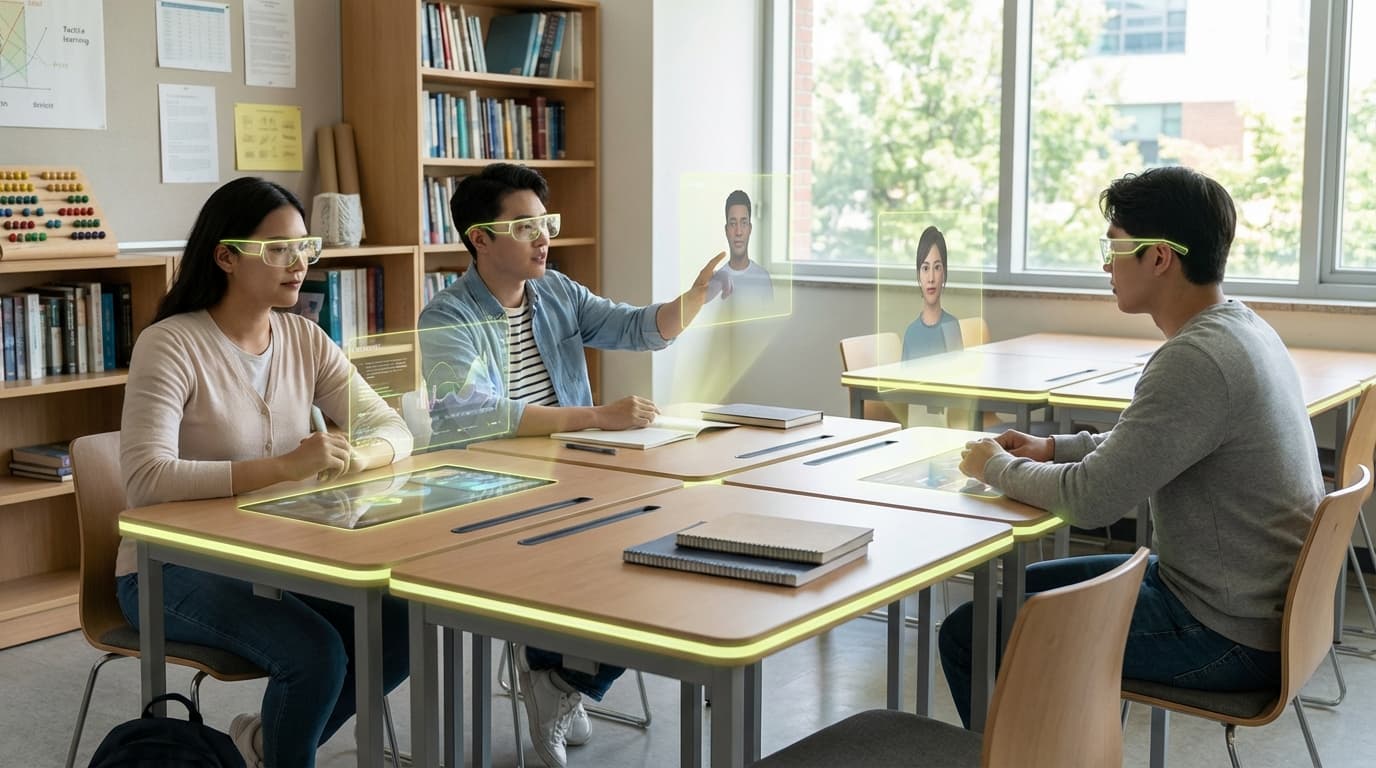
Synthetic classrooms are multi-agent learning environments where AI-powered virtual classmates, peers, and collaborators interact with human learners, creating social learning experiences that include collaboration, competition, discussion, and knowledge co-construction. These systems use advanced AI agents that can participate in group work, ask questions, provide perspectives, challenge ideas, and contribute to learning activities, simulating the social dynamics of real classrooms. By providing AI classmates with diverse personalities, knowledge levels, and perspectives, these synthetic classrooms can offer dynamic class sizes, ensure active participation, and provide social learning signals that enhance engagement and learning, even when human peers aren't available or when learners prefer to practice in low-stakes environments.
This innovation addresses the challenge of providing social learning experiences when human peers aren't available, where individual learning can lack the benefits of discussion, collaboration, and peer interaction. By creating AI agents that can participate meaningfully in learning activities, synthetic classrooms can provide social learning benefits even in individual or asynchronous contexts. Research institutions and educational technology companies are exploring these capabilities, with some systems already providing AI-powered discussion partners and collaborative agents.
The technology is particularly significant for enabling social learning in contexts where human peers aren't available, where AI classmates could provide practice opportunities and social learning benefits. As AI capabilities improve, synthetic classrooms could become more sophisticated and provide richer social learning experiences. However, ensuring AI agents provide meaningful contributions, managing the complexity of multi-agent interactions, avoiding uncanny or distracting behaviors, and maintaining the value of human peer interaction remain challenges. The technology represents an interesting direction for social learning, but requires continued development to achieve the sophistication needed for effective synthetic peer interactions.
Related Organizations

Research lab focused on embodied conversational agents and social interaction.

Develops AI-driven avatars for role-playing simulations in language and culture training.
University affiliated research center specializing in virtual humans and mixed reality.

Language learning app using AI avatars to simulate real-life conversation scenarios.
Generative AI platform for healthcare communication training using virtual patients and peers.

A platform for creating AI characters with distinct personalities, memories, and contextual awareness for games and virtual worlds.

Spatial computing platform for workplace skills, recently acquired by Cornerstone OnDemand.

VR and AI platform for soft skills training where users interact with virtual characters.

Creates autonomously animated 'Digital People' with simulated nervous systems.

Developing foundation models for robotics (Project GR00T) and vision-language models like VILA.
Supporting Evidence
Research this in Signals
Signals turns a topic into a sourced research record you can inspect and rerun. Your first scan is free, and this one starts with Synthetic Classrooms already loaded, so edit it or scan as is.