









Digitally intermediated field trips
Virtual Field Trips
Immersive VR and 360° video experiences that transport students to distant learning destinations
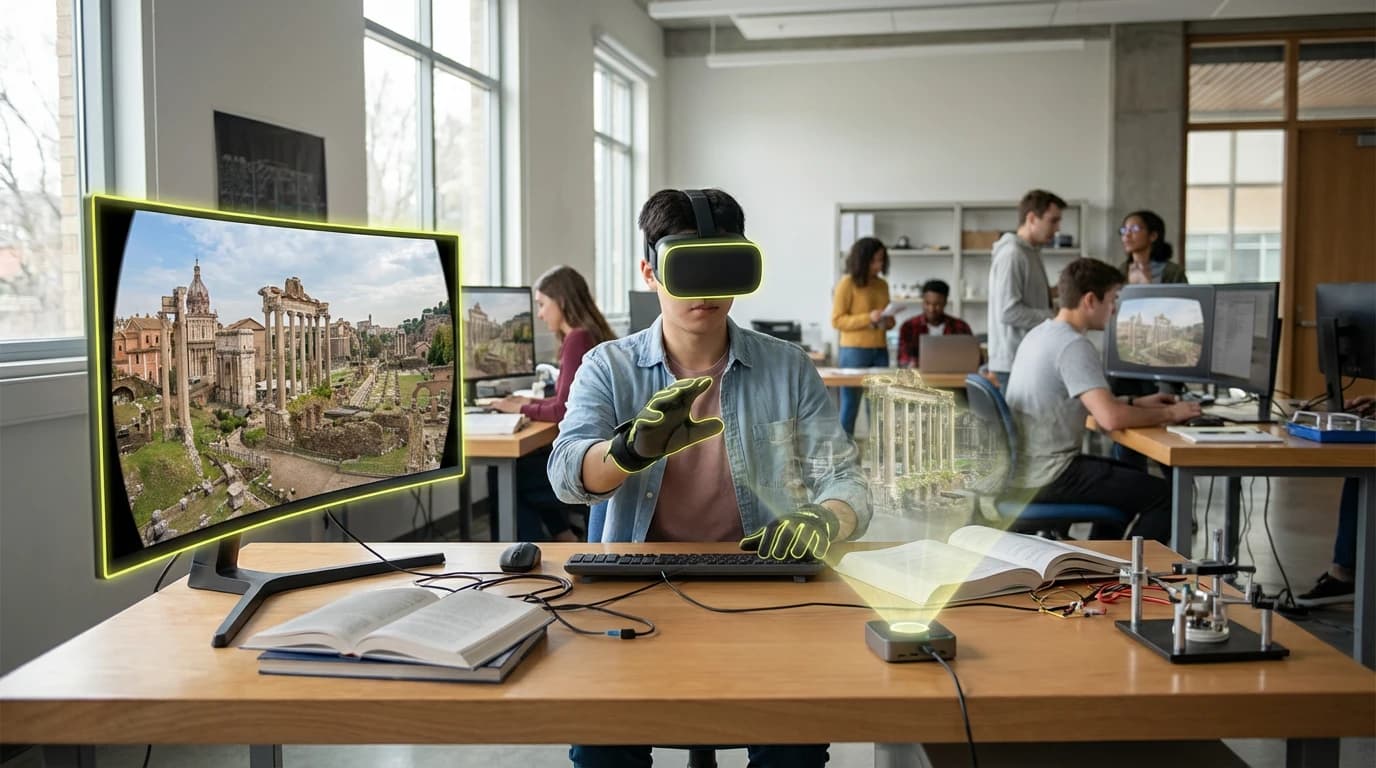
Virtual field trips use virtual reality (VR), 360-degree video, and immersive technologies to transport students to distant or inaccessible locations—museums, historical sites, ecosystems, factories, space, or other educational destinations—without leaving the classroom. These experiences can be pre-recorded 360-degree videos, interactive VR environments, or live-guided streams where educators or experts lead tours in real-time, enabling students to explore and learn about places they might never visit in person. Advanced systems integrate augmented reality (AR) worksheets, interactive elements, real-time Q&A with guides, and assessment tools that make virtual field trips engaging, educational experiences that complement or replace physical field trips, overcoming barriers of cost, distance, accessibility, and logistics.
This innovation addresses the limitations of physical field trips, which can be expensive, logistically challenging, inaccessible to some students, or impossible for distant or dangerous locations. By providing immersive virtual experiences, these systems can bring educational destinations to any classroom, enabling equitable access to rich learning experiences. Educational technology companies, museums, cultural institutions, and content creators are developing these experiences, with virtual field trips becoming increasingly common in schools, particularly after the COVID-19 pandemic accelerated adoption of virtual learning experiences.
The technology is particularly significant for expanding access to educational experiences, where virtual field trips can provide rich learning opportunities regardless of geographic or economic constraints. As VR and 360-degree technology improves and becomes more accessible, virtual field trips could become standard educational tools. However, ensuring educational quality, maintaining student engagement, providing interactive elements, and balancing virtual with physical experiences remain challenges. The technology represents an important tool for expanding educational access, but requires careful design to maximize learning benefits.
TRL
7/9Operational
Impact
4/5
Investment
3/5
Category
Applications
Related Organizations
Platform providing virtual tours of museums, heritage sites, and landmarks using Street View technology.
Developer
VR education company building 'metaversities' and virtual field trips for schools.
Developer
Creators of ClassVR, a complete VR/AR hardware and content solution for schools including field trips.
Developer
Edtech company providing digital curriculum resources, including high-production virtual field trips.
Developer
Inclusive VR platform providing virtual field trips designed to be culturally relevant and accessible.
Developer
An instructional platform that merges formative assessment and dynamic media for collaborative learning experiences.
Deployer
Provides virtual laboratory simulations for science education and training.
Developer
A VR learning platform for math and science that allows students to experience real-world problems physically.
Developer
World's largest museum complex, actively digitizing collections for virtual tours.
Developer
Spatial data company that integrated mobile LiDAR support into their capture app, democratizing real estate digital twins.
Developer
What was expected
Published forecasts about this technology, graded against what happened in Hindsight.
Supporting Evidence
Evidence data is not available for this technology yet.
Research this in Signals
Scan Virtual Field Trips for yourself.
Signals turns a topic into a sourced research record you can inspect and rerun. Your first scan is free, and this one starts with Virtual Field Trips already loaded, so edit it or scan as is.