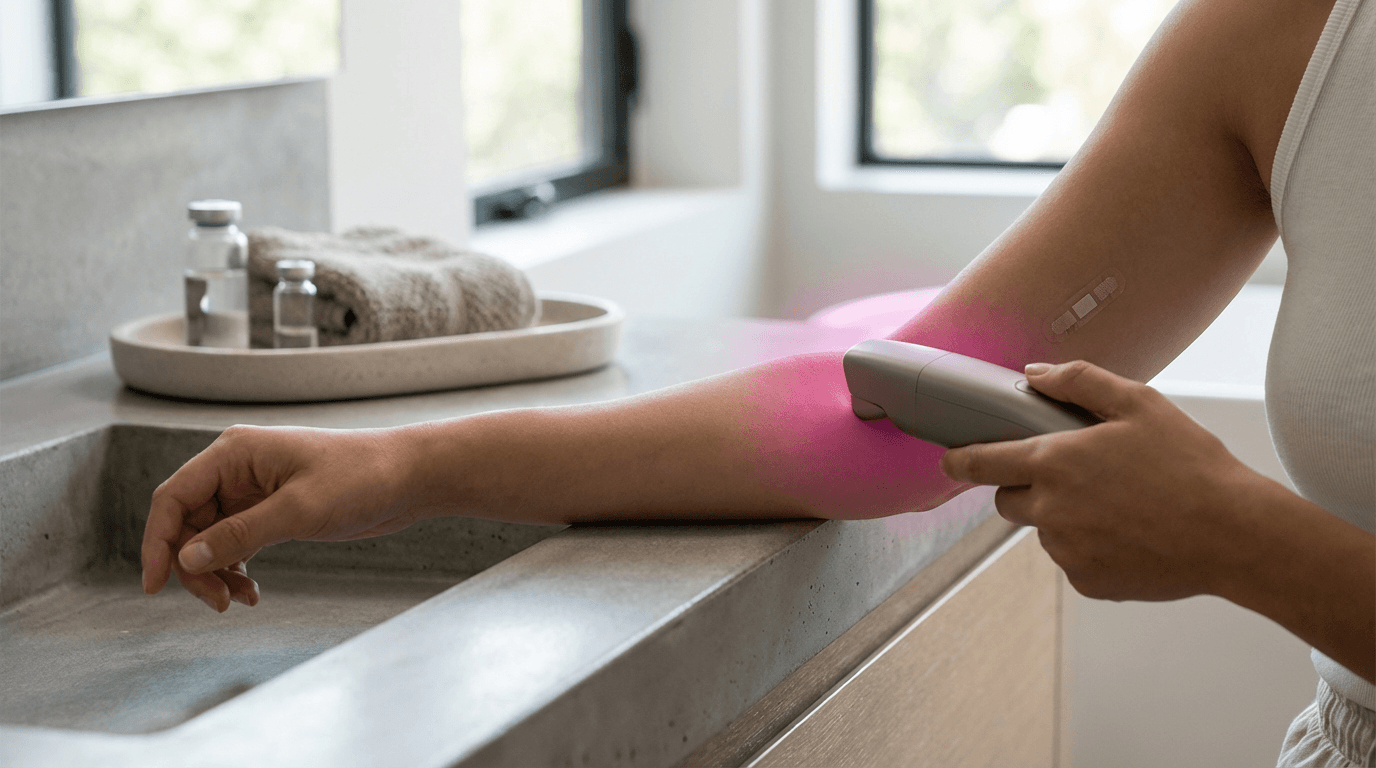
Injectable Delivery Innovations
Injectable delivery innovations span high-pressure jet injectors, piezoelectric microneedle arrays, and programmable sub-dermal reservoirs that release actives over weeks. Multi-chamber cartridges keep peptides, hyaluronic acids, and neuromodulators isolated until the moment of delivery, while onboard thermal control and ultrasound guidance maintain viscosity and placement inside delicate facial planes.
For high-volume med-spas and concierge clinics, these systems reduce chair time, bruising, and practitioner fatigue while enabling novel protocols such as micro-dosed contouring or body-wide peptide stacks. Galderma, Revelle Aesthetics, and a wave of Korean OEM consoles are piloting injectors that pair digital twins of the face with RFID-tagged formulations, creating an audit trail that satisfies both regulators and discerning clients.
The category still requires rigorous clinical validation to avoid over-reliance on automation, so savvy operators combine AI dosing suggestions with human override workflows. Expect hybrid service models where patients leave with companion wearable reservoirs that top up injectables between visits, turning delivery hardware into an ongoing subscription funnel rather than a one-off device sale.
Related Organizations
United States · Research Lab
Robert Langer's lab at MIT, famous for pioneering drug delivery systems, including programmable implants and microneedles.
United States · Startup
Developing a needle-free, high-pressure jet injection device based on MIT research.
Israel · Company
Developed MicronJet, a MEMS-based hollow microneedle device for intradermal delivery.
Prausnitz Lab (Georgia Tech)
United States · Research Lab
Mark Prausnitz's lab focuses on microneedle patches for transdermal drug delivery.
United States · Company
A commercial-stage biopharmaceutical company focused on transdermal delivery systems.
Japan · Company
Japanese pharmaceutical company that pioneered the development of hyaluronic acid microneedles for cosmetic use (Quanis brand).
Switzerland · Company
A major pharmaceutical company specializing in dermatology and injectables (Restylane, Dysport).
France · Company
Specializes in micro-cannulas for aesthetic injections, reducing pain and bruising compared to needles.
Supporting Evidence
Research this in Signals
Signals turns a topic into a sourced research record you can inspect and rerun. Your first scan is free, and this one starts with Injectable Delivery Innovations already loaded, so edit it or scan as is.