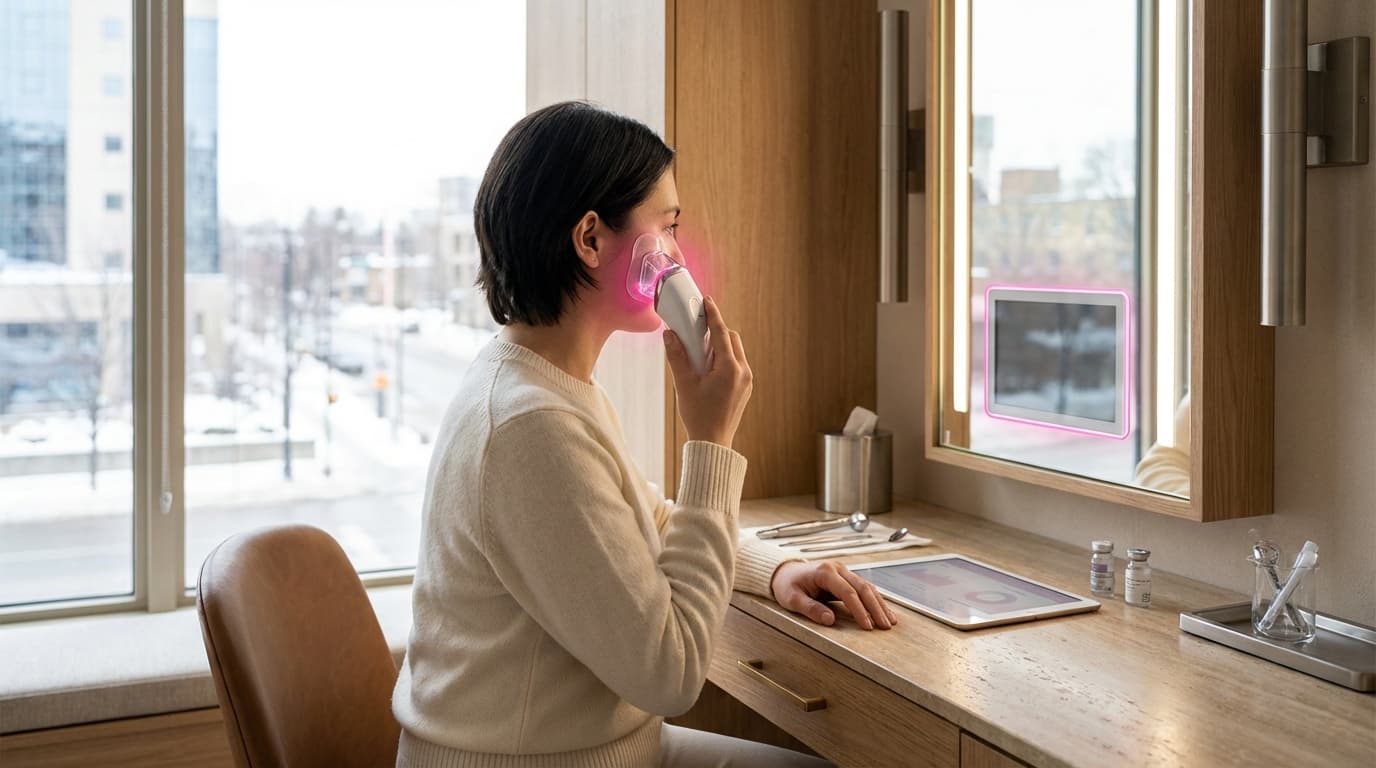
Peptide-Based Injectables
Peptide-based injectables use biomimetic peptides and bioregulators—short chains of amino acids that mimic natural biological signaling molecules—to achieve aesthetic improvements without neurotoxins like botulinum toxin. These injectables can reduce expression lines by modulating muscle activity through peptide signaling rather than blocking nerve transmission, stimulate collagen production through growth factor-like peptides, and improve skin elasticity through peptides that enhance extracellular matrix components. Unlike neurotoxin-based treatments, peptide injectables typically offer faster recovery times, more natural facial movement, and potentially fewer side effects, while still providing visible improvements in wrinkles, skin quality, and facial contouring.
This innovation addresses the limitations of neurotoxin-based treatments, which can cause frozen expressions, require recovery time, and carry risks of complications. By using peptides that work through natural biological signaling pathways, these injectables offer a potentially safer and more natural alternative. Companies like various aesthetic medicine companies, peptide-focused biotech firms, and research institutions are developing these products, with some peptide-based injectables already available in certain markets.
The technology is particularly significant for individuals seeking aesthetic improvements who want to avoid neurotoxins or prefer more natural approaches. As peptide science advances and formulations improve, peptide-based injectables could become a major alternative to traditional neurotoxin treatments. However, ensuring efficacy comparable to established treatments, managing injection techniques, and establishing long-term safety data remain challenges. The technology represents an important evolution in aesthetic injectables, but requires continued development and validation to achieve widespread adoption.
Related Organizations

Parent company of Sederma, the developer of Matrixyl, a peptide range that stimulates collagen synthesis to mimic fillers.

Produces SYN-AKE, a small synthetic peptide that mimics the activity of Waglerin-1 (found in snake venom) to reduce muscle cell contraction.
Switzerland · Company
Develops advanced cosmetic ingredients including B-Lightyl and other biomimetic peptides designed to replicate aesthetic procedure results.
United States · Company
Develops the AQUAGOLD fine touch micro-channeling device often used to deliver peptide cocktails and micro-botox into the dermis.
Japan · Company
Conducts extensive research into skin elasticity and the basement membrane, developing proprietary peptide complexes for bio-regeneration.
Germany · Company
Global supplier of cosmetic ingredients, developing peptides that target neuromuscular communication for aesthetic applications.
Supporting Evidence
Research this in Signals
Signals turns a topic into a sourced research record you can inspect and rerun. Your first scan is free, and this one starts with Peptide-Based Injectables already loaded, so edit it or scan as is.