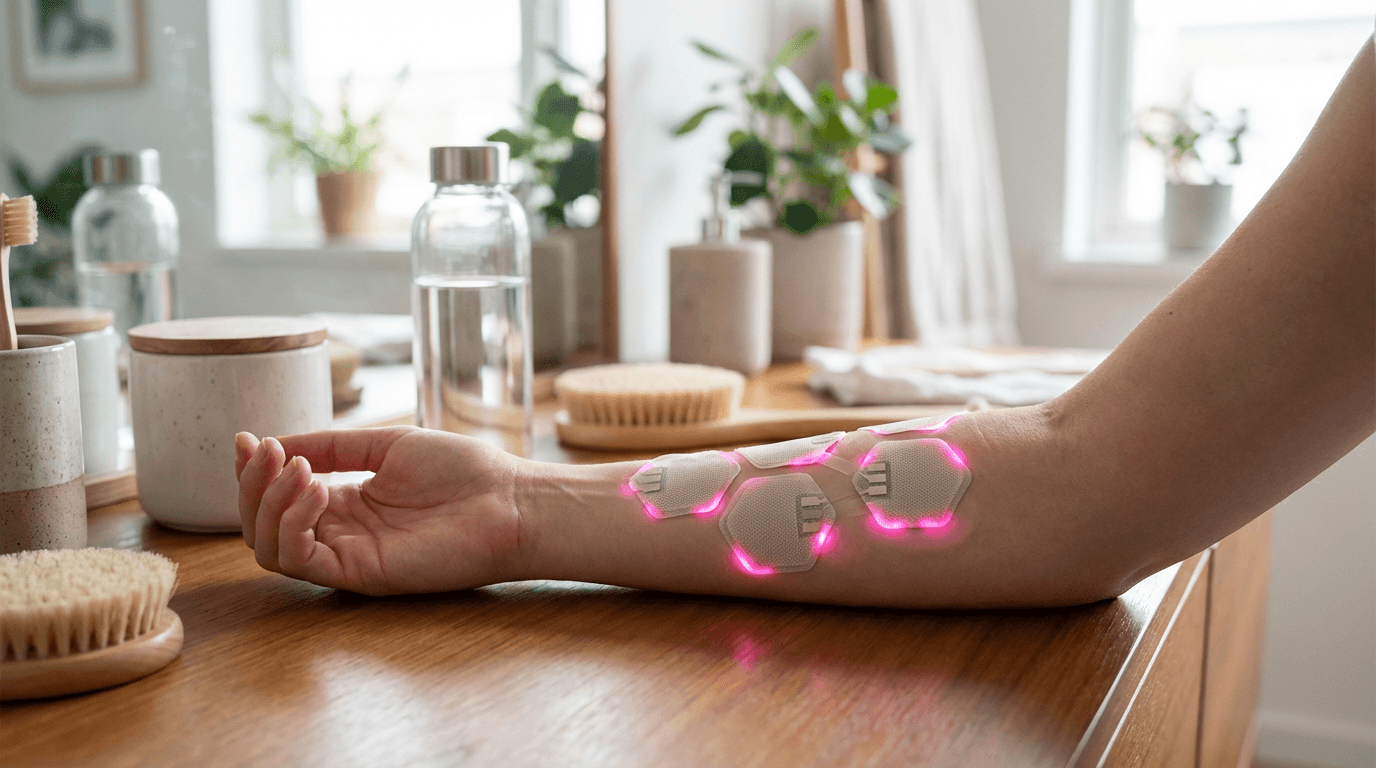
Closed-Loop Dermal Wearables
Closed-loop dermal wearables embed hydration, transepidermal water loss, temperature, and biochemical sensors directly into hydrogel patches or flexible silicone masks. Custom ASICs interpret the readings in milliseconds, then trigger MEMS valves, thermal elements, or microcurrent electrodes to adjust dosing of actives before the skin tips into irritation.
Aesthetic clinics deploy them during recovery windows to keep laser, RF, or filler outcomes on track without daily nurse check-ins. Consumer platforms like L'Oréal's Smart Mask pilots, Atolla, and Respira Labs' skin modules use the same feedback loops to coach users through ingredient stacking, automatically throttling retinoids or acids on sensitive zones and pushing lymphatic drainage when edema spikes.
Because these wearables generate regulated health data, leading vendors offer SOC 2 pipelines, dermatologist dashboards, and partnerships with telehealth groups that can intervene when inflammatory biomarkers cross thresholds. Expect insurers and wellness employers to pilot closed-loop patches as part of stress-skin programs, turning them into the dermal equivalent of continuous glucose monitors.
Related Organizations

A premier materials science lab at Northwestern University led by John Rogers, pioneering epidermal electronics and soft microfluidics.
United States · Startup
Develops flexible, skin-like microfluidic wearables for analyzing sweat and hydration.
France · Company
A startup combining microelectronics and chemistry for dermo-cosmetic applications.
France · Startup
A developer of graphene-based wearable biosensors and wound care patches.
Amorepacific
South Korea · Company
South Korean beauty conglomerate that owns 'Vital Beautie', a major brand in the inner beauty and health functional food market.
Developing a continuous molecular monitoring patch using DNA aptamer sensors to track multiple targets like vancomycin and lactate.

Spun out of Northwestern University, developing soft, flexible sensors for ICU-grade monitoring in the home.
Supporting Evidence
Research this in Signals
Signals turns a topic into a sourced research record you can inspect and rerun. Your first scan is free, and this one starts with Closed-Loop Dermal Wearables already loaded, so edit it or scan as is.